
When we think about youth sports, most parents conjure images of their little ones on a soccer pitch, baseball diamond, basketball court, or gymnasium. Part of this is due to the “street cred” that certain sports possess intrinsically, either by virtue of their exciting play style or the fact that they are played at a professional level to audiences of millions. Nevertheless, there are plenty of unsung heroes among youth sports, many of which can be just as fun for budding athletes as any of the popular ones.
Many readers will remember playing badminton in gym class or a “backyard sports activity kit” of some kind but likely won’t have played it anywhere else; or even seen it played on TV. Because of this, most people might dismiss what is essentially a fast, engaging racquet sport.
The good news is that badminton has had a bit of a resurgence in recent years. The rising popularity of pickleball (a similar sport) has seen badminton become more popular than it has in centuries, particularly among kids and families.
In this article, we will discuss how badminton’s simple setup, quick learning curve, and emphasis on coordination over strength, makes it ideal for children who are just beginning to learn about the potential of youth sports.
What Is Badminton?
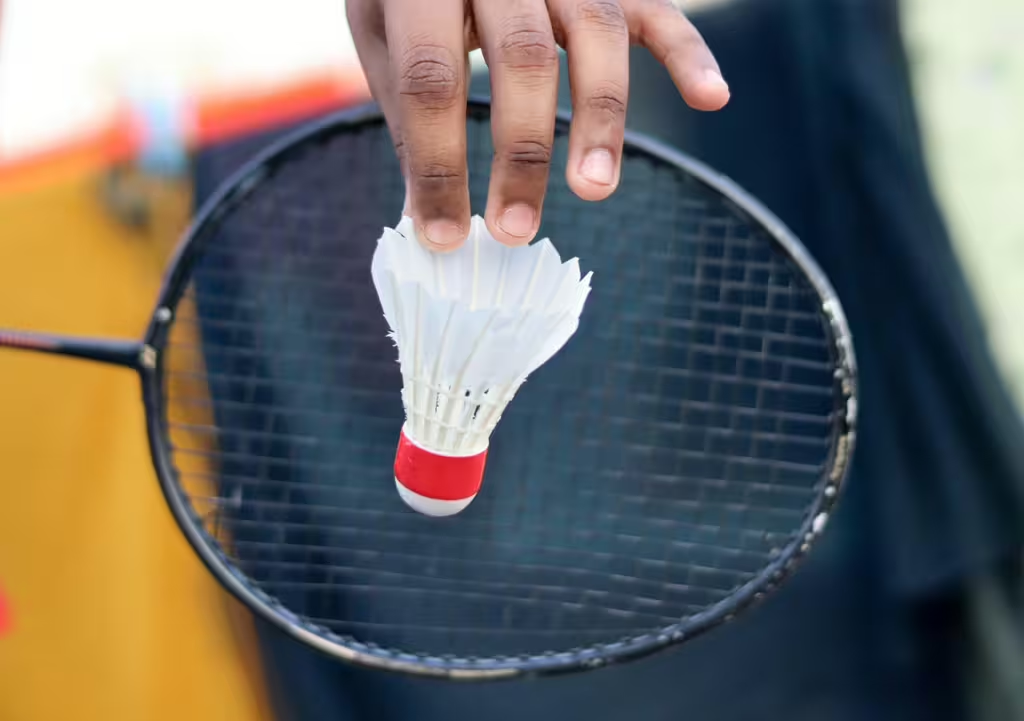
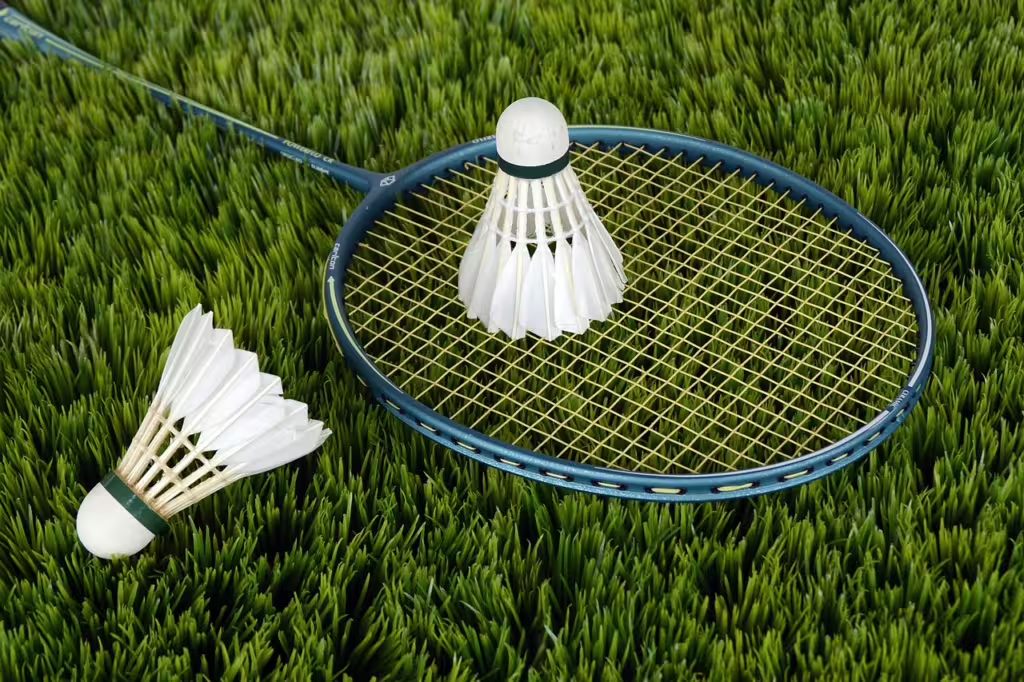
Badminton basics are fairly simple to understand. You only really need three things to play: a racquet, the lightweight object you hit back and forth, called a shuttlecock or “birdie” in some circles, and a net. It can be played one of two ways; in singles (one player on each side) or doubles (two players per side).
Unlike tennis, where the ball bounces around the court, and pickleball, where the ball is lightweight but still quite bouncy, the shuttlecock is meant to stay in the air during play. This rule, in and of itself, creates longer rallies, thereby giving players more time to react as the birdie makes its way over the net. This slow form of volleying making badminton highly beginner-friendly.
The game does not necessarily need a net, as any delineation of the court will usually suffice; but the net helps act as a sort of hazard that players can get tangled in if they volley the birdie too low. In any case, badminton can be played indoors or outdoors. Most readers will be familiar with the indoor form of play as it is much more common for organized games and is usually what is played in phys ed classes. Also, indoor play ensures that the wind cannot affect the shuttlecock’s flight.
Why Badminton Is Great for Kids
Badminton balances simplicity with skills and patience. There is a bit of agility training in there as well, though clambering for the shuttlecock is not the same as chasing after a tennis or pickleball. Either way, this all just means that kids can start playing almost immediately and need very little practice before they get all the rules down-pat. Easy rules and simple play patterns mean that kids pick up serving, rallying, and scoring quickly and can build confidence in their ability from the get-go. The pace of the game can be fast at times, but it’s also manageable and is perfect for developing coordination. Finally, badminton is not what one might call dangerous by any measure. Accidents and injuries can occur, but the lightweight racquets and shuttlecocks mean that little hands can easily hold onto the equipment and don’t need to worry about dropping or tossing it at someone during early stages of play.
Physical Benefits of Badminton
Badminton might seem like an “easy game” but there are plenty of reasons why gym teachers bring out the birdies year after year. This simple game provides a full-body workout for young children, helping them to improve their hand-eye coordination, balance, control, agility, footwork, and their cardiovascular health. Kids play slowly at first but as skills improve, the continuous movement keeps hearts racing. And sure, the short bursts of activity can seem less physically demanding than in other sports. However, this type of pacing makes it ideal for a wide array of children; all of whom might be at different levels of physical fitness. Hence why it is often featured as part of grade school physical fitness regimens.
A Social and Family-Friendly Sport
One of badminton’s greatest strengths lies in how flexible it is. This is a sport that can be played casually in the backyard or competitively in a gym. Let’s say your family is the backyard sports type, badminton fits. Or let’s assume your children are older and you’re all doing your best to improve your physical fitness, there are worse things you can do than play badminton against one another a few times a week.
Families generally enjoy playing badminton because it can be played by kids and adults on the same court. Games can also be as short or as long, as competitive or laid back, as the family decides they should be. Double games also encourage teamwork, communication, and cooperation, not to mention some healthy levels of competition. No smack talk though; this isn’t the sport for that kind of noise!
Getting Started: What You Need
Badminton is also pretty dawn accessible, and most importantly in this day and age, affordable for kids and parents. You need the racquets and the birdies; that’s really it. No pads, shin guards, helmets, or expensive baseball gloves are necessary. A net is, as we mentioned earlier, completely optional for casual play. The game can be played just as well in a driveway as it can in a public park. For those looking for structured play settings, talk to your local recreation center, your child’s school, or even the gym you might already be a part of.
Organized Programs and Opportunities
As more and more parents seek out physical ways to entertain and enrich their kids, public interest in badminton has continued to grow. The internet certainly does its part to help spread the word, as well. And as a result, we see more and more badminton youth programs available these days. Children are able to participate in this “badminton resurgence” through community recreation leagues, summer camps, badminton clubs, national badminton associations, and the old standby, school physical education programs.
In nearly all cases, badminton programs provide structured coaching and opportunities for children to develop their skills. For kids who enjoy the competitive side of youth sports, there are even tournaments and leagues out there!
Cultured Athlete Says…
As you can see, for families that are looking to find a skillful, enjoyable, easy-to-manage game, there are few choices more suitable than badminton. This is a sport that offers children an engaging way to stay active and a jumping-off point for many other athletic pursuits.
Parents, meanwhile, are able to share in the experience with their children and encourage a lifelong love of movement in them. Sometimes, in a world with fast-paced schedules, overstimulation, and endless responsibilities, the simple joy of a backyard sport can do wonders for familial relationships.
Discover more from CulturedAthlete
Subscribe to get the latest posts sent to your email.