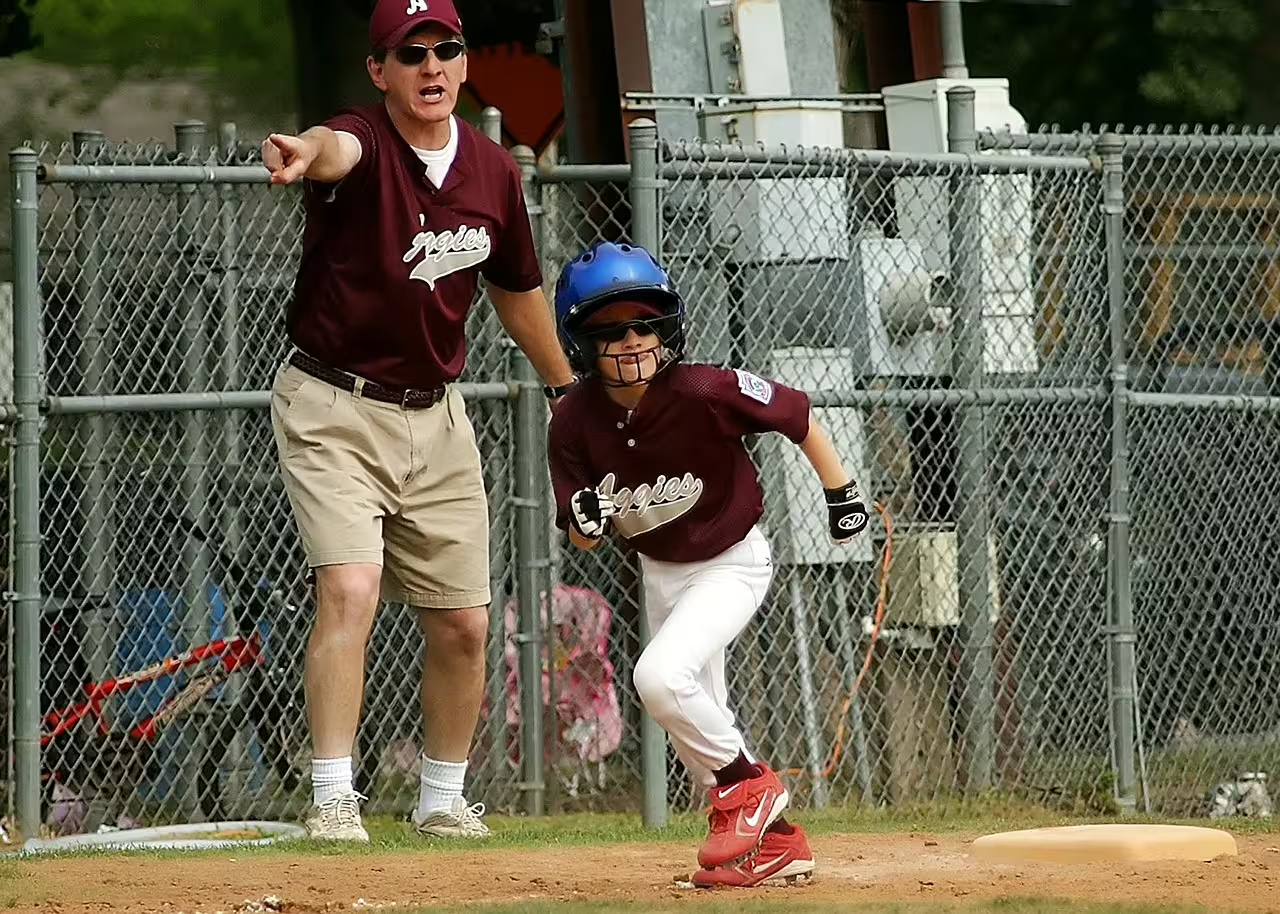


For many parents, youth sports is a juggling act. We’re constantly trying to match our kids’ schedules to our own busy day-to-day. And if you have multiple children and if those children are involved in different sports or even different age brackets, the whole ordeal can feel like an unsolvable puzzle. That’s not even mentioning the different terminology that can often be very confusing to the uninitiated.
Between game times, field locations, bracket play, pool rounds, and terms like “double elimination,” it’s easy for some parents to feel unsure about what everything means. Fortunately, if you’re new to organized sports or just need a refresher, this might just be the article for you.
In this article, we will help parents understand the vagaries of youth sports schedules and tournament formats. We will talk about how they are structured, how to read a schedule properly so that you can plan your time well, and ultimately, how to support your child on their sports journey while avoiding unnecessary stress or complications.

Understanding the Basics of a Schedule
We will begin, as one does, with a few core concepts. Youth sports schedules include a few key pieces of information:
- Date – When the game or event takes place
- Time – Start time (and sometimes arrival time)
- Location – Field, court, or facility name
- Opponent – The team your child is playing
- Team designation – Home vs. away or team number
At a glance, this all seems pretty straightforward, but don’t be fooled! Within these overarching concepts are small details that can make a big difference.
Start Time vs. Arrival Time
Most of us think about start time as when the game begins. The thing is, coaches, like workplace supervisors, kind of expect players to arrive earlier. The expectation is that they get there between 15 and 30 minutes before the game starts. This is not arbitrary, it is so the athletes can warm-up before the game. Note, these pre-start, start times aren’t always listed on the printed schedule, so it’s a good idea to confirm with the coach to make sure.
Decoding Locations and Field Assignments
Some youth sports leagues use large complexes with multiple fields or courts for games and practices. The larger the facility, the more complicated the field assignments might be. If you see something like Field 3, Court B, or Diamond 2, you might find yourself temporarily flummoxed. Worry not, these designations tell you where within the facility the game will take place and checking out a map of the place beforehand can go a long way towards getting you to the right locale. For tournaments, locations may change between games, so always double-check each listing and the map before you arrive.
What Does “Home” and “Away” Mean?
Even the most inexperienced sports parents probably know the terms “home” and “away,” but did you know that these terms don’t always refer to actual locations? Oftentimes, determine which team wears certain colors, which team bats first (in baseball/softball), and/or certain bench or sideline assignments. In some cases, even if all games are played at the same venue, these labels still matter for organizational purposes.
Recurring Schedules vs. Tournament Play
There are two main types of schedules parents will encounter in the course of their child’s youth sports career: regular season schedules and tournament schedules. The former are usually spread out over several weeks or else played once or twice per week. There is consistency in this format.
Tournaments schedules are a bit more condensed, though they can also be more complex. these schedules often involve multiple games over the course of a single day, changing schedules based on results, and different formatting, such as pool play or elimination rounds.
The long and short of this being, understanding the tournament structure for your children’s chosen sport or sports is the key to knowing what to expect.
What Is Pool Play?
Many tournaments begin with pool play, a format in which teams are divided into groups or pools. Each of those teams plays a set number of games and the records from those games are used to determine their rankings within the league.
For example, a team might play three pool games against different opponents. After pool play, teams are seeded into brackets based on their performance. Some consider to be pool play one of the best ways to organize a youth sports league.

Understanding Bracket Play
At the end of pool play, tournaments will sometimes move into bracket play. This is the stage where the competition becomes more structured. The way bracket play works out, ultimately, is as follows:
Single Elimination
- One loss = elimination
- Winners advance to the next round
- Fast-paced format
Double Elimination
- Teams can lose once and still continue
- A second loss results in elimination
- More opportunities to play
Championship Brackets
Top teams from pool play may enter a championship bracket, while others may play in consolation brackets. Knowing which bracket your child’s team is in helps you understand how far they can advance.
Seeding and Rankings
There is also a ranking system in place that often comes up following pool play. At this stage, teams are ranked based on their performance. Wins and losses, points scored, points allowed, and any head-to-head results are usually taken into consideration. This is what is meant by seeding. Higher-seeded teams may end up playing lower-seeded teams in early rounds, which might give them certain advantages in terms of scheduling. As much as it seems like it doesn’t, seeding helps create balanced matchups.
Managing Multiple Games in a Day
Tournaments days are long and often involve kids playing several games in one day. Parents should prepare for this and make sure their children have adequate hydration, as well as snacks or meals on hand. They also might want to consider bringing extra equipment, clothing for changes in the weather throughout the day, and allow for some time to travel if events take place in different locations. As with all things, scheduling and preparation can mean the difference between confusion and smooth-sailing.
Weather and Schedule Changes
Youth sports schedules can change due to weather or other factors. Bad weather can result in delayed start times, field changes, and even rescheduling of events. Most of the time, leagues will email parents or inform them over text chains. Make sure you check updates regularly if the weather looks uncertain.

Cultured Athlete Says…
As you can see, youth sports schedules and tournament formats might seem complicated at first, but once you cotton-on to the basics and the consistent patterns that exists within most systems, you’ll be right as rain. In time, we’re confident that the terms and timing will become second nature to you. You might even find your child helps to remind you about certain scheduled sports events.
Indeed, throughout the last article, you have learned how to read schedules, interpret formats, and anticipate the most common changes. With that knowledge in place, we are confident that you’ll be able to cultivate a smoother, more enjoyable experience for you and your children.
Discover more from CulturedAthlete
Subscribe to get the latest posts sent to your email.