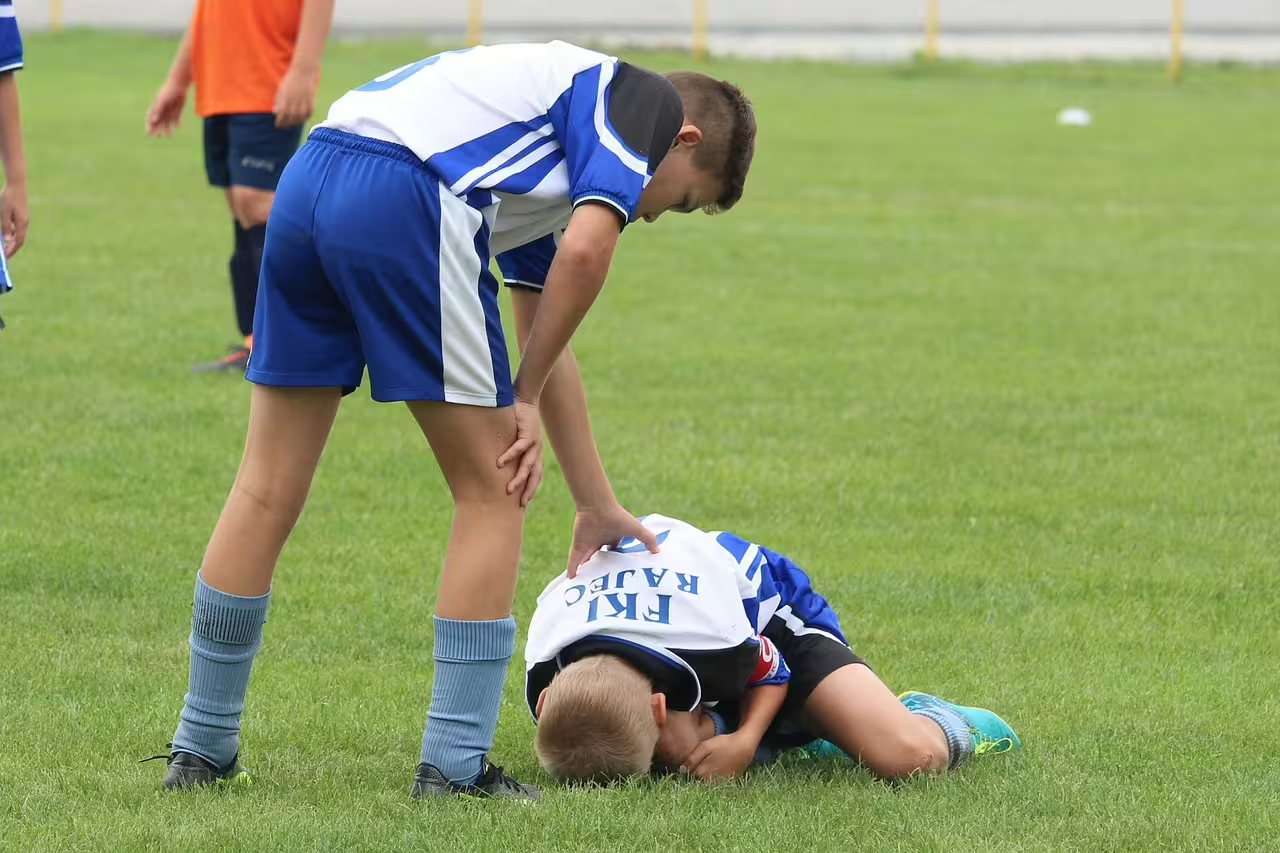
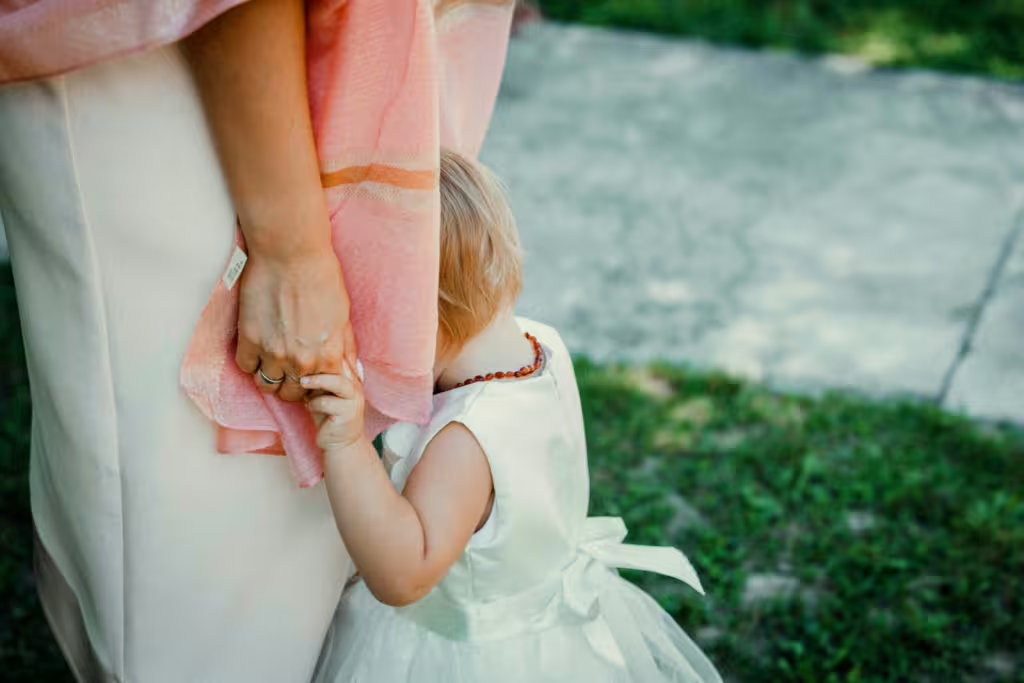

We know that not every child is going to thrive in a loud, boisterous sports environment. Oftentimes, the high-energy of a sports gymnasium, stadium, or even team sport setting, can have an unsettling effect on certain types of children.
In past decades, parents may have considered those children merely “shy” and countered that exposure to such sensory experiences was the best way to “toughen them up.” The thing is, the parenting models of a bygone age don’t really apply anymore; not when we have so many more options for introverted children that still want to participate in sports activities.
Also, it should be noted that being introverted isn’t really a bad thing anymore. It is perfectly okay for a child to be uncomfortable with the sound, sight, smells, and pressure of traditional sports environment. But then, you may ask, are sports a good fit for my child at all? The good news is that many athletic pursuits can prove to be beneficial for introverted children, especially when the environment matches the child’s personality.
In this article, we will discuss why introverted children do better in smaller groups and quieter settings, how structured routines and giving time to process information internally can help them to succeed. As it happens, the key isn’t pushing them into the most popular team sport — it’s finding the one that they will love to play.
Understanding Introversion in Young Athletes
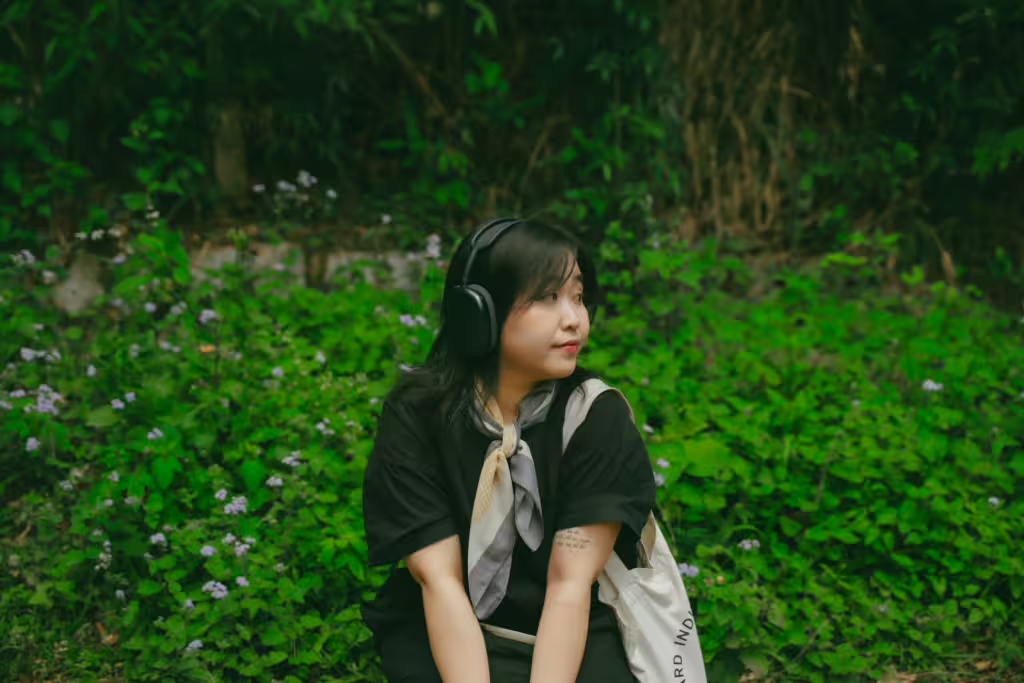
We want to be clear, introversion is not shyness. Moreover, it should never be discussed as a deficiency or weakness. Introverted children are just different. They might need to recharge through alone time or want to take time to observe the situation before participating. They tend to think carefully before they act and prefer deep, one-on-one interactions as opposed to large group activities. After they are with a crowd, they may even feel drained by the constant stimiulation.
As a result of all these tendencies, they may find that group or traditional sports are too much. That said, sports can be a valuable tool to help introverted children build confidence and become more comfortable in social situations in a gradual way. This is why choosing the right sport is imperative for helping them grow without feeling overstimulated.
Individual Sports: A Natural Fit
Individual sports, as one might expect, are practically perfect for introverted children. These sports allow for personal growth without relying on overstimulating team dynamics.
Swimming
Swim teams may be a common sight in middle school and high school athletic programs, but by and large, swimming is an individual sport. This sport offers structure, routine, and personal progress tracking and is ideal for children who desire quiet, focused practices. At the same time, success in swimming largely depends on individual’s effort, not that of the whole squad.
Swimming represents a measurable, predictable environment where kids can measure their progress, build endurance, and encourage self-discipline. They can do so with calming sensory input and in an environment where personal goal setting can thrive without the weight of heavy social pressure.
Martial Arts
At Cultured Athlete, we have often spoken about the many benefits provided by martial arts like karate, taekwondo, jiu-jitsu, and others. Such individual sports emphasize the virtues of respect, discipline, and structured learning. Classes often follow consistent routines and instructors genetally set clear expectations for athletic advancement. The focus tends to be on personal improvement and individual achievement at one’s own pace. The belt system usually reinforces this focus on individual achievement and progress. Martial arts also build confidence without requiring constant verbal interaction.
Tennis
Tennis does need an opponent in order to be played, but while it is mostly an individual sport, it can also be played in doubles, offering flexibility for many young athletes. Tennis lessons often involve one-on-one coaching, which can feel less overwhelming than coaching done in team settings. Introverted athletes learn strategic thinking, enhanced reflexes, and personal accountability as they play, while also learning to play against other children. In any case, tennis allows children to focus inward while still competing at a high level.
Track, Dance, and Gymnastics
Track events, especially running or jumping, focus on individual performance within a team setting, making it perfect as an introduction for many introverted kids. Track can be an excellent middle ground between true team sports and individual athletics. Gymnastics is similar in that way, and so is dance. Training tends to be repetitive and structured in these settings, but is quieter and requires more inward focus for thoughtful young athletes.
Low-Pressure Team Sports
Some introverted children enjoy team sports…though they need to in the right format. Take soccer or volleyball for example. Both sports offer lower-stakes, recreational leagues that emphasize fun over performance. In these settings, the teams are smaller and the social intensity is vastly reduced. The programs also tend towards developmental, skill focus and will usually have more positive coaching styles, as opposed to overtly competitive ones.
What to Avoid (If It Feels Overwhelming)
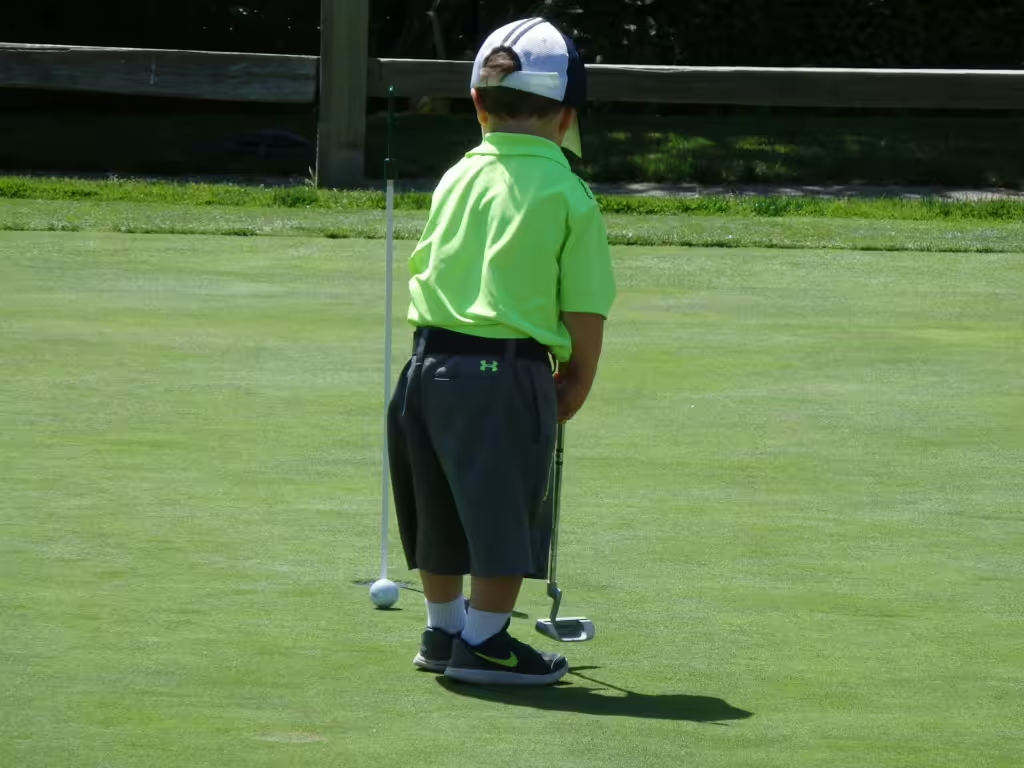
Many times, sports environments may feel intense for certain introverted children, especially early on. Sports that involve loud gymnasiums, large competitive travel teams. or heavy pressure from coaches and spectators on the sidelines, will not help an introverted child. In these cases, the option may be to try again with a different sport, in a different arena, and with a different coach. These things don’t mean that all sports are off-limits forever — but gradual exposure is the key to getting things right.
The Hidden Strengths of Introverted Athletes
Introverted children often bring unique strengths to sports such as thoughfrul decision-making, stronger focus, strategic thinking, and better emotional self-regulation. These are the benfits of such insular thinking and they often mean that the child forms a deep commitment with their chosen sport, especially once they become thoroughly engaged. And while these children may never dominate team huddles or become outwardly personable or gregarious on the team, they will often lead by example and be thoughtful, empathetic team captains.
Cultured Athlete Says…
As you can see, introverted kids do not need to give up on athletics entirely. They too can enjoy sports so long as those sports activities are in line with their temperament and limitations. At the same time, all sports offer the potential for introverts to gently expand their comfort zone and learn to live in a world where, despite their discomfort, others will always be present.
Indeed, introversion need never be barrier to athletic success but may, in fact, be a source of strength and focus for many children. The best way that parents can help their introverted progeny is to choose supportive environments, prioritize development over pressure, and celebrate quiet progress. Doing this will enable sports to become a powerful tool for personal an emotional growth, rather than a painful childhood memory.
Discover more from CulturedAthlete
Subscribe to get the latest posts sent to your email.