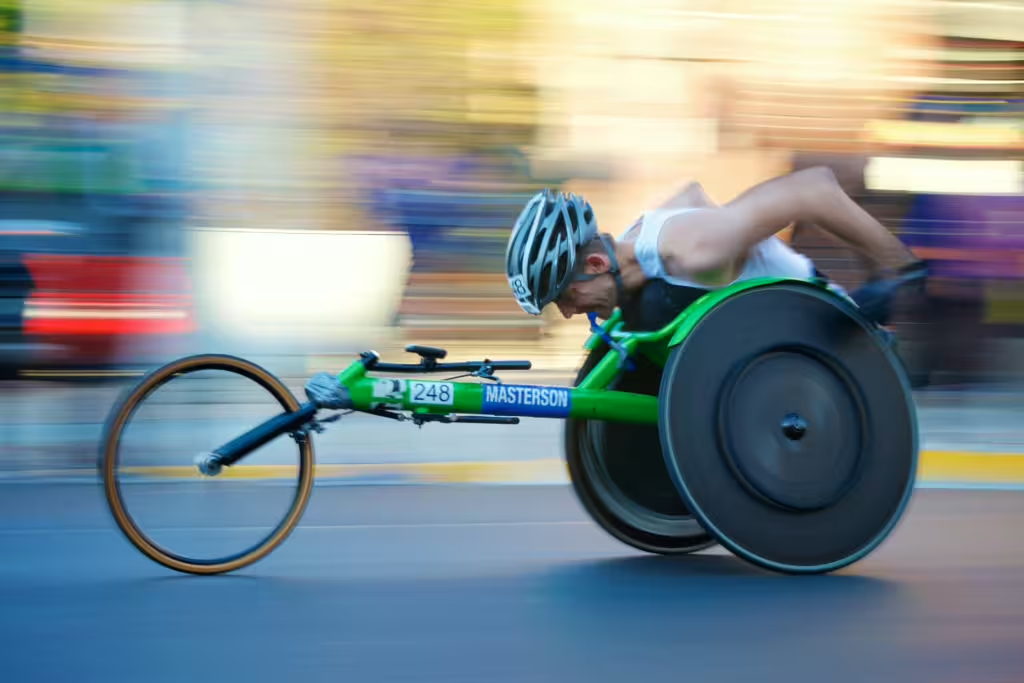

Many readers might remember that feeling they got watching their favorite athletes compete either live or on television. There is a thrill that comes from seeing one’s sports heroes doing what they do best; it’s inspiring. And some of the most inspiring competitors in the world are Paralympic athletes; individuals who, despite their difficulties, manage to demonstrate extraordinary determination, resilience, and skill.
This is especially true for children possessed of the same or similar disabilities. In many ways, the journeys that these athletes have undertaken on their way to success, illustrate to children that they too are capable of achieving their goals, so long as they believe in themselves and work hard.
In this article, we will discuss some of the most notable paralympic athletes in the game. As we do, we will talk about how these tenacious competitors have overcome the obstacles in their lives and how their personal journeys can inspire young athletes of all levels of ability.
The Power of Representation in Youth Sports
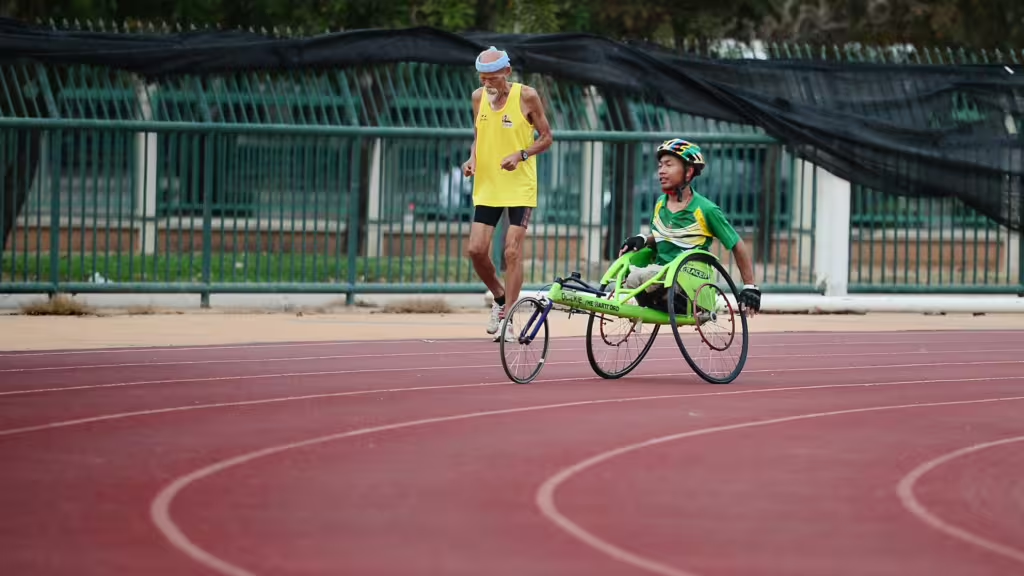
Seeing athletes who overcome adversity can have a profound effect on children; regardless of whether or not that adversity comes in the form of disability. Children who also have disabilities may find role models in paralympic athletes. These individuals show them that, despite their challenges, their athletic dreams are still possible.
In many ways, paralympic athletes demonstrate that sports are for everyone. Their own struggles and resilience remind children that participation, effort, and personal growth matter much more than perfection, in the long-run.
At the same time, the inclusivity that paralympic athletes represent is a valuable lesson to all children that anyone can play sports; even if the leagues, organizers, or athletes need to get a little creative about how to facilitate that.
Tatyana McFadden: Champion of Wheelchair Racing
Readers who are not familiar with Paralympic champions may not have heard of Tatyana McFadden, but believe us when we say that she is one of the greats. McFadden just happens to be one of the most decorated Paralympic athletes in history. Born with spina bifida, she spent her early childhood in a Russian orphanage without access to mobility aids. Fortunately, she was eventually adopted by an American family, who provided her with the support and the wheelchair she needed to begin to excel at athletics.
McFadden was not the type of person to sit still, especially now that she had the means to move around. Her desire for movement quickly developed into a passion for wheelchair racing. The rest, as they say, is history, and throughout her career, McFadden has won multiple Paralympic medals across. To say she has dominated major marathons around the world, would be an understatement; she left her competition in the dust!
Jessica Long: Swimming to Greatness
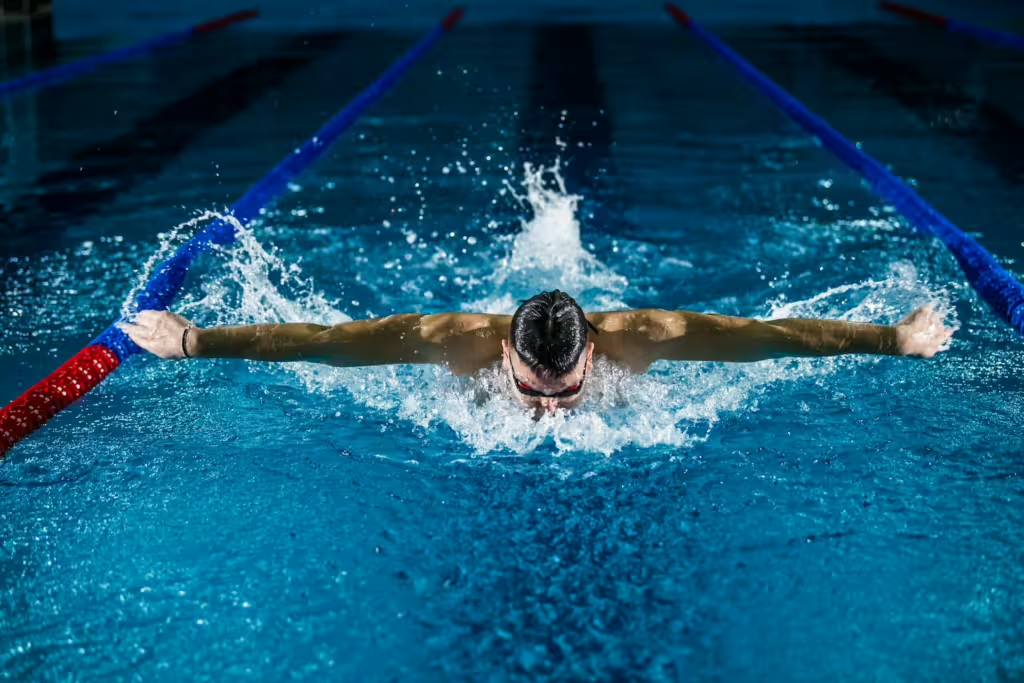
Jessica Long was also born outside the U.S., in one of the most inhospitable places on the planet; Siberia. In addition to a harsh environment, Long was born with a rare condition that required both legs to be amputated below the knee. In time, she too was adopted by an American family, who brought her into their home and helped her see her true potential. It was around then, that Jessica Long was first introduced to the joys of swimming.
Adopted as a toddler, Long first began swimming at a young age. Her love of the water soon revealed a remarkable talent for swimming. She was a veritable fish in the water and she soon found that a lack of lower limbs was no kind of impediment for a determined, persistent, positive young athlete. Long went on to become one of the most successful Paralympic swimmers ever, earning dozens of medals across multiple Games.
Oksana Masters: A Multi-Sport Champion
Many readers are familiar with the Chernobyl disaster; one of the most destructive nuclear incidents in the history of the world. But did you know that some of the children born after the disaster developed mutations and limb disabilities because of the radiation exposure? Oksana Masters was one of those unfortunate few. Despite different leg lengths, missing bones, and extra digits, Masters went on to achieve success across as many Paralympic sports.
By now, you might be familiar with how the story goes. Masters was adopted by an American family and over time, decided she wanted to do sports just like all of her peers. She soon found her way into adaptive sports and over the years, has competed in several Paralympic disciplines, including rowing, cross-country skiing, biathlon, and cycling.
In many ways. Master’s versatility of sport, her ability to excel in multiple sports, highlights the importance of adaptability and resilience.
Matt Stutzman: The Armless Archer
Matt Stutzman, sometimes known as the “Armless Archer,” has become one of the most recognizable figures in Paralympic sports. Born without arms, Stutzman had to learn how to use his remaining limbs to accomplish everyday tasks. Thus, he learned to perform those tasks using his feet. Once he discovered archery was a thing, Stutzman decided he wanted to try his hand…err feet, at it as well.
In time, he actually developed an incredible technique that allows him to draw and shoot a bow using his legs and shoulders. Since then, Stutzman has competed at the highest level of international archery and has inspired countless people with his uncanny ingenuity, perseverance, and skill.
The Growth of Adaptive Sports for Kids
In recent years, the widespread understanding and adoption of adaptive sports has provided more and more opportunities for children with disabilities to participate. Programs such as adaptive sports leagues, Special Olympics youth programs, and inclusive school teams are helping more kids discover the joy of athletic participation.
Kids can play wheelchair basketball and sitting volleyball. They can practice adaptive swimming, cycling, and para track and field. With so many opportunities out there, children need not be left behind as they watch their friends play. Indeed, the very existence of these programs ensure that children of all abilities can develop the same measure of athletic skills and experience as their peers. It also provides kids with the ability to make friends in similar situations and for parents of those children to collaborate and help one another in the same community.
Cultured Athlete Says…
As you can see, though paralympic athletes have had to overcome their physical disabilities in order to compete, that doesn’t mean that their journeys are any less inspiring than those of other professional or Olympic-level athletes. With courage, perseverance, and no small amount of heart, these athletes have shown that accomplishments can be attained even when things seem impossible. For parents guiding their children through youth sports, sharing the inspiring stories of Paralympic athletes can teach empathy and resilience, as well as inclusion and self-confidence.
Discover more from CulturedAthlete
Subscribe to get the latest posts sent to your email.