

For many parents of children on the autism spectrum, the struggle to find a youth sports activity is very real. To say that finding the right sport for your child can feel overwhelming is a bit of an understatement. Whether your child struggles with certain sensory sensitivities, has trouble communicating, or is uncomfortable in social situations, it is safe to say that the “traditional” youth sports route might be fraught with difficulties.
The good news here is that modern youth sports have taken autism to heart. The sports offered to children in 2026 are more inclusive than they have ever been. Between adaptive programs, sensory-aware coaching, and flexible league structures, children on the autism spectrum are being given the tools they need to thrive in athletic environments; making life that much less worrisome for parents everywhere.
In this article, we will talk about the modern changes that youth sports have undergone in the past few years. At the same time, we will discuss the powerful social, emotional, and physical benefits that sports can offer children on the autism spectrum, specifically when the environment is supportive and individualized.
Why Sports Matter for Children on the Autism Spectrum
For those who are not familiar, autism is not one, single type of disability. Autism, in fact, exists on a wide spectrum, offering many different challenges to many different people. For instance, some children may crave structure and repetition, while others have boundless energy and require constant movement and/or sensory input. Sports can support all of these needs and then some.
Over the years, sports science has determined that youth sports can aid in gross motor skill development, coordination and balance, social communication, and emotional regulation. In the same way, sports can build confidence and independence in kids who were lacking it before they began their sports journey.
At the same time, physical activity can also help a child to focus and manage their stress in constructive ways. Many parents have reported improvements in mood and behavior among their children with autism, especially when regular movement has become a consistent part of that child’s routine.
Choosing the Right Sport
Whether your child has autism or not, there is no one-size-fits-all sports option. The key is matching the sport to your child’s interests, sensory needs, and communication style. The right environment will make all the difference. Look out for sports programs that advertise smaller team sizes, flexible participation expectations, and sensory-friendly environments. Also, seek out coaches that are trained in special education or adaptive sports.
Individual Sports
Individual sports are often a good fit for certain kids because they can feel less overwhelming because they reduce social complexity.
Swimming
Swimming is often a top recommendation. Water activities often provide calming sensory input for children with autism. Meanwhile, swimming lessons tend to be structured and predictable, bereft of the surprising changes in routine that often unnerve some kids. Many communities even offer adaptive swim programs.
Track and Field
Running events allow children to focus on their personal progress and ignore the feats of others. Short sprints, long-distance runs, or jumping events can be tailored to specific levels of ability.
Martial Arts
We have often talked about the many social, emotional, and physiological benefits of martial arts for kids. Karate or taekwondo are two disciplines that emphasize repetition, discipline, and clear structure; all of which are helpful for kids on the spectrum. These days, many martial arts instructors are trained in inclusive coaching strategies ideal for children with certain disabilities.
Gymnastics
For children who enjoy movement and body awareness, gymnastics is a great introductory way to show them the joy of sports.
Team Sports
Team sports are slightly more challenging for children with autism. Their noise, the complex social aspects inherent to them, and even their style of play necessitate certain social skills. Nevertheless, in the long-run they can help enhance or build social skills and communication in even children with autism.
Soccer (Adaptive or Rec League)
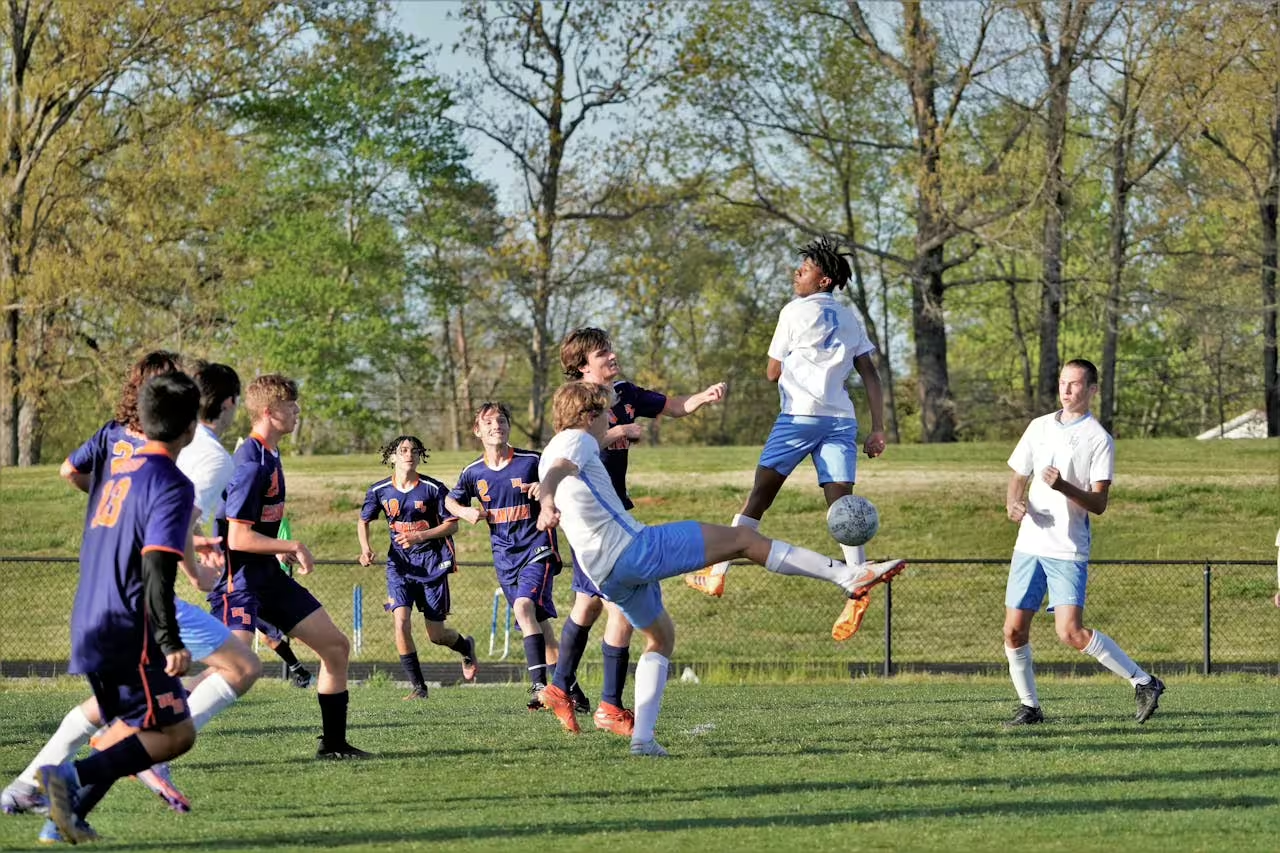
Small-sided soccer programs with modified rules have come about in recent years to help reduce overstimulation. Meanwhile, some leagues provide “buddy” systems for additional support.
Baseball and T-Ball
The predictable inning structure and clear turn-taking rules of baseball are beneficial for children who thrive on routine. Adaptive leagues are available in some places and their emphasis on play over competition can be most helpful in reducing performance pressure.
Basketball
Short drills and structured plays can work well in recreational basketball leagues when coaches emphasize inclusion over competition.

The Rise of Adaptive Sports Programs
Across the country, inclusive programs have already begun to expand. Indeed, many parks and recreation departments now offer adaptive sports leagues or individual programs. They offer unified sports where children with and without disabilities can play and commingle with one another. There are specialized coaching certifications that each inclusive strategies, as well as sensory-friendly time periods for play and/or practice.
In addition, organizations such as Special Olympics Youth Programs and local adaptive sports associations are providing structured, supportive environments for children with autism. There is also a shift in mentality, as many aspects of modern youth sports culture have already begun shifting away from “win at all costs” toward notions of development, inclusion, and emotional well-being. In short, the world of youth sports is changing for the better!
Managing Expectations
In the end, progress is going to look different for every child, regardless of where they sit on the spectrum. Success might be as simple as making eye contact or conversing with a teammate or as exciting as completing a drill or play. Heck, even participating for the full practice or being able to manage a moment of discomfort or frustration can be a big step for a child struggling with their disabilities from time to time.
Parents ought to remember that athletic growth should be measured individually, not by comparison to others and fortunately, modern sports programs often come coupled with parental resources to instill that. These sports programs increasingly recognize diverse definitions of success and offer up those lessons to all parents and staff involved in the sport; not to mention the young athletes themselves.
When Challenges Arise
Some children may initially resist group activities and that’s okay. Gradual exposure can help with acceptance. Shorter practice visits, one-on-one instruction, and taking time to observe the sport before the child chooses to participate can help lessen anxiety. Building comfort is the best way to introduce a child with autism to the world of sports. And remember, even if a particular sport doesn’t fit, it is ok to stop and try another. The goal is finding a setting where your child feels safe and supported, not trying to fit a square peg into a round hole.
Cultured Athlete Says…
As you can see, youth sports is constantly evolving and that evolution has allowed children with autism to play and participate in ways they never imagined. In 2026, inclusion is no longer an afterthought but has become a real priority. For parents of children on the autism spectrum, this shift opens new possibilities for emotional, social, and physical improvement.
At Cultured Athlete, we believe that every child deserves the chance to move, play, and grow in a supportive environment. Fortunately, opportunities abound! No matter what sport you choose for your child in 2026, you can find a way to make it a meaningful, enriching part of your child’s developmental journey.
Discover more from CulturedAthlete
Subscribe to get the latest posts sent to your email.