
Many of us think of wrestling purely in terms of wha we see in the old “square circle.” We recall the overacting, the pageantry, and the mania; Wrestlemania, that is! The truth is, wrestling isn’t all bright costumes and Stone Cold Stunners. Real wresting, that is to say, not professional wrestling, is an Olympic mainstay and one of the oldest sports in the world.
The original form of this sport is admittedly less of a spectacle but it is rooted in strength, discipline, strategy, and determination. Moreover, wrestling offers unique benefits for children that go far beyond mere physical fitness. And while many parents might be on the fence about introducing their kids to a contact sport, wrestling can be an excellent means of instilling the values of individual effort, confidence, and personal growth.
In this article, we will discuss traditional wrestling as a youth sport, as well as it’s positive effect on a child athletes. Throughout the article, parents will learn that, with the right environment and coaching, wrestling can become a powerful tool for both character development and athletic prowess.
What Makes Wrestling Unique?
Despite the individual nature of participation, wrestling is considered a team sport in some circles. Yet, unlike many team sports, wrestling is both individual and structured. Athletes compete one-on-one, but they train together, learn together as part of a team. This combination is ideal, because it allows children to develop independence while still learning about the benefits of group dynamics.
In wrestling, success depends on a combination of effort, technique, and above all, persistence. Skill is important, but having the right technique and a strategic mind, can help a wrestler overcome a more “skilled” opponent. As for the team, they’re mostly there for moral support. There is no reliance on teammates to carry the outcome of a match, as each athlete is responsible for their own performance. That said, the support of one’s teammates is often enough to help you through a tough match.
This type of personal accountability is rare in youth sports, but it can be highly valuable to young athletes, especially if their sports experience before this has only been with team sports like soccer, football, or basketball.
Building Physical Strength and Coordination
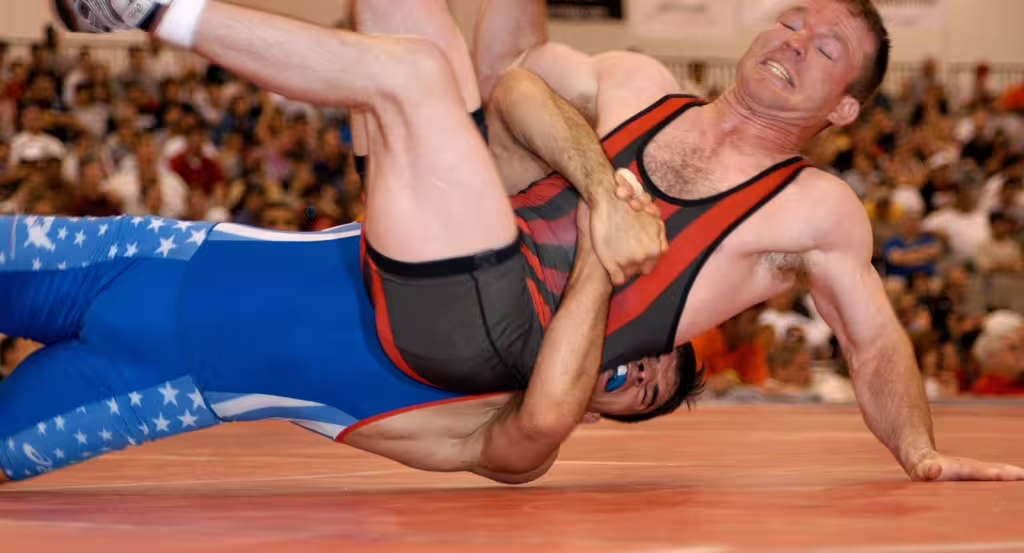
Wrestling is not as easy as it looks on television. Readers who have dabbled in middle school or high school know exactly what I’m talking about. This is a full-body sport, a full-body workout that requires strength, balance, and control.
Throughout their wrestling career, young athletes develop improved core strength, which they gain through grappling and positioning. They also improve their upper and lower body strength, from holds and movements. As they learn to maintain or gain control over an opponent, they improve their balance and stability. Coordination also improves over time, as wrestlers learn how to master complex movements or transitions.
As we mentioned earlier, success in wrestling isn’t just about skill but it’s also not just about size or power. Learning the basics or even advanced techniques plays a major role, allowing athletes of different body types to succeed.
Confidence Through Individual Achievement
Wrestling builds confidence. If you don’t think that’s true, than you haven’t seen the Rock Versus Hulk Hogan match! Joking aside, the wins a child gains in a wrestling match are the direct result of their training. Their strength, skill, effort, preparation, and decision-making is what led them to victory and the lack thereof, can lead to defeat. It might seem challenging at first, but as ever, each loss creates new opportunities for growth. Even small successes, such as mastering a move, completing a match, or improving performance, can build self-confidence over time.
Teaching Discipline and Work Ethic
Wrestling requires dedication. Practices can be more physically grueling that in other youth sports, often involving repetition, conditioning, and technique refinement. In that way, though, wrestling helps kids to develop focus, discipline, and perseverance. This goes a long way towards them developing a strong work ethic, which can aid them academically and professionally, down the line.
A Safe and Structured Environment
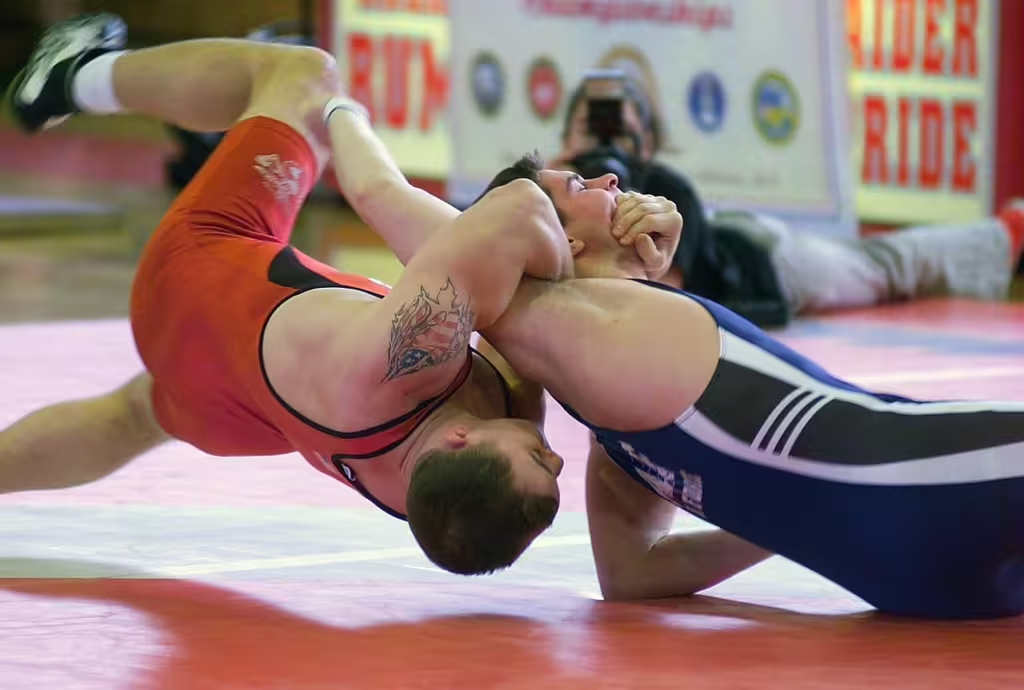
Despite its bad rep, wrestling is not as unsafe as some parents might think. Youth wrestling programs take safety very seriously and many programs are designed with safety in mind. Coaches teach proper techniques to minimize risk, including: safe takedowns, controlled movements, and having respect for one’s opponents. At the same time, matches are supervised by trained officials, and rules are in place to protect athletes. Indeed, when taught correctly, wrestling is no more dangerous than many other youth sports.
Social Benefits and Team Support
Although wrestling might seem an individual sport where matches are concerned, it fosters strong team connections. Wrestlers that train together, learn to support one another, and share the experience of competition. Camaraderie is formed among teammates and kids get that same sense of friendship and belonging they get in other team sports. The shared goals of the inevitable individual bouts are present among all wrestlers, so they learn to look to eachother for assistance and encouragement.
Getting Started with Youth Wrestling
Parents interested in introducing their child to wrestling can begin by looking at local or even school-based programs. School wrestling teams, community recreation programs, and youth wrestling clubs are all good entry points. Such programs offer beginner level classes that focus on fundamentals and safety. These elements are essential towards ensuring that children learn how to wrestle without harming themselves or others. Once they graduate from there, higher level programs will shift their focus to skill development and advanced techniques. In all cases, the best programs will involve positive, inclusive coaches and age-appropriate levels of competition.
What Equipment Is Needed?
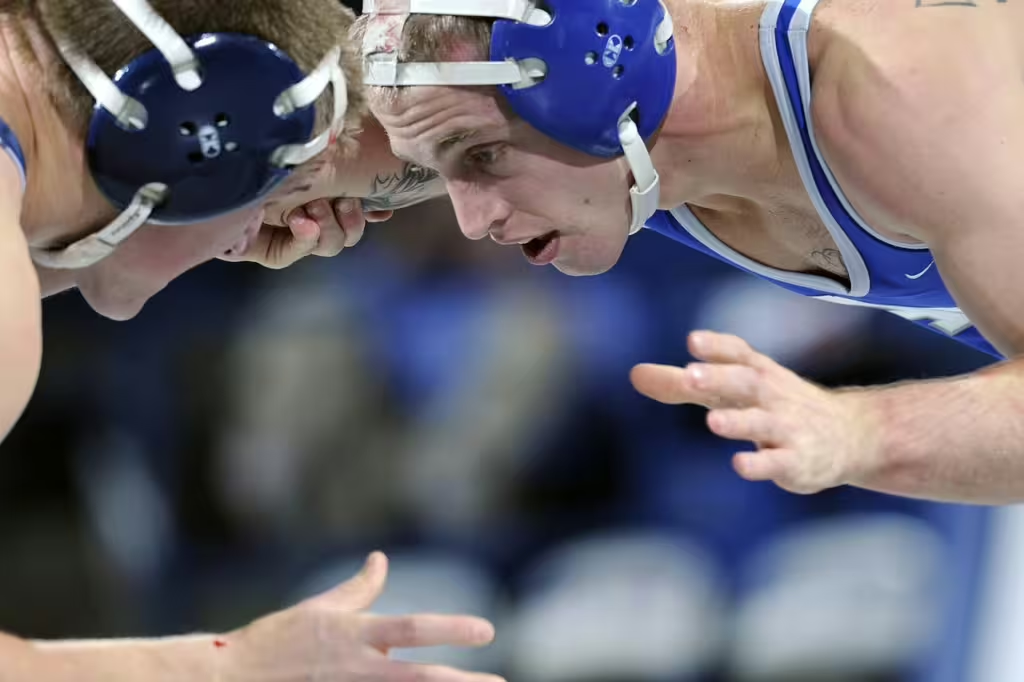
Wrestling requires relatively minimal equipment, thus making it accessible for many families. Kids need only wrestling shoes, some sort of athletic clothing or the traditional wrestling singlet, and some sort of headgear. The latter is only required in some programs, however.
Cultured Athlete Says…
As you can see, youth wrestling doesn’t have any Undertakers but it does make kids into Ultimate Warriors, so to speak. This sport offers children a unique combination of physical development, mental growth, and personal achievement that can help them push themselves in healthy, meaningful ways. Joining the right wrestling team can instill the discipline, respect, and self-belief that will serve them both on and off the mat.
Discover more from CulturedAthlete
Subscribe to get the latest posts sent to your email.