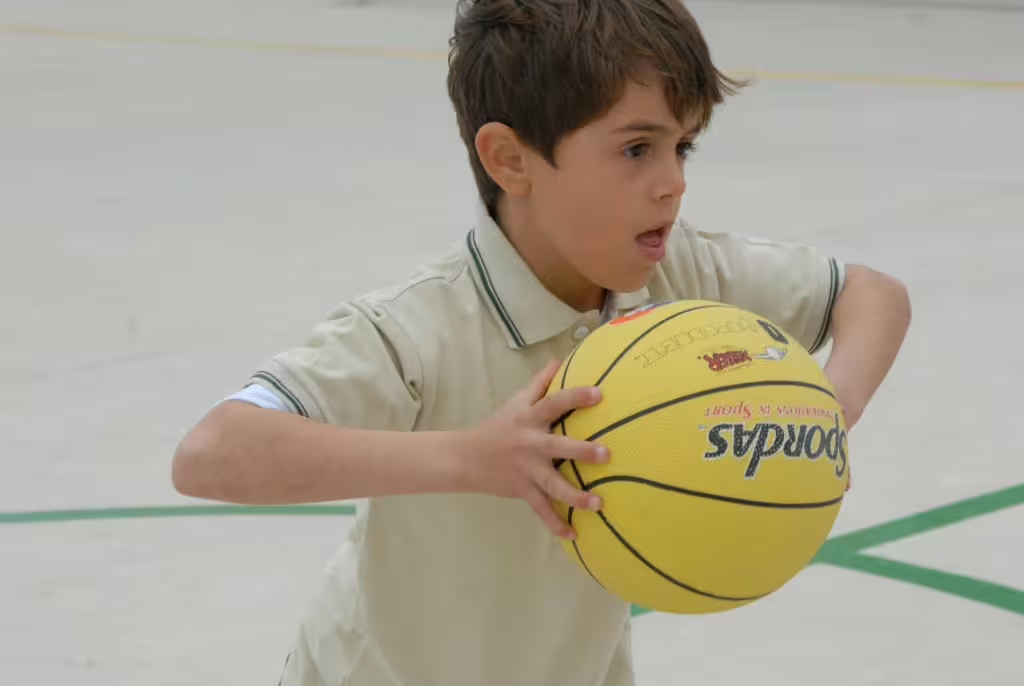

Parents who are reading will likely be familiar with the concept of milestones. We track when they can turn over, when they can sleep through the night, when they crawl, stand, walk, and talk. Parents are also aware that those milestones continue on throughout their lives and that quite a few of them have to do with their motor skills. What parents might not be aware of, however, is that sports can actually be a good barometer for how well a child is hitting their motor skill milestones.
Playing youth sports can often create positive changes in a child’s coordination, balance, and overall movement; though it’s not always noticeable at first. Every kid is different, of course. Some kids seem naturally agile, while others take more time to develop confidence in their physical abilities. These differences are often tied to motor skill development. And though this is a gradual process that unfolds as children grow, sports can often make up for any gaps or missed milestones by honing specific kinesthetic movements.
In this article, we will teach parents about how sports affects certain skill milestones, what skills develop at different stages, and how to set realistic expectations for their own child’s development. We will also instruct parents how to choose age-appropriate sports activities for their kids that will result in the most positive outcomes.

What Are Motor Skills?
Let’s break down motor skills to start. When we talk about motor skills, we are referring to the ability of a person to control and coordinate the movements of their body. These skills are generally divided into two categories:
- Gross motor skills: This includes large movements involving the arms, legs, and torso. Running, jumping, and throwing are all good examples of these motor skills.
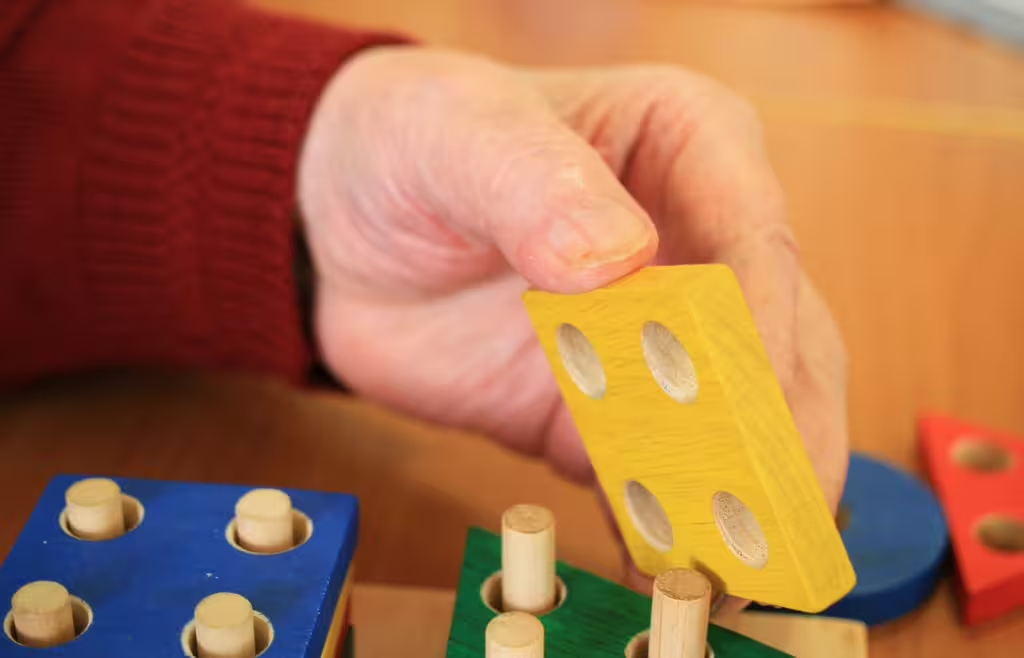
- Fine motor skills: Smaller, more precise movements are represented here. Gripping, hand control, and coordination are all examples of fine motor control.
As one can imagine from all the running, jumping, and throwing that gets done in youth sports, gross motor skills play a particularly important role. In fact, having good gross motor skills forms the foundation for a person’s athletic ability. At the same time, motor development is influenced by growth, practice, and environment.
It should also be noted that while there are general milestones, each child develops at their own pace. Therefore, parent’s should try to temper their expectations in a way that is productive and supportive, without being overbearing.
Ages 2–3: Exploring Movement
We’re skipping the earliest years here because most parents are not considering enrolling their kids in sports at this stage. It is mostly by the time they reach ages 2 or 3 that children are just beginning to explore how their bodies move. Sports activities at this tender age are less structured and more focused on play.
Common motor milestones in this age bracket include walking or beginning to run, kicking a ball forward, climbing on furniture and/or playground equipment, and throwing a ball…albeit with limited control. Balance is still developing around this time, so movements may appear unsteady. Also, coordination is very basic, even if children are eager to explore.
Parents can support their kids at this stage by encouraging free play in safe environments, introducing simple games involving balls, and keeping the focus on fun rather than mere instruction. Remember, these early years are about building comfort with movement, not mastering skills.
Ages 4–5: Building Coordination
As children approach preschool and kindergarten age, coordination improves in very noticeable ways. Movements become more controlled, and children can follow simple instructions and understand basic rules. They can run with better balance, jump with both feet, catch large balls with both hands, and might even be able to pedal a tricycle or training bike. All of this put together is why this is usually a good time to introduce them to simple sports concepts.
Parents can support kids at this stage through repetition and encouragement. Try introducing them to beginner sports like soccer or gymnastics. Help them practice simple skills such as throwing and catching, and always be sure to keep any instructions short and clear. It does no one any good to confuse them at this stage.
Ages 6–8: Developing Fundamental Skills
Between ages 6 and 8 lies a key stage for motor development. Children begin refining fundamental movement skills at this age, skills that basically form the basis for many sports. They have improved hand-eye coordination, which give more accurate throwing and catching ability. They also have better balance and agility, and are better able to follow multi-step instructions, as well as understand more complex strategies and concepts like teamwork.
Parents can support their children at this stage by making sure they try a bunch of different sports activities. This will help them get a feel for different sports modalities, as well as expose them to different movements and rulesets. Parents should also encourage practice when time permits.
Ages 9–12: Refining Skills and Building Confidence
During this stage, children gain greater control over their movements and begin to specialize in certain sports if they choose. They have greater strength and endurance than they had as young children, along with more precise coordination and faster reaction times. This is in addition to better balance and body control, in general. Older kids are also more capable of understanding the team dynamic, roles, and complex strategies of higher-level athletics.
Parents should encourage consistent practice and skill development whenever possible. They should make the focus on effort and personal improvement, rather than purely on overt successes, and performance metrics. Also, don’t be afraid to encourage your kids to mix it up here too. Have them try both individual and team sports.
Recognizing When Extra Support May Be Needed
While variation is normal and all kids hit milestones at different stages, it is important to keep an eye on certain signs. For example, parents may want to consult a professional if a child struggles significantly with basic coordination, or if they avoid physical activity, particularly due to frustration. If your child has difficulty with balance or movement beyond the expected age range, it may mean physical therapy is needed. Either way, don’t worry just yet, there are many therapeutic or specialized programs, not to mention occupational therapists, that can help kids reach their motor skill milestones; even if it’s a little later than usual.
Cultured Athlete Says…
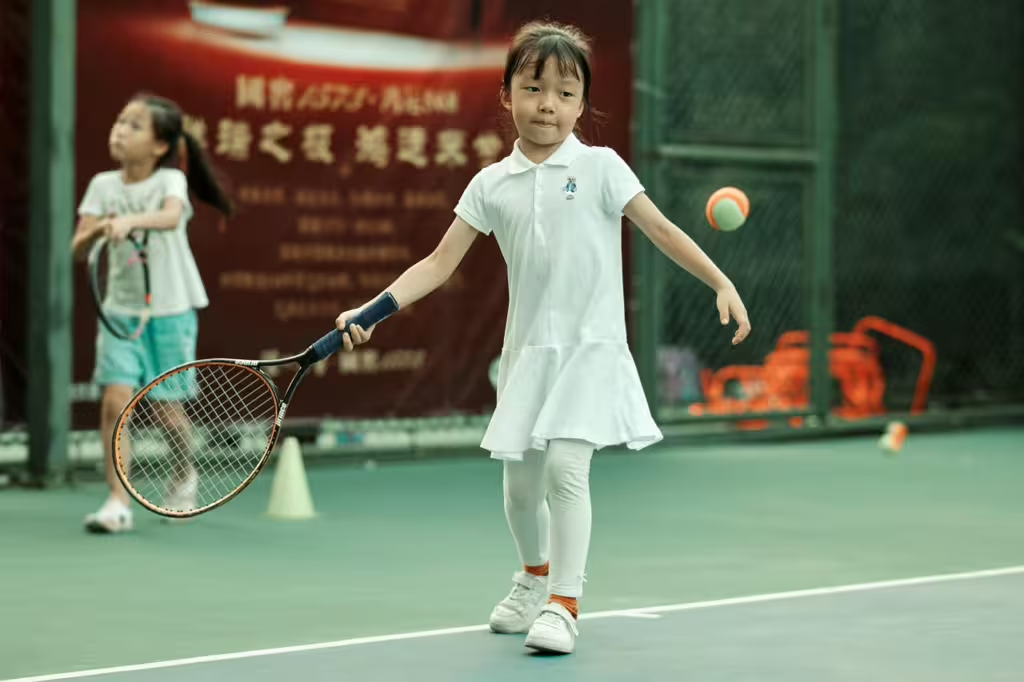
As you can see, understanding motor skill milestones can not only help parents support their child’s physical development, it means that it can be done in a thoughtful and informed way. Ultimately, each stage of growth, regardless of the hurdles and challenges it might pose along the way, brings new abilities, builds new skills, and offers countless opportunities for learning.
The lesson here is that parents need to stop focusing on where a child “should” be in their development, and to start encouraging steady progress, building up their confidence, and creating an enjoyable experiences with movement that will last a lifetime.
Discover more from CulturedAthlete
Subscribe to get the latest posts sent to your email.