
A few weeks back, we spoke about the preconceptions that often stop young male athletes from engaging with and enjoying sports activities that are often woman-dominated. In the end, we believe we made our point that boys should be encouraged to play sports that some single-minded fools would consider to be inappropriate for them. Unfortunately, the stereotype cuts both ways; affecting both genders.
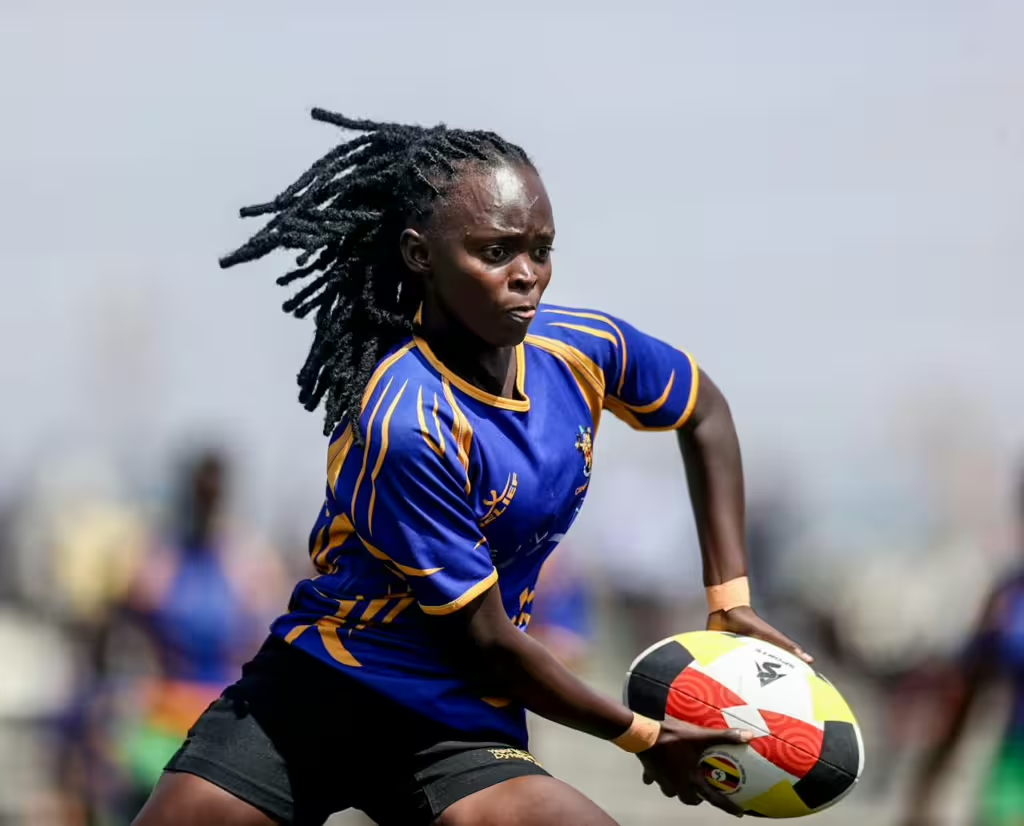
The prevalence of men in certain sports modalities is undeniable and many times, if a young girl expresses interest in playing football, hockey, wrestling, or any number of other sports, they are met with concern or outright derision. In some cases, the alternative has been to make female-only versions for those girls interested in playing; softball for girls, baseball for boys, an so on.
Nevertheless, as the years go by and inclusion becomes a main driver in youth sports of every kind, things are beginning to change. It’s a slow change, but it is happening steadily, meaningfully, and it is often led by families who decide to follow their child’s interests rather than society’s wrongheaded expectations.
In this article, we will explore those changes and examine how modern young women are not only participating in male-dominated sports, but how they are competing, excelling, and reshaping what youth athletics looks like for them and for everyone!

Where the Divide Comes From
Interestingly enough, the idea that certain sports belong to one gender is not rooted in an individual’s ability to play that sport, it’s rooted in tradition. Let’s face it, historically, opportunities for girls in sports were somewhat limited. Heck, until very recently, women weren’t even encouraged to have much of a life outside of being a wife and mother. Fortunately, this archaic way of thinking has ceased to be in many corners of the world, though there are some corners where a woman’s “expectations” remain woefully wrongheaded.
The sports arena, for example, seems to be a place where a females need to be relegated to their own versions of popular sports, simply by virtue of the fact that it’s always been done that way. Over time, youth sports programs have expanded to include female athletes should they want to play in the male-centric version. However, certain sports modalities remained culturally associated with boys; football, wrestling, baseball, ice hockey, and weight lifting, to name a few.
Despite an enlightened world, these associations persist, even though the physical and mental skills required for these sports are not exclusive to any gender. Nevertheless, the willingness of people to question the assumptions that have held back many female athletes, are what’s making inroads for many young women.
Why Girls Are Choosing These Sports
For many girls, the decision to participate in a traditionally male-dominated sport is simple: they enjoy it. Whether they are drawn to the sport for the competitive environment, the physical challenge, team dynamics, the opportunity to try something different, or simply, the physical/athletic challenge that the sport represents.
Then there’s the fact that some girls may have grown up watching their siblings or parents play these sports. Perhaps watching football was a family activity and they, like many young children before them, wanted to be out on that field playing too. As with all things, the desire to participate can be driven by curiosity, passion, and a desire to grow.
The Benefits Go Beyond the Game
Girls who participate in athletics already gain a number of positive mental, physical, and emotional benefits, but many times, the benefits and skills they learn while playing sports they’re “not supposed to play,” extend far beyond basic athletics.
Confidence
Entering a space where they may be wither one of a few girls or even the only girl, requires a decent amount of courage. Over time, girls can turn this initial burst of courage into true self-assurance. This well-earned confidence can help them build a strong sense of identity.
Resilience
Facing challenges, particularly those that arise from simply wanting to enter an arena where you may not exactly be welcome, takes a lot of gumption. As they learn to navigate setbacks, unwarranted animosity, physical, emotional, or mental struggles, these girls develop a powerful sense of resilience that will lead them through life.
Independence
In these environments, girls may feel as though they are “on their own,” even if they aren’t. Yet even if they are only partially supported by their peers and parents, they often need to learn some measure of self-reliance and personal accountability.
Leadership
As participation in their chosen sport grows, girls often find themselves having to take on leadership roles. Part of this is because they’ve had to prove themselves, part of this may be due to their newfound confidence, either way, this often thrusts them into becoming role models for others.
Put together, all of these qualities support success not only in sports, but in school, future careers, relationships, and many other aspects of daily life.
Physical Development and Skill Building
Considering that this article is about common misconceptions, we would be remiss if we didn’t talk about how so many people think that girls are at a physical disadvantage in certain sports; that they just aren’t “built for it.” The truth is, youth sports, especially at younger ages, are actually designed around skill development; they aren’t really about physical dominance.
Girls can excel by developing the agility, coordination, technique, and strategic thinking that will allow them to succeed. Moreover, many coaches emphasize these fundamentals, thereby creating opportunities for all athletes to succeed, regardless of their gender. In fact, sports like wrestling or baseball often value skill and timing more than brute strength. And this is even more pertinent in youth leagues.

Navigating Challenges
The sad truth is, while opportunities are expanding, challenges still exist for young women who wish to get into male-dominated sports. And sadly, the same is not as true for young men who want to learn to dance or do gymnastics.
Nevertheless, girls in male-dominated sports may encounter doubts from the peers, spectators, or even coaches. There many be a distinct lack of representation, limited access to roles, or even bars to entry. Such challenges can feel isolating at times, but as we mentioned in the benefits section, they also provide great opportunities for personal growth. Indeed, with the right support, girls learn to navigate these situations with confidence and resilience.
The Role of Coaches
Coaches play a critical role in creating inclusive environments for kids from all walks of life. The most effective coaches tend to focus on fun and skill development over outright wins. They also tend to treat all athletes equally and encourage respect among teammates, regardless of gender, ability, or appearance. In this regard, they often set clear expectations about sportsmanship and good behavior that all players must adhere to if they want to continue to participate.
Finding the Right Environment
Remember, not all programs are the same, so finding the right fit for your child is important. Try and seek out programs that lead with or prioritize inclusion. Positive coaches and coaching styles are also imperative, as they will dictate much of the behavior surrounding your child’s inclusion. Programs that foster a supportive, respectful team culture and that offer equal opportunities for participation are among the most desirable. Ultimately, the goal is to find an environment where your child feels comfortable and motivated.

Cultured Athlete Says…
As you can see, as more and more girls step up to try their hand in traditionally male-dominated sports, the barriers and stereotypes are beginning to break down. The expanded possibilities that this type of across-the-board inclusion creates, paves the way for other young athletes to begin or enhance their athletic careers. As parents, we should endeavor to not only support our children and encourage their participation, but to fight for their right to compete with the peers; regardless of gender.
In the end, when girls are given the opportunity to step onto any field, mat, or court they choose, they gain more than athletic skills. They gain confidence, resilience, and the understanding that they can choose their destiny for themselves; even if that choice begins with picking up a sport everyone said they wouldn’t be any good at.
Discover more from CulturedAthlete
Subscribe to get the latest posts sent to your email.