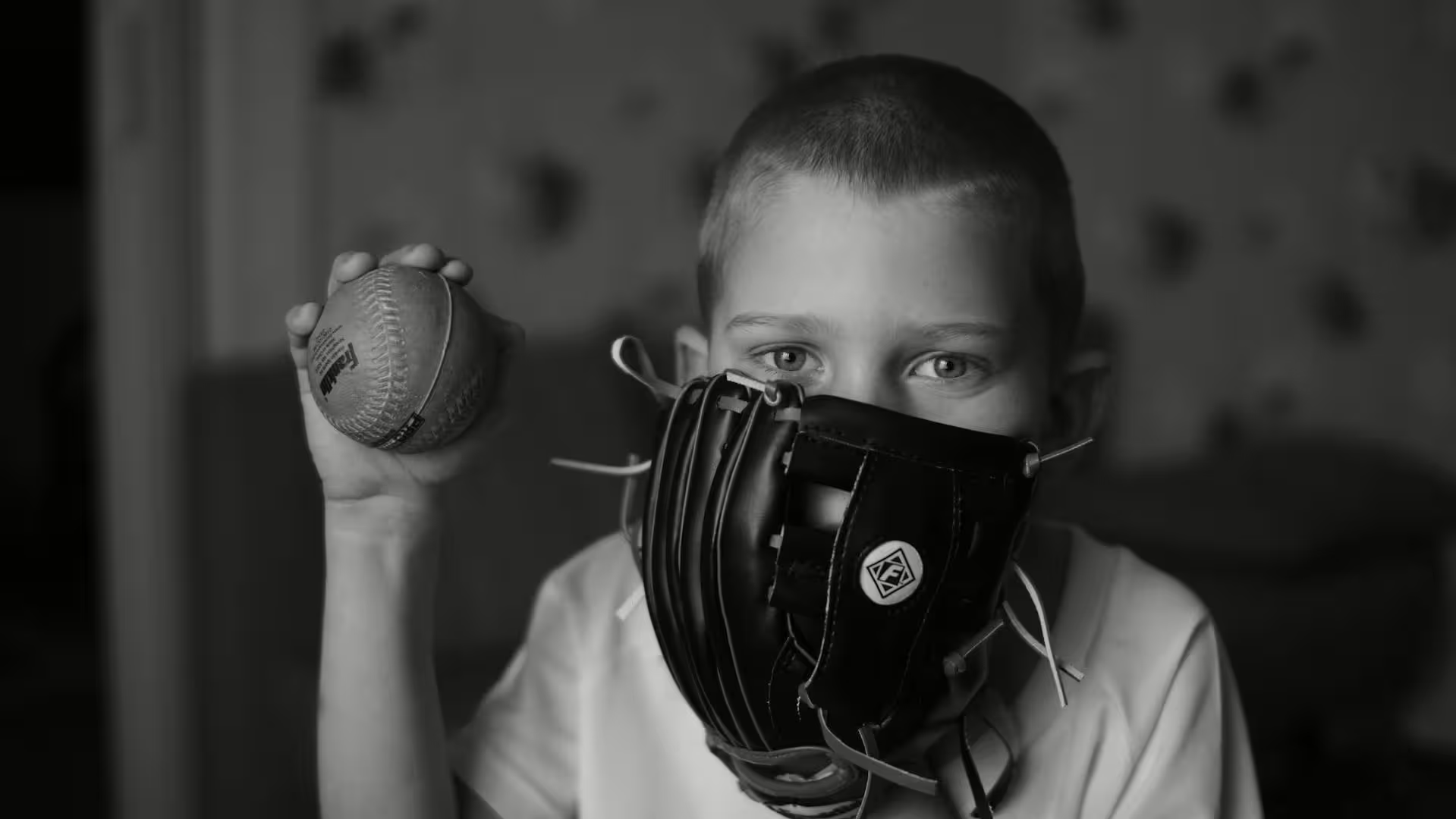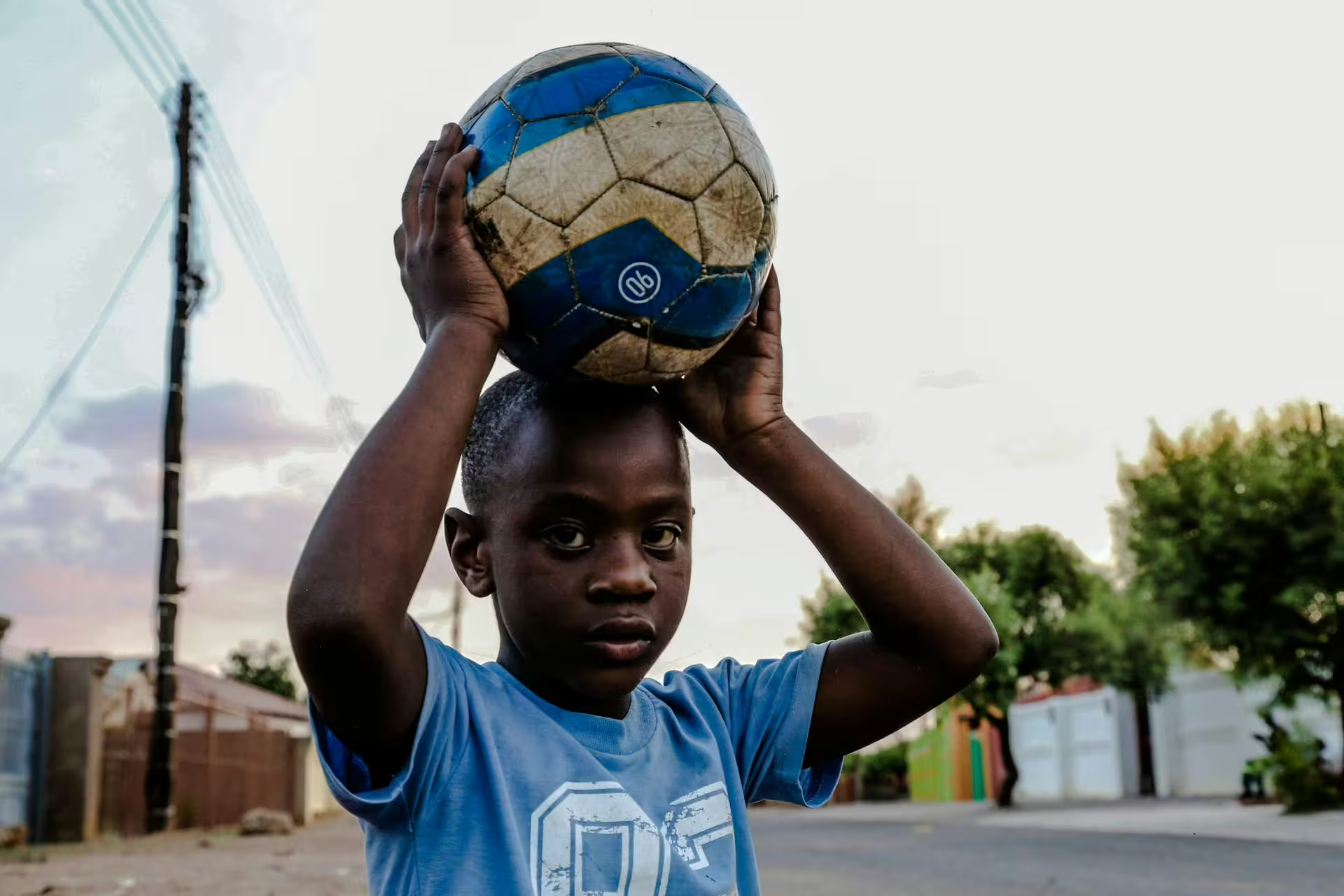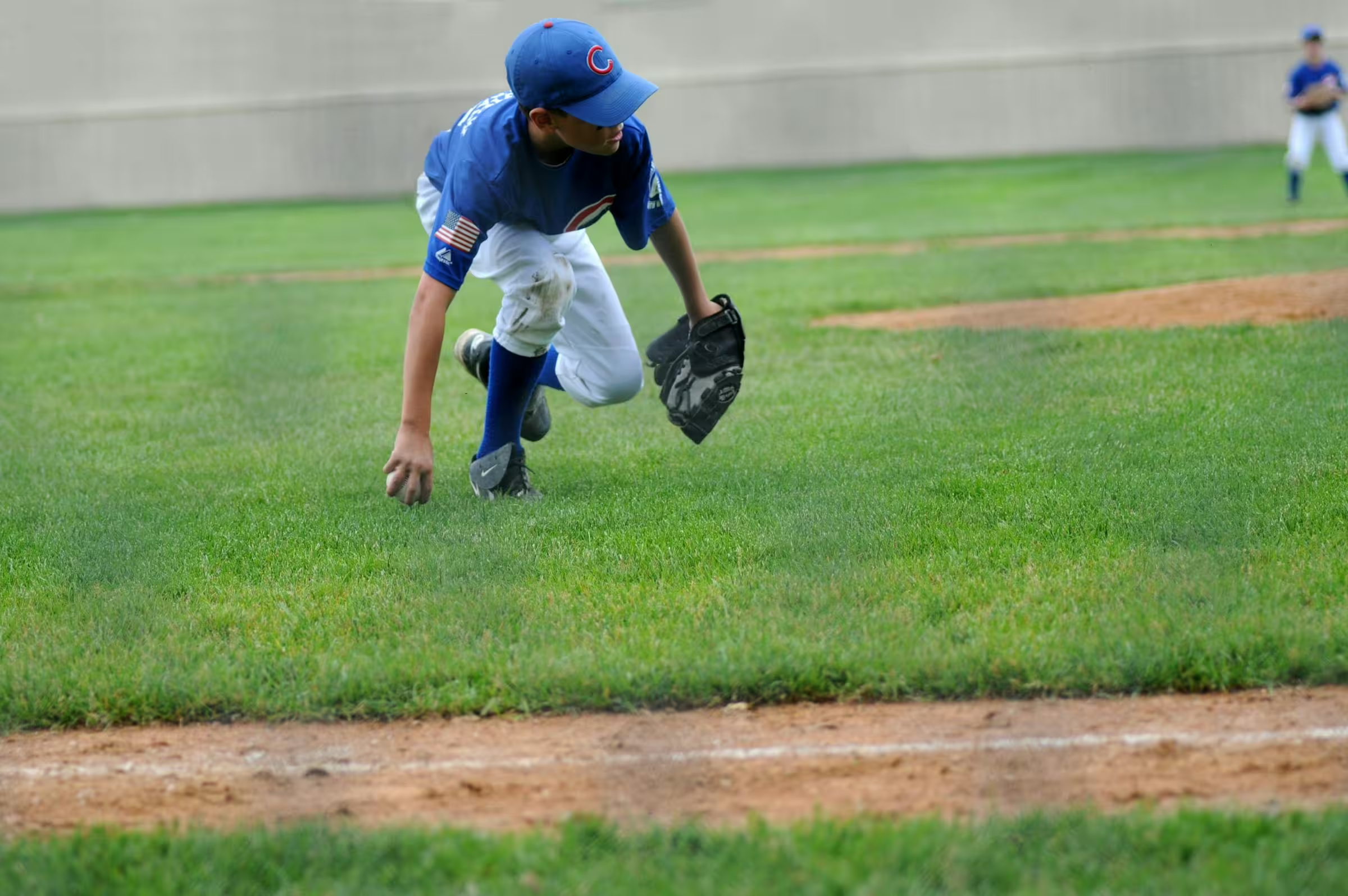


As parents, we want our children to succeed. Whether they do so academically, socially, or athletically, their success is, in many ways, a measure of how effective we are as parents; at least, that’s what many of us tell ourselves. Yet, just as we ought not correlate our child’s future successes to our own parenting prowess, we should not assume that the success of world class athletes comes from the advantages they had in their youth.
It’s true! Behind every well-trained, advantaged Olympic athlete is another who rose to their ranks from much more humble beginnings. What’s more is that many parents may have already seen an unassuming preview of their child’s eventual athletic achievement when looking out into the driveway to see them shooting free throws. These innocuous incidences of simple backyard play may well become the foundation for our child’s extraordinary achievements.
Believe it or not, a good portion of Olympic and/or professional athletes began their journey playing in the street outside their apartment before making their way into the elite training centers of their middle youth. In these places, they developed the skills, confidence, and passion that would lead them all the way to the Olympic games. And much of that was accomplished through repetition, imagination, and parental guidance.
In this article, we will discuss how homegrown backyard play has helped to mold some of the world’s greatest professional athletes.
Michael Phelps: Swimming Before Sunrise
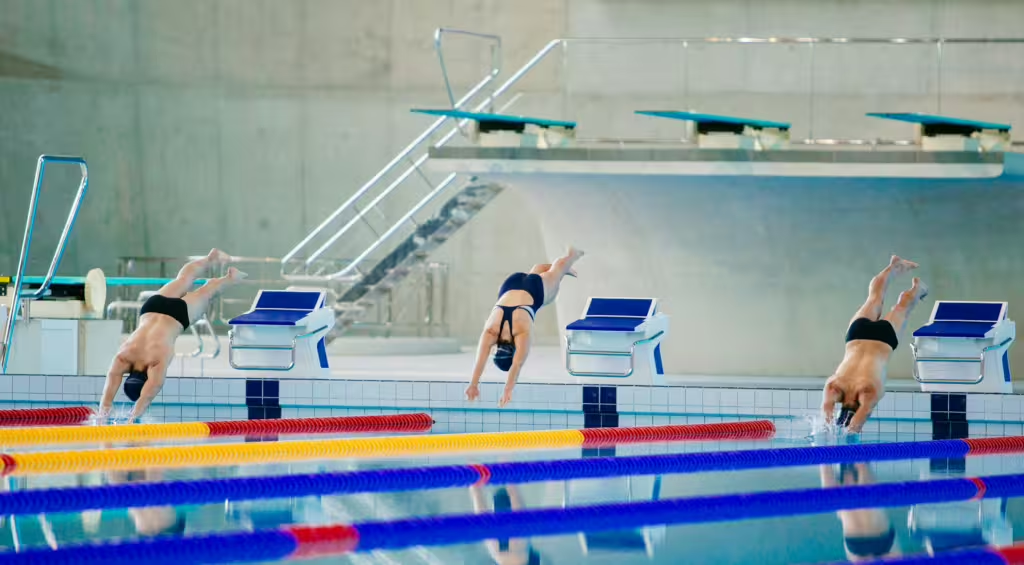
Before becoming the most decorated Olympian of all time, Michael Phelps was a tall and talented young swimmer from Baltimore, Maryland. As one might expect, he was a child possessed of big energy and an umistakeable love for the water.
Michael’s parents saw his potential early but though he trained with coaches, much of his early development came from simply swimming for swimming’s sake. He didn’t just have formal swim sessions but swam for fun. He also took the time to stretch, practice dryland drills, and study technique even from the comfort of his backyard. Throughout all this free play, however, his family were there, encouraging consistency and commitment from him, while putting in the time themselves to help make his dreams a reality.
For parents, Phelps’ story shows that elite performance isn’t built in one moment, but grows from daily habits and moments of fun, many of which can be practiced in one’s local community swimming pool.
Kevin Durant: Hours in the Driveway
NBA champ and Olympic gold medalist Kevin Durant once spent his evening shooting hoops in his neighborhood basketball court. Durant’s own family members have described countless hours spent practicing in neighborhood courts and home driveways. Yes, if there was a court or even a rim anywhere nearby, you could bet that he was going to take a few minutes to make that three-pointer.
It may seem like overkill, but all those extra shots mattered. Every single moment of practice adds up to mastery and it is well-known that repetition builds muscle memory. It also breeds confidence, both on the court and off. Backyard practice allowed Kevin Durant to experiment without pressure and refine his game. He could try new moves, fail without consequence, and build creativity that would eventually turn him into one of the game’s greatest ballers.
Allyson Felix: Sprinting in the Park
Olympic track star Allyson Felix did not begin her running career in a professional facility. No, like most children, she began running around with her friends in local parks or schoolyards, on high school tracks, or down country roads. Even from a young age, Allyson was all about the race. She’d race siblings and friends for fun, of course, but even that bit of playful competition helped her to develop her speed.
We now understand that even haphazard, unstructured running can improve a person’s coordination and build intrinsic motivation that will help them to keep going; not because they are told to, but because they enjoy it. Thus, encouraging kids to just run for the fun of it can be the catalyst for a promising Olympic track career.
Megan Rapinoe: Backyard Soccer Battles
Olympic soccer champion Megan Rapinoe played soccer in the yard with her twin sister and older siblings before she ever joined a national team. Those informal, childhood games weren’t just about having fun with her family, they help sharpened her competitiveness and versatility on the field. In the end, those games likely contributed to her quick decision-making skills and her confidence as a player and a person. In time, Rapinoe’s style became like second nature and that instinctual skill is often something that comes from childhood repetition of play.
Supporting Backyard Practice as a Parent
The point of all this is that, parents don not need to invest in expensive equipment or professional facilities for their young athletes; not right away. Small efforts and contrivances like cones, backyard nets, driveway basketball hoops, or even a piece of chalk to draw lines on the asphalt, can make a big impact and can allow your child the chance to just play the sport they love. Who knows, with some consistency and enjoyment, that happy child may end up becoming one of the greatest athletes in history; and all of it starts at home.
Balancing Passion and Pressure
We should be clear, no matter how much encouragement or opportunity a parent provides, not every child who practices in the backyard is going to become an Olympian or a professional athlete; and that’s perfectly okay.
Regardless of the end-results, backyard practice should, at all times, encourage creativity, be driven by the child’s own interest, and feel fun for them! This means not putting undue pressure on them and supporting their decisions. Thus, if a child asks to practice, support them. If they prefer free play without structure, remember that even that can be valuable in the long-run. The key is fostering a love of movement and athletics, in general.
The Bigger Lesson for Kids
Olympic stories inspire us because they show what dedication can achieve. But the deeper lesson for children isn’t about medals, it’s about ownership. When a child chooses to practice on their own and on their own terms, they develop discipline, learn to self-motivate, and build valuable resilience. In the end, such qualities will help them far beyond the limited deliniations of the sports field.
Cultured Athlete Says…
As you can see, the path to Olympic success is not just found in professional gymnasiums or stadium-level sports fields. The journey of a young athlete often begins in the most mundane of spaces; in the driveway, abandoned lot, or on a quiet suburban street. A fancy locale and Olympic-grade equipment isn’t usually what makes the difference between a gold medal winner and a wide-eyed hopeful. What really counts is the consistency, curiosity, and love for the game that defines a true Olympic athlete.
As parents, our role isn’t to create a champion but to cultivate an environment where passion, persistence, and perseverance are able to grow. All we can really do is encourage our kids to play and support their athletic journeys by celebrating effort, as well as success. Remember, as we have seen time and time again, the biggest Olympic dreams start right in our own backyard.
Discover more from CulturedAthlete
Subscribe to get the latest posts sent to your email.