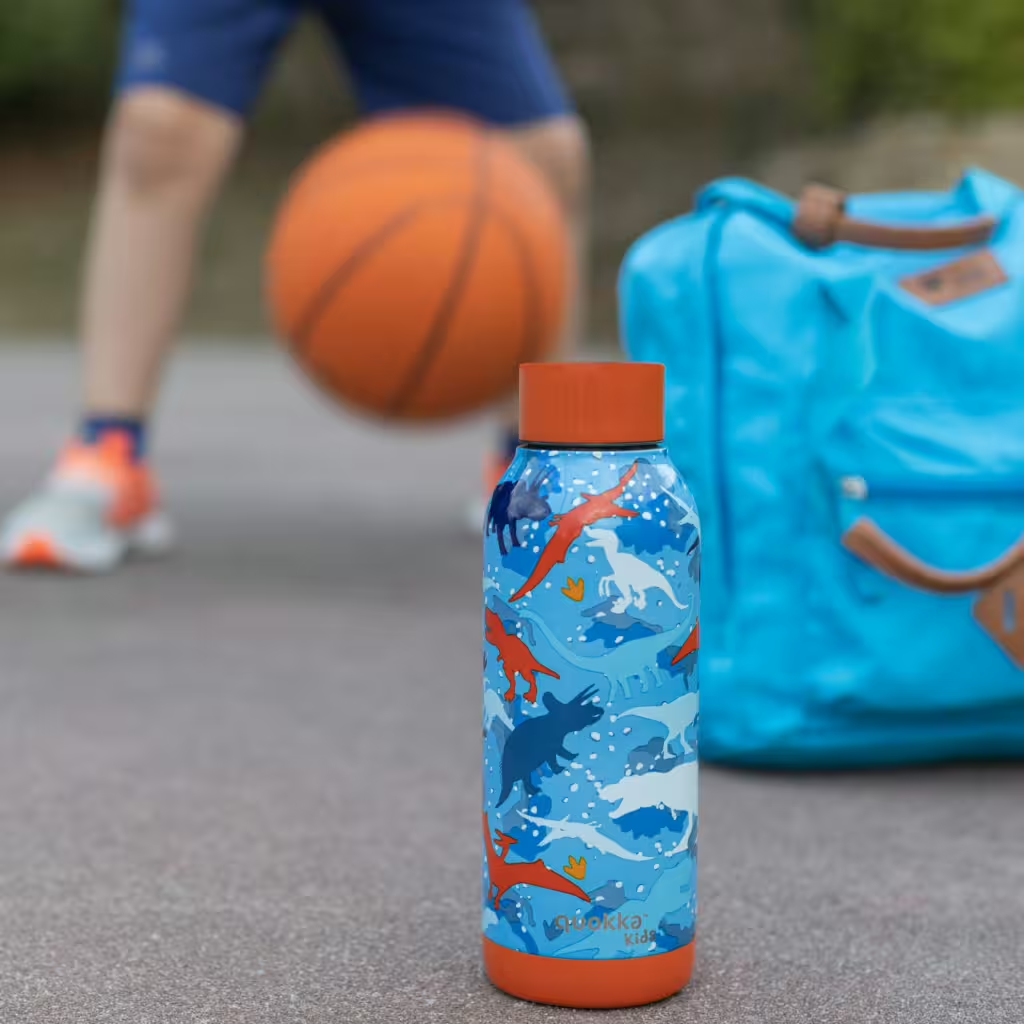

Basketball might be one of the most popular youth sports in the world, but that doesn’t mean that it’s easy. Nevertheless, it’s the game’s accessibility that makes it so beloved by kids of all ages. It’s a fast-paced game with easy-to-learn rules, and despite the skill level involved to play it at a high level, it can still be enjoyed by kids of varying degrees of ability.
Whether your child is looking to be the next NBA sports superstar or just wants to play the game in their driveway, there are certain skills that they’ll need to learn in order to play at least semi-competently. We should be clear before we begin, however. The early stages of basketball are less about winning championships or even scoring the most points, and should instead be focused on building fundamental skills, learning teamwork, and developing enough confidence to keep pace on the court.
In this article, we will take some time to go over the basics. That way, even if parents have zero experience with basketball, they can help their kids build a strong foundation in the sport.
Why Learning Fundamentals Matters
Before we dive into the fundamentals themselves, we should speak a bit about why fundamental skills are essential for the tutelage of young athletes. In basketball, learning the fundamentals will help kids to develop better coordination, balance, ball control, and communication skills. It will also allow them to build up better decision-making skills and lead the way towards more complex plays and more competitive levels of athletics.
Of course, these skills are not solely for the court, they translate well to other sports and physical activities, as well as other walks of life; specifically in terms of athletics. But how do we teach these fundamentals to them from the tip-off?
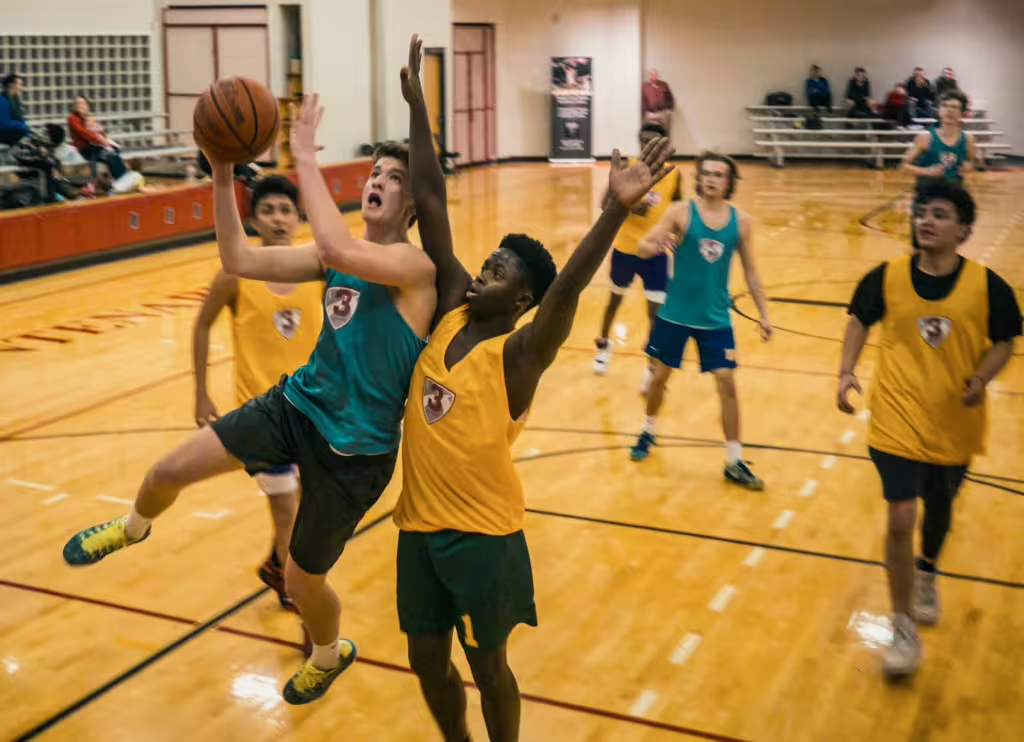
Dribbling: The First Essential Skill
We’ve talked about the importance of dribbling on Cultured Athlete before, so it should come as no surprise that we lead with this most important fundamental. This is why dribbling is usually the first basketball skill kids learn, even at the most basic levels. It is this, most meaningful skill, that allows players to move across the court while controlling the ball. Beginners should start by keeping the ball low and controlled, using their fingertips instead of their palm, and looking up rather than staring straight down at the ball in their hands.
Truth be told, the latter of those is a difficult habit for kids to break. Young players tend to instinctively look down while dribbling, thus limiting their ability to see teammates and defenders. Keeping their eyes up during practice can slowly but surely break them of that habit and give them better ball control.
Parents can help teach proper dribbling fundamentals at home by encouraging children to dribble as they walk, dribble in place, and alternate between their right and left hands.
Passing: Learning to Share the Ball
Passing is the next most basic skill that young basketball players need to learn. After all, basketball is a team sport, and passing connects the singular players to all the members of their team. Learning how and when to pass helps children understand teamwork and decision-making. The most basic passes include the chest bass, where players push the ball from their chest toward a teammate, the bounce pass, where the ball is bounced once on it’s way to another player, and the overhead pass, which is often used to get the ball across the court.
Shooting: Building Confidence and Technique
Once your kid has the ball and has learned to move with the ball, the next step is shooting towards the hoop. Shooting (or dunking if you’re Michael Jordan, LeBron James, and others) is arguably the most exciting part of basketball. And even if you’re just scoring a basket as normal, the achievement can be be thrilling for young players.
In order to accomplish this, however, a player needs to develop a good shooting technique. The most knowledgeable experts in the field agree that key shooting fundamentals. Players should bend the knees, keep their elbows aligned with the basket, use their shooting hand for control, and follow through with the wrist. Now, this isn’t always easy to do as you’re racing up and down the court trying to navigate around teammates, opponents, and gravity itself, but knowing those deliberate forms to take can go a long way towards sinking more baskets in the long-run.
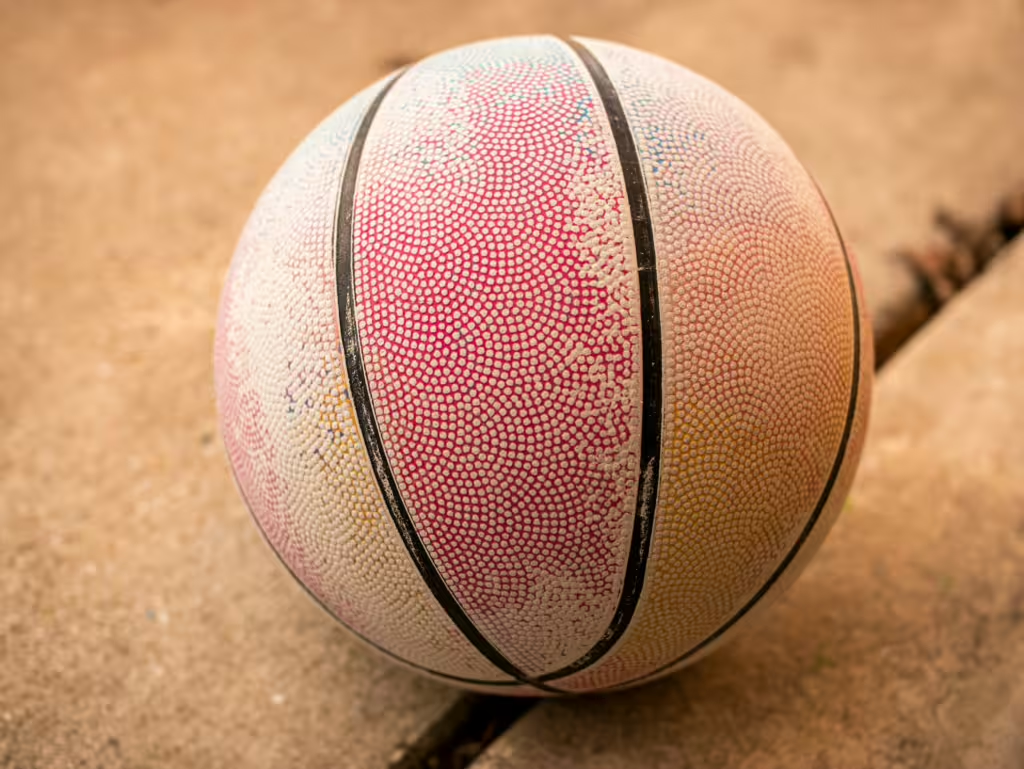
Defense: Learning to Guard the Basket
The best offense often includes a similarly effective set of defensive skills. Being able to defend the ball and your hoop is nearly as important as scoring points. Players need to learn the basics in terms of stance, guarding, and active defending. The former involves staing bent with their knees low and their arms read to react in the space of a second, while the latter involves proper positioning, blocking movements, and keeping an adequate distance between one’s teammates, one’s opponents, and either of the hoops.
Footwork and Movement
Good footwork, proper balance, and coordination are all intrinsic to the game of basketball. Players move efficiently while maintaining their balance and so it is essential that they learn to pivot, jump, and change direction in the blink of an eye. Coaches often encourage players to practice these movements through burpees and other such drills, so that their agility and stamina improves. Doing this whilst dribbling and learning how to avoid fouls will help prevent game violations once the buzzer sounds.
Understanding Teamwork
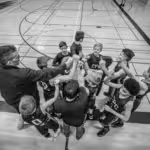
Basketball is a team sport and being able to communicate with teammates, pass and share the ball, and support one another are fundamental to finding success on the court. Social and emotional skills are just as important as physical development, and all of those begin with proper communication. Parents can even reinforce those fundamentals by practicing positive reinforcement and showing proper communicative examples.
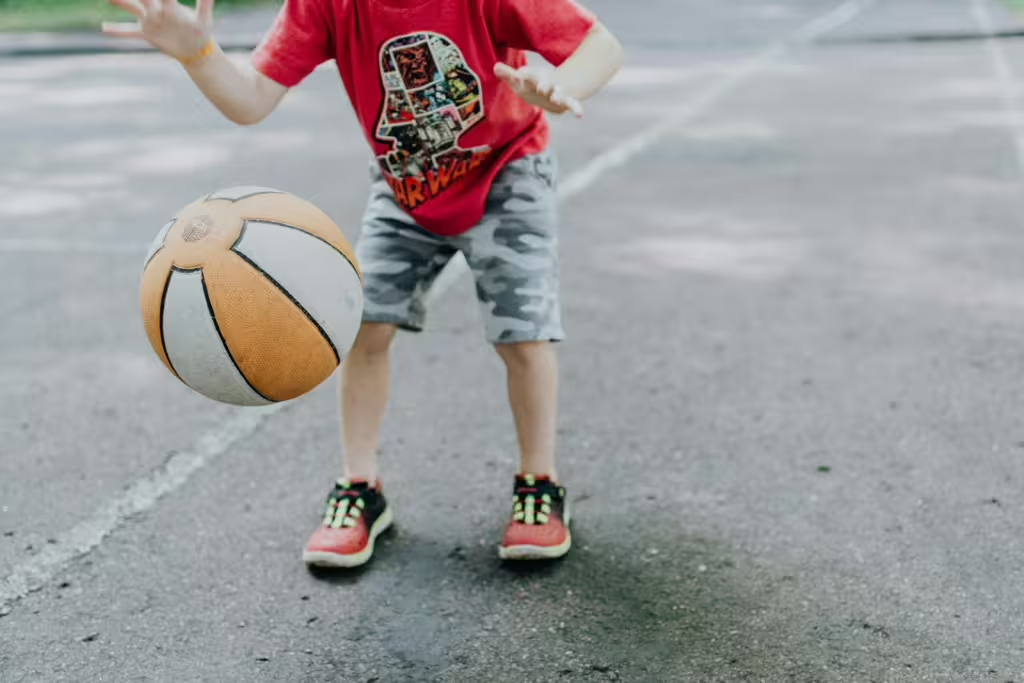
Practicing at Home
Your child’s fundamental skills will improve much faster if you take time to help them practice even when they are at home. The best part is, many basketball skills can be practiced almost anywhere; even if you don’t have an official basketball hoop in your driveway. Children can practice dribbling drills, shooting, passing, and agility training in their own front or backyard. A few short, fun sessions after school will help keep them moving, practicing valuable repetition of kinestetic skills, and might even give parents a little exercise too!
Cultured Athlete Says…
As you can see, learning the fundamentals of basketball will help your child build up the physical skills they need to succeed while enabling them to develop confidence, learn teamwork, and instill valuable life lessons about communication and perseverance. Youth basketball coaches generally already know how to teach these basics, but now you as parents understand what to look out for when trying to get your child ready for the game. Remember, our goal is to give them the tools they need to excel, not push too much on them in terms of expectation.
Discover more from CulturedAthlete
Subscribe to get the latest posts sent to your email.