
Even today, in an age of or gender enlightenment, the stereotypical notions that certain sports are just “for boys” or just “for girls” still persists. You might even be guilty of these assumptions yourself. Think about it for a minute. Think about football, baseball, or wresting; who do you assume is playing? If your first notion was “boys” then you’ve been just as brainwashed as the rest of us. Don’t worry though, we’re here to help disavow you of such ill-conceived notions and truly enlighten you to all the athletic possibilities available to children today!
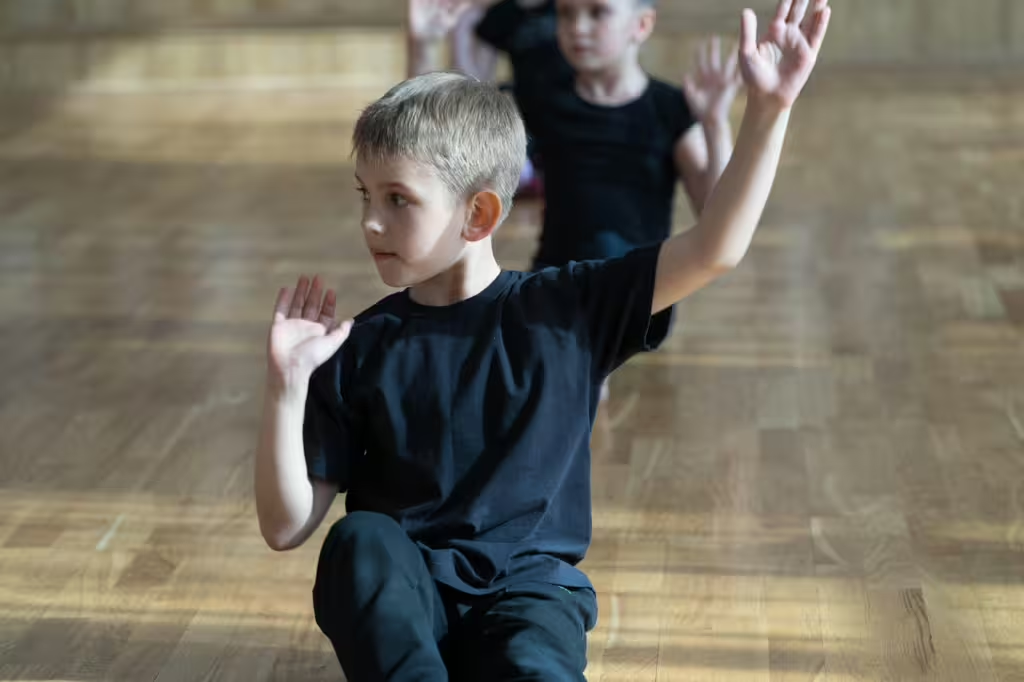
The good news is that, despite some intransigent holdouts, more and more families are beginning to recognize a couple “girls only” sports offer offer tremendous physical, mental, and emotional benefits for children of all genders. Dance and gymnastics are disciplines that help build strength, confidence, and athletic excellence in boys as well as girls.
In this article, our goal is to defy the outdated stereotypes that have governed so much of youth sports for the past few hundred years and help parents to open the door to new opportunities for their children.
Where the Stereotype Comes From
The textbook definition of a stereotype reads as: a widely held but fixed and oversimplified image or idea of a particular type of person or thing. This is why we consider the widespread and erroneous idea that dance and gymnastics are “not for boys” to be nothing but a stereotype; one that has neither aged with the times nor modern thought processes. It should also go without saying that, while this belief is largely cultural and intrinsically misogynistic, it is far from the truth.
What the shortsighted fail to realize is that both dance and gymnastics require varying degrees of physical strength, flexibility, balance, coordination, and discipline; the very same things that are required in male-dominated sports.
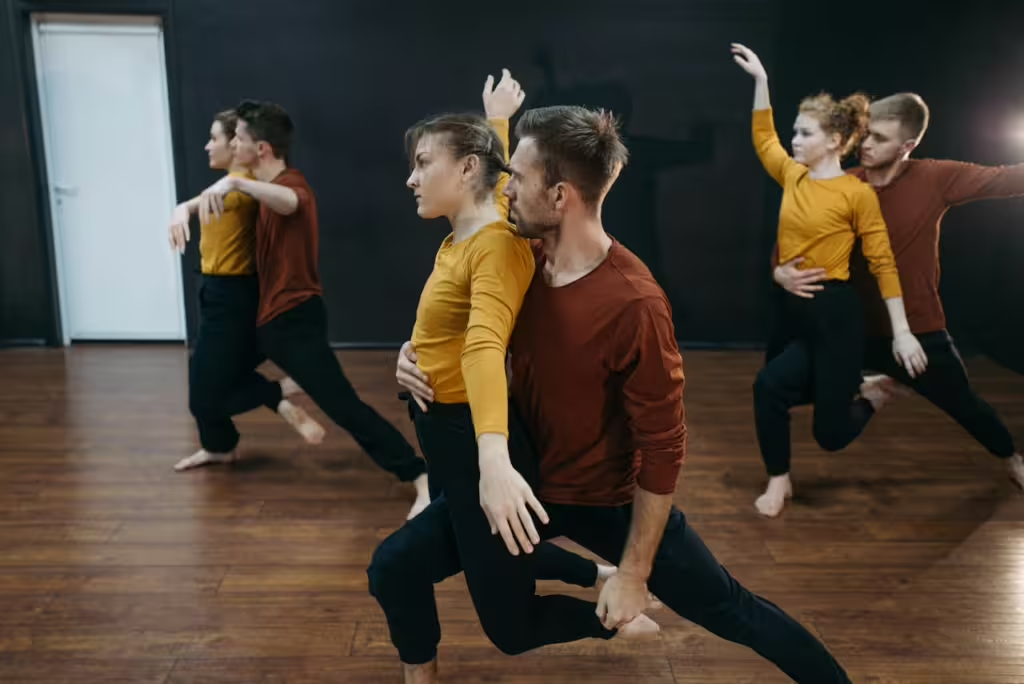
Moreover, male dancers and gymnasts have historically been celebrated at the highest levels of competition; from legendary dance companies to Olympic-level contests of skill. Think about the few males you may have seen in ballet recitals or even ballroom dancing competitions like Dancing with the Stars. Such dance companies rely on their male contingent of dancers for lifts and to demonstrate powerful movements or masculine energy.
The fallacies that once led to those stereotype persist mainly because of social expectations and not for any actual, factual reasons.
The Athletic Benefits of Dance and Gymnastics
Few people realize how physically demanding activities like dance and gymnastics can be.
Strength and Power
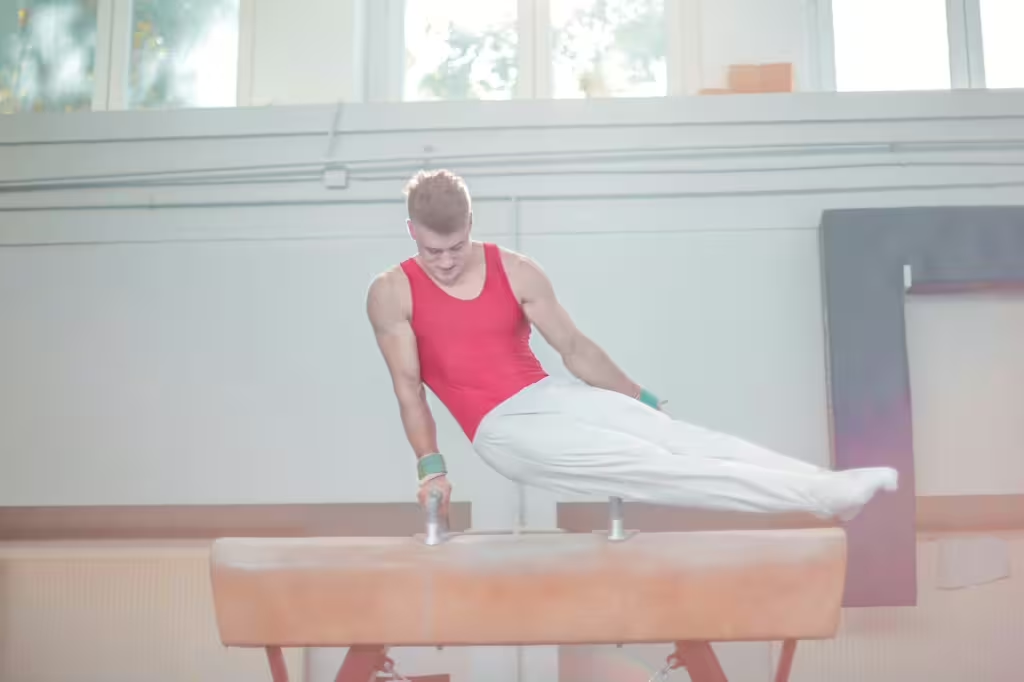
Gymnastics, in particular, builds incredible upper body and core strength. Athletes practicing movement using the rings, vaulting into the air, or performing floor routines have to build up explosive power and learn precise body control. Dance is similar, especially when it pertains to dances that require jumps, lifts, or other types of sustained movement. This strength is mostly in the legs and core, but it is no less impressive.
Flexibility and Mobility
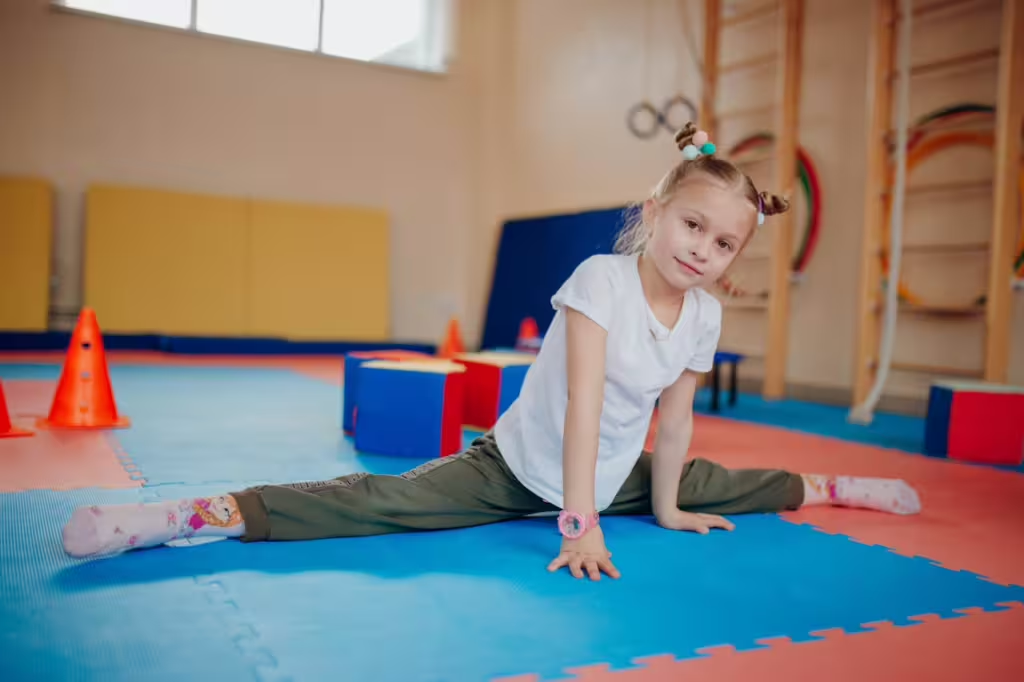
Both sports require uncommon amounts of flexibility, not only to perform but to help reduce the risk of injury when doing so many acrobatic movements.
Coordination and Balance
Learning routines, sequences, and movements improves an athletes awareness of their own body. What’s more, for kids who want to play basketball, soccer, football, or who are involved in martial arts, these skills are eminently translatable.
Endurance
Dancing for hours at a clip is hard! Athletes who spend long practices doing continuous movement build up their cardiovascular fitness and stamina along the way. The same is true for gymnastics. Moreover, many other sports have had their athletes take time to train in dance or gymnastics in order to improve their stamina, coordination, memory, and overall performance.
Breaking Social Barriers Early
Even if we, ourselves are sometimes a little guilty of stereotypical thinking, children are not so close-minded. Kids are naturally open to exploring new interests and in truth, it is often societal messaging, from peers, media, or even adults, that keeps them from wanting to engage with “uncommon” sports.
The truth is, when young boys are encouraged to pursue what they enjoy, regardless of stereotypes, they learn that their interests need not be defined by gender norms. They learn that it’s ok to be different and that self-confidence can come from being their authentic self. And yes, we as parents play a key role in shaping this mindset, so it’s up to us to be better about it. We can accomplish this by looking to our own preconceived notions and working to challenge them for the better.
Choosing the Right Program
As in most youth sports, try and remember that the environment matters nearly as much as the activity itself. When selecting a program, look for coaches that support all participants equally, regardless of gender. This means seeking out programs with an inclusive, welcoming culture. Remember, dance and gymnastics are sports, regardless of what the naysayers think, so look for programs that can be both recreational and provide the opportunity for athletic advancement.
The best way to do this is to visit a class, meet the instructors, and observe how the kids interact. Check if the class has male and female participants and if both are treated as equals. If everyone is having fun, it is usually an indication of a good fit.
Expanding Opportunities for the Future
The Internet and the widespread dissemination of the Information Age has raised people’s awareness about the benefits of dance and gymnastics. As this awareness becomes more and more widespread, so too are the opportunities for boys to learn dance or gymnastics, should they so choose.
Recreational programs, school PE classes, and competitive teams are all starting points that lead to true professional, “major league,” so to speak, pathways for young men all over the world. And the options continue to expand from there.
Final Thoughts
As you can see, dance and gymnastics are not just for any one gender. These are powerful, athletic, and rewarding pursuits that offer tremendous benefits for children of all kinds. Kids who get the chance to engage with them are able to build physical strength and agility, balance, coordination, and self confidence. They also learn to express themselves, to feel musicality, and creativity.
In the end, breaking stereotypes is not just about changing perceptions; it’s about giving kids from every walk of life the freedom to explore their interests without limitation and without fear of judgement. As parents, our goal is simple: to find what our child loves to do and support them in doing it, no matter what. So long as it isn’t dangerous to them or others, what does it matter which sport they play? And as we continue to encourage participation in these sports, our hope is that we help to create a more inclusive sports culture for the future.
Discover more from CulturedAthlete
Subscribe to get the latest posts sent to your email.