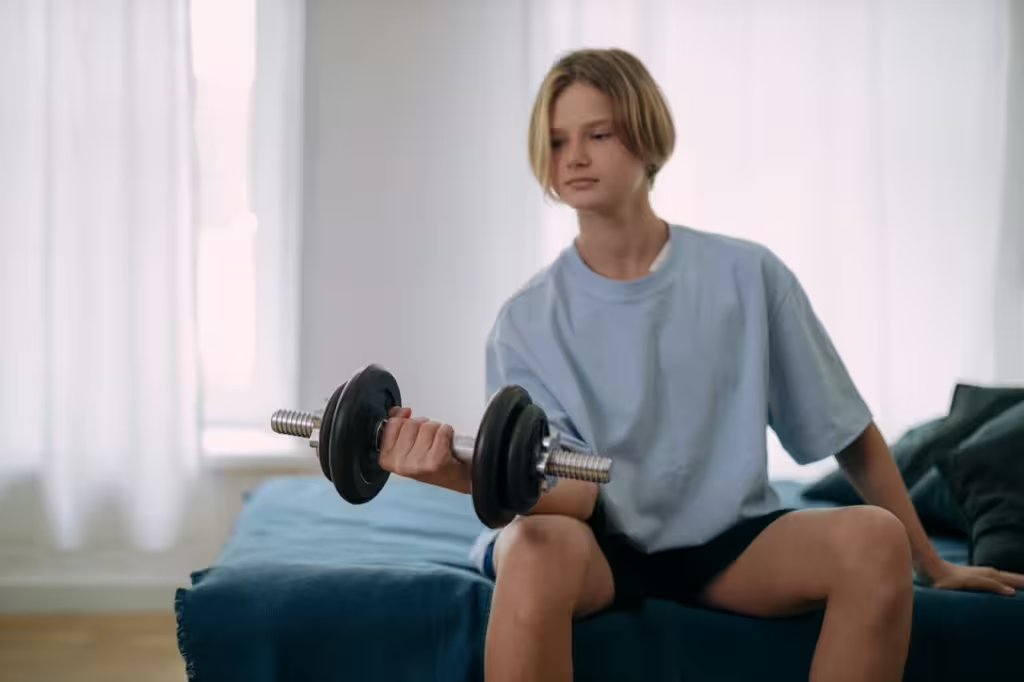

Did you ever look at your six-year-old playing peewee hockey and think, “man, that kid could stand to put on a few more pounds of muscle…” If you haven’t, don’t worry, it’s not exactly a common notion; even for parents that might be a little too invested in their child’s burgeoning sports experience. Indeed, many parents might find the idea of strength training for children unusual, if not even a bit untoward.
It’s easy to see why. Not only does child strength training raises immediate questions about safety or growth problems, it conjures up the same sort of disquieting thoughts many of us get when think about children in peewee beauty pageants. Then there’s the question of whether or not gaining muscle through strength training is strictly necessary for a child’s athletic performance or some sort of narcissistic projection of one’s own desire to “get fit.”
The point is, all of these concerns are understandable and important. The good news is that when it is done properly, strength training can be both safe and highly beneficial for certain kids, not just in terms of augmenting physical strength but in coordination and body control, as well. In this article, we will discuss this concept, its safety concerns, benefits, and how it should be implemented within certain age groups.
What Strength Training Means for Kids
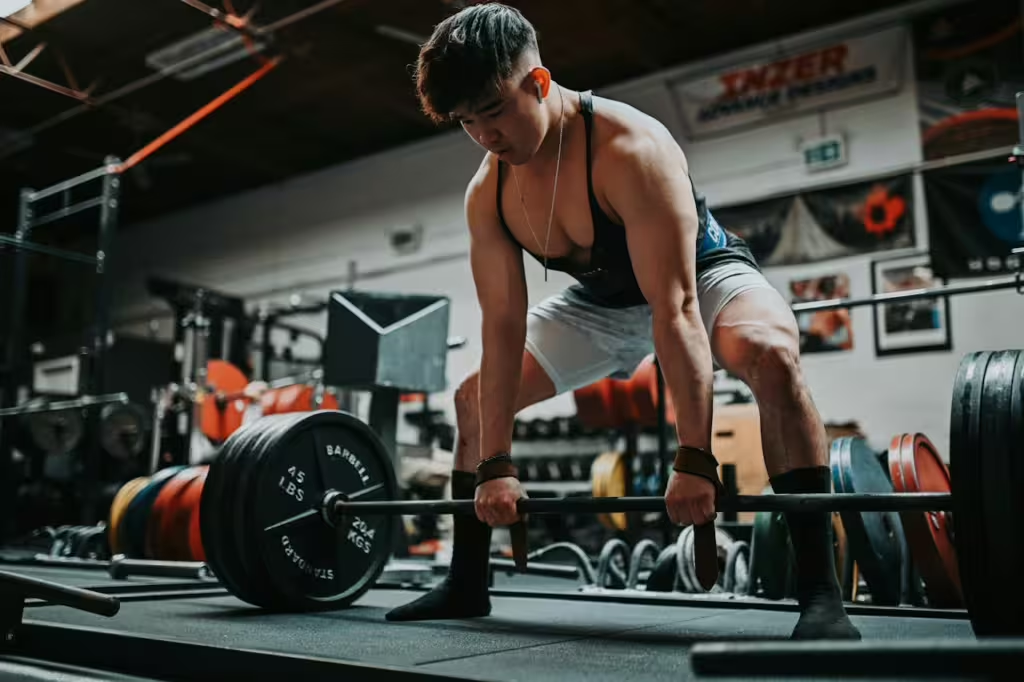
When adults think of strength training, we think of gains. Images of meatheaded muscleheads weightlifting in a gym, pumping iron, all of that. For children, strength training looks very different. When it comes to younger kids, the focus is on balance, coordination, bodyweight movements, and practicing controlled safe motions. Most of the time spent strength training at these tender ages is focused on the child learning proper techniques.
Young kids are not lifting weights, they’re doing squats, planks, push-ups (usually modified), or climbing. And all of these are practiced over and over until they get the proper form correct. The idea is to build a foundation of strength and one of expertise, thus preparing them for more difficult and complicated strength exercises when they get older. Doing these easy activities also avouids placing any unnecessary stress on their little bodies.
Benefits of Strength Training for Young Athletes
When done properly, under the right supervision, and using the right age benchmarks to determine age-appropriate exercises, strength training offers a wide range of benefits for children at many different stages of development.
Improved Coordination
You may not realize it right away, but strength exercises actually help kids learn how to control their bodies better. Practicing the proper movements for the aforementioned sit-ups, push-ups, planks, etc., helps improves a child’s movement patterns; some of which are then utilized in sports like soccer, basketball, and gymnastics.
Injury Prevention
Stronger muscles and better movement mechanics can go a long way in reducing the risk of injury during sports and during physical play.
Increased Confidence
As children develop strength and master new movements, they often feel more confident in themselves and in their abilities. Confidence is often the key to success in youth sports and building it up early can help them excel where more timid children might need more time to adjust.
Better Performance in Sports
If you’re not physically fit and physically strong, you may not do as well in youth sports as your more physically-able teammate. That’s not to say that sports can be played by people of varying physical ability, but the truth is, better strength supports speed, balance, and endurance; and all of these are important for athletic performance.
Healthy Habits
Interestingly enough, there are some schools of thought that believe early strength training can help children develop a more positive association with physical activity. Even something as simple as yoga or a daily workout can be brought into their routine; and kids thrive with positive, uplifting routines.
Addressing Common Myths
There are several myths about strength training for kids that can cause concern for parents. We would like to demystify them by addressing them directly.
“It will stunt growth”
Research shows that properly supervised strength training does not necessarily affect growth in a negative way. As we said earlier, it might even support healthy physical and mental development.
“Kids should only do cardio”
While running and aerobic activity are important, strength is just as valuable to a growing kid; especially an athletically-inclined one. A balanced approach to physical fitness will always be preferable to a narrow or myopic one.
“Weightlifting is dangerous for children”
As with any heavy equipment, one should never leave their kid alone lifting weights. Yes, heavy, unsupervised lifting can be risky for young kids but that’s why we talk about age-appropriate strength training. Any athletic training, when focused on technique, is much safer than one that is not.
Strength Training by Age Group
Children’s bodies develop at different rates, which is why experts recommend that strength training should be tailored to each stage of the child’s growth.
Ages 5–7: Learning Through Play
At this stage, strength training should feel like play rather than structured exercise. Keep the focus on jumping, climbing, crawling, and basic bodyweight movements. The goal here is to develop coordination and ease of movement.
Ages 8–10: Building Foundations
At this age, children can begin learning simple strength exercises with guidance. Basic squats and push-ups can be incorporated as can light resistance training, using resistance bands. The goal is to teach proper form and body control. Sessions ought to be short and engaging, but not too over strenuous.
Ages 11–13: Developing Technique
As children grow, they can handle more structured strength training. Controlled bodyweight exercises are often added at this stage, as are light free weights; with proper supervision of course. The trick is to keep the routines balanced to target different muscle groups (leg day, arm day, etc.) Either way, focusing on technique is still the name of the game.

Ages 14 and Up: Gradual Progression
Teenagers are obviously physically stronger and by now, far more coordinated, so they can begin more advanced training. This depends on their maturity and experience, of course, but in general they can up the resistance and do more structured weight lifts. Safety, supervision, and emphasis on proper form is still imperative here, so keep your eye on them as they work out. Spot them even, if they’ve gotten to that stage of weight training.
Signs of Healthy Progress
Not sure if all that work is making progress? Here are a few things to look for that may indicate your kid’s strength training is working as it’s supposed to. Your child may show improved coordination, batter posture, and better endurance when at play. They may also show a marked confidence in the way they move and how well they perform in sports activities. Don’t rush things though. Try and remember that progress should be gradual and consistent.
What to Avoid
To ensure safety, there are a few important guidelines that parents are going to want to follow and a few things to avoid. Don’t have your young kid lift heavy weights of any measure without proper supervision. That last one should be a no-brainer, but it’s worth mentioning. Avoid any exercises that strain joints or use poor form and avoid overtraining or excessive repetition. Your kid may even let you know if a joint or muscle is hurting. That’s the signal to rest up and switch. Don’t ever pressure your young child to “push through” pain. Children should feel challenged by what they are doing, but never overwhelmed.
Cultured Athlete Says…
As you can see, when it is implemented properly and at the proper age, strength training can help kids to develop better confidence, coordination, and, as it the actual purpose, improved physical strength. Ultimately, this type of safety-focused strength training is not about building muscle size or pushing limits, it it’s about aiding young athletes in ways that will help them succeed through many sports modalities.
So long as your child is working out under proper guidance, while keeping focus on safety and technique, strength training can become an important piece of their athletic and personal development. As with all athletic pursuits, however, parents should always ensure that the training itself remains fun for the child. We want to keep them engaged with physical fitness, not consider it to be a chore, and strength training is no different.
When approached thoughtfully, strength training is not just safe; it’s one of the best ways to support their physical, mental, and emotional growth.
Discover more from CulturedAthlete
Subscribe to get the latest posts sent to your email.