
Parents often wonder, which should they focus on in terms of getting their kids ready for youth sports: strength or conditioning training? Not long ago, we discussed how age-appropriate strength training could work if parents learn the proper ways to teach it to young children. Today, we will discuss how strength training and conditioning differ and how each serves a different function in terms of athletic development.
At the same time, we will discuss how these types of training can be used for young athletes at multiple stages of development. We will also discuss how, when used in tandem, this training can positively impact a child’s growth in sports.
What Is Strength?
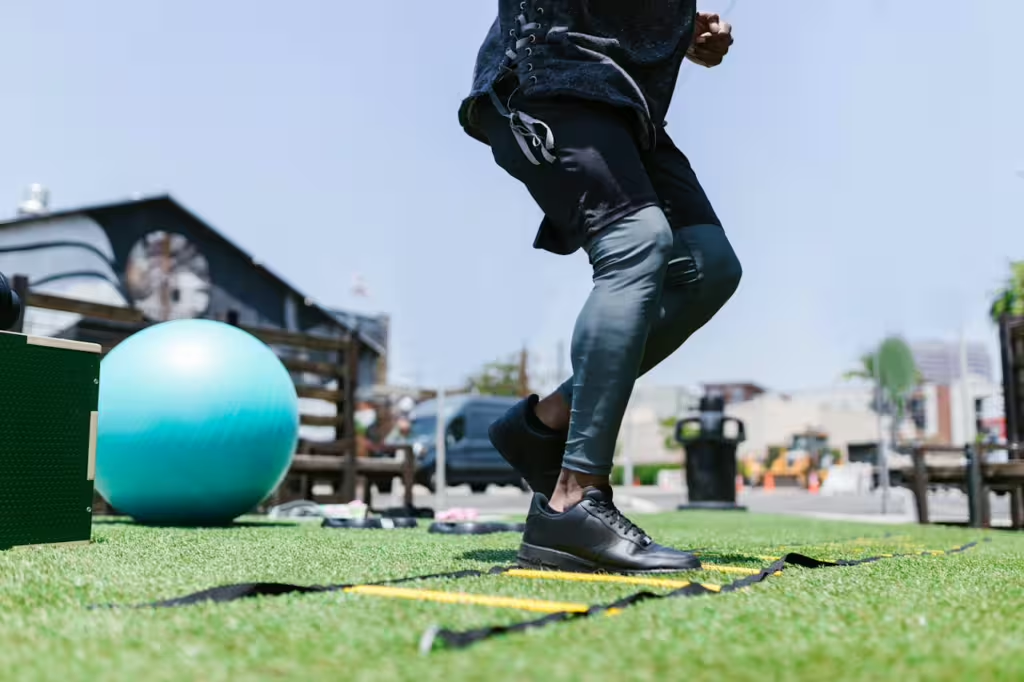
Let’s be frank, the term strength is pretty broad, especially as it pertains to youth sports. What is strength? Is it physical? Mental? Is it muscular? These are all valid questions, but for the purposes of “strength training” we shall say that it refers to the ability of a person’s muscles to produce force.
In simple terms, when referring to your child, we’re talking about how much power that can generate when they push, pull, lift, or jump. We should clarify, of course. Kids, in general, aren’t lifting heavy weights to build muscles like they might do when they get started playing middle school football. Nevertheless, the strength they build at elementary levels and even beforehand, is about developing control over their own bodies.
For example, if a child can hold a plank position, perform a complete squat, push themselves off the ground to jump, or even just climb on playground equipment, then they have a foundational level of strength that they can use for nearly every movement needed for youth sports.
What Is Conditioning?
Now that we know what strength is, we can move on to conditioning. This term refers to the body’s ability to sustain physical activity over time. Basically, we’re talking about endurance or stamina. At the same time, the term conditioning also references an individual’s cardiovascular fitness and their ability to recover. In essence, proper conditioning for kids means they can keep going during practices and games without tiring themselves out.
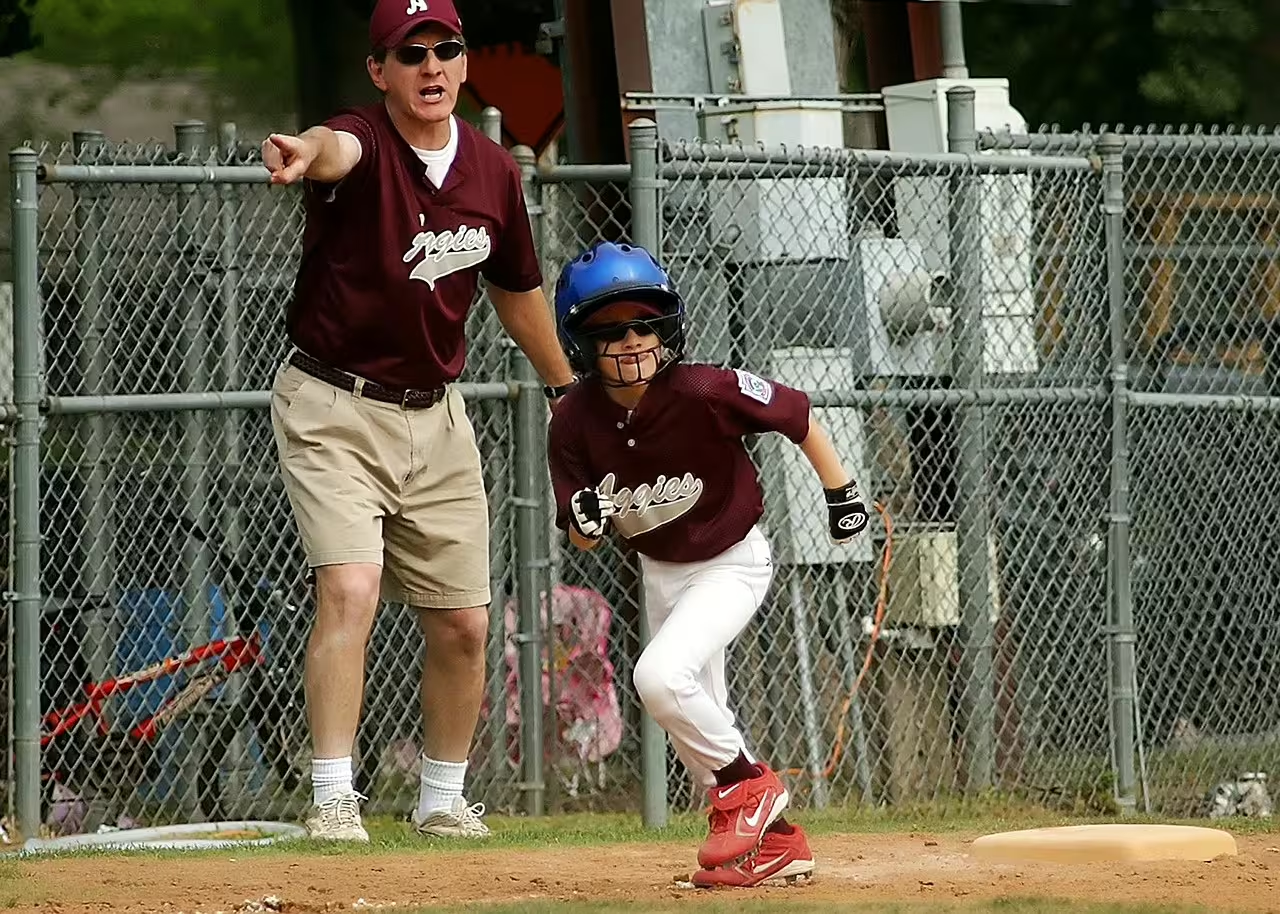
Kids that can run consistently during a soccer game, complete multiple practice drills, or stay active through an entire baseball game (which can be quite long, frankly) then they have good conditioning. Additionally, of they can recover quickly between bursts of activity and perform consistently, then they are well-conditioned in terms of endurance.
The Key Difference
So what’s the difference between strength and conditioning? Well, the simplest way to understand the difference is to consider the following:
- Strength = how much force the body can produce
- Conditioning = how long the body can perform activity
Basically, strength is about power and conditioning is about endurance. Both are important, but in terms of how they enhance a child’s athletic performance, they serve very different purposes.
Why Kids Need Both
That said, when it comes to youth sports, kids need both strength and conditioning in order to perform at their best. These concepts work together and so, if one is slightly off, their whole performance will be affected.
For instance, if a child has strong muscles but struggles to keep up during a long game, they won’t be able to play at the same level as their more balanced peers. On the other hand, even a good with endurance may tire quickly if they lack the strength to perform certain movements during the course of the game.
When used in concert, strength and conditioning enable young athletes to move more efficiently and reduce their risk of injury. They also help kids to improve their performance and build the confidence they need to meet the rigorous demands of their chosen sport.
Strength Development by Age
We mentioned it briefly in the last article, but strength training for kids should always be age-appropriate if it is to be safe.
Younger Children (Ages 5–8)
Training should focus on bodyweight movements, basic coordination, and play-based activities. Running, jumping, and climbing all work in this way.
Middle Childhood (Ages 9–12)
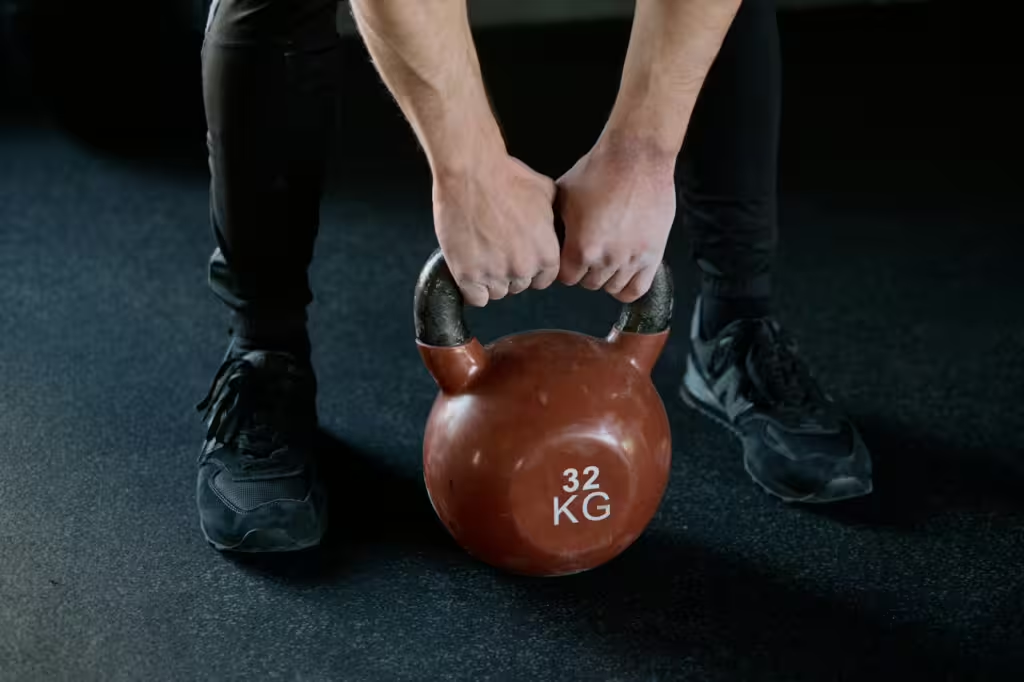
At this age, kids can try light resistance training and structured bodyweight exercises. Proper technique is more of a focus here and kids can do squats, push-ups, and planks to learn the best ways to do so.
Teens (Ages 13+)
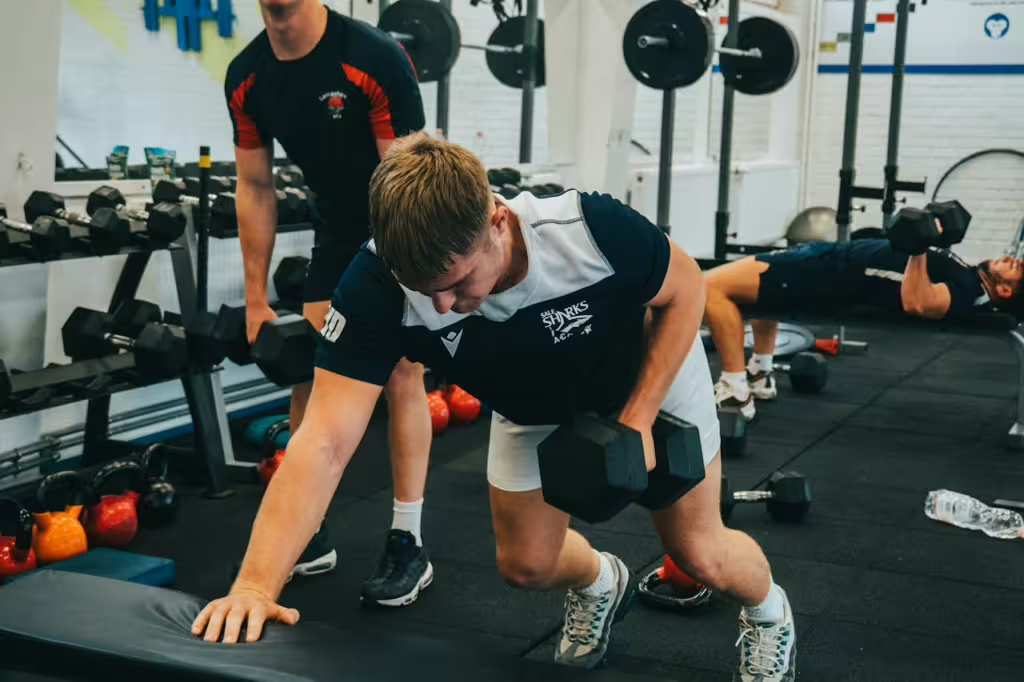
By the time their teens, athletes have usually moved to supervised weight training and more structured routines. Most strength training at this stage involves gradual increases in resistance and weight. At this and every stage, remember that form and safety always matter more than intensity.
Conditioning Development by Age
Interestingly enough, conditioning also evolves as children grow.
Younger Children (Ages 5–8)
At this stage, parents should focus on games that involve movement like running, such as tag, relay races, or obstacle courses. Basically anything that expends short bursts of energy should work here.
Middle Childhood (Ages 9–12)
As kids age up, they can begin engaging in longer activities as well as basic endurance exercises. Jogging and long days of continuous sports play are a great way to improve conditioning and stamina.
Teens (Ages 13+)
Once a child has become a teen, they usually begin endurance training in earnest. They will likely have sport-specific conditioning during practice and may even begin interval training. As with strength training, conditioning needs to be balanced and kids should not be pushed to the point of fatigue or burnout.
How Strength and Conditioning Support the Whole Athlete
Strength and conditioning are not separate; they support each other. If a kid has stronger muscles, they can move more efficiently, use less energy during activity, and maintain proper form, even when they are tired. Meanwhile, kids with better endurance can practice their essential skills for longer, complete more repetitions, and recover faster between periods of play. Thus, these concepts feel like a sort of yin and yang, two balancing forces that make for a complete whole.
Signs of Healthy Development
Parents might be wondering how they can tell that their child is developing strength and conditioning appropriately. There are signs, of course. Children that show improved coordination, better stamina or endurance throughout games, increased signs of energy, and most importantly of all, confidence, are on the right path. Remember though, Rome wasn’t built in a day. The best progress should be gradual and consistent.
Cultured Athlete Says…
As you can see, though strength and conditioning are both essential components of youth athletic development, they differ in their definitions and in the way they are trained. Where the former supports physicality and force, the second is about endurance and recovery. Nevertheless, their differences also mean that they can be used in tandem to aid in a child’s athletic development.
And really, at the end of the day, the goal isn’t to build stronger or faster kids; it’s to help them feel capable, confident, and excited about movement. It is also about safety and giving them the tools to play at their best whilst maintaining the control they need to prevent accidental injury.
Discover more from CulturedAthlete
Subscribe to get the latest posts sent to your email.