
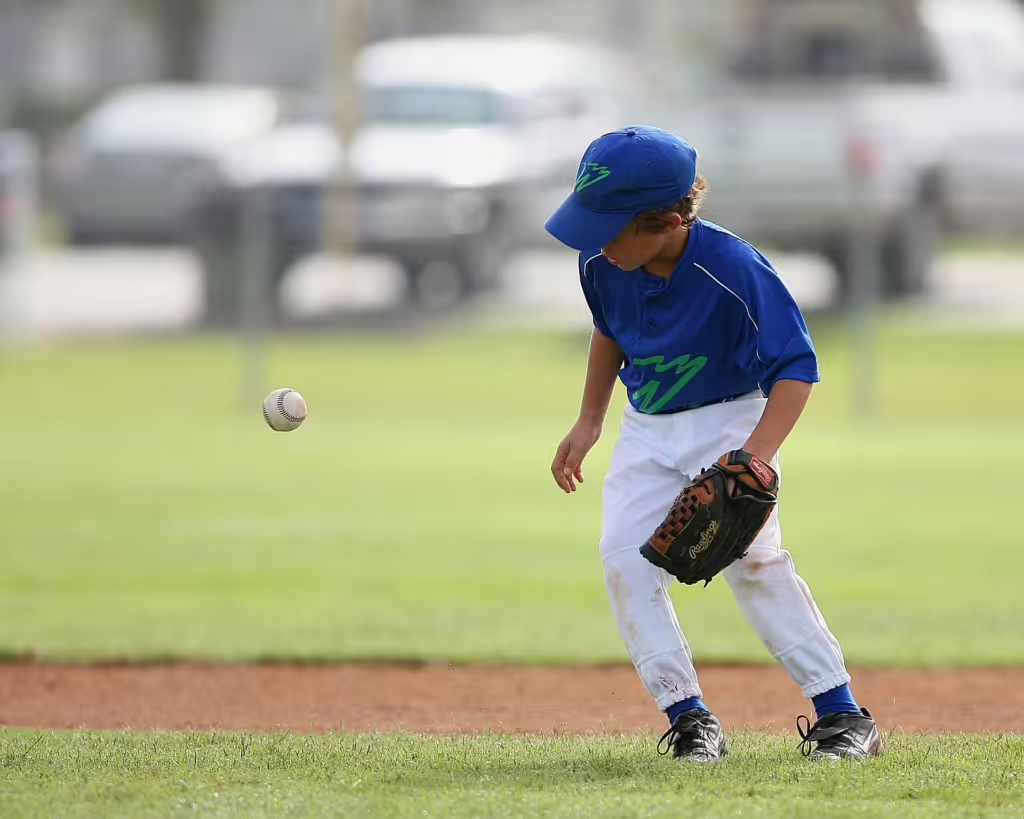
For many kids, T-ball is their first foray into organized sports. They may have watched baseball on television or played it casually in the backyard, but when it comes to an official version of the sport, T-ball is essentially level one. To say that children who step out onto that baseball diamond are wholly unprepared for what awaits them, would be an understatement. Youth sports like T-ball are chaotic messes, kids chase balls in the wrong direction, forget which base to run to, and sometimes stop mid-play to stare at a bumblebee in the grass.
The thing is, what seems like chaos is kind of by design. Meaning, this uncertainty in terms of rules and actions is exactly how it should be. At it’s core, T-ball isn’t about competition or even about skill advancement, its about introducing kids to a sport in a way that enriches them.
In this article, we talk about the T-ball basics and why this level of baseball is perfect for building confidence, coordination, and a foundational love of baseball in young children. At the same time, we will touch upon how parents can help to make this stage and experience that much more meaningful.
What Is T-Ball?
As we said earlier, T-ball is a beginner version of baseball. This sport is designed for young children, those aged 4 through 7. For all intents and purposes, the game is identical to baseball. Kids hit the ball, run the bases, field, and throw. The only thing they don’t have is pitching.
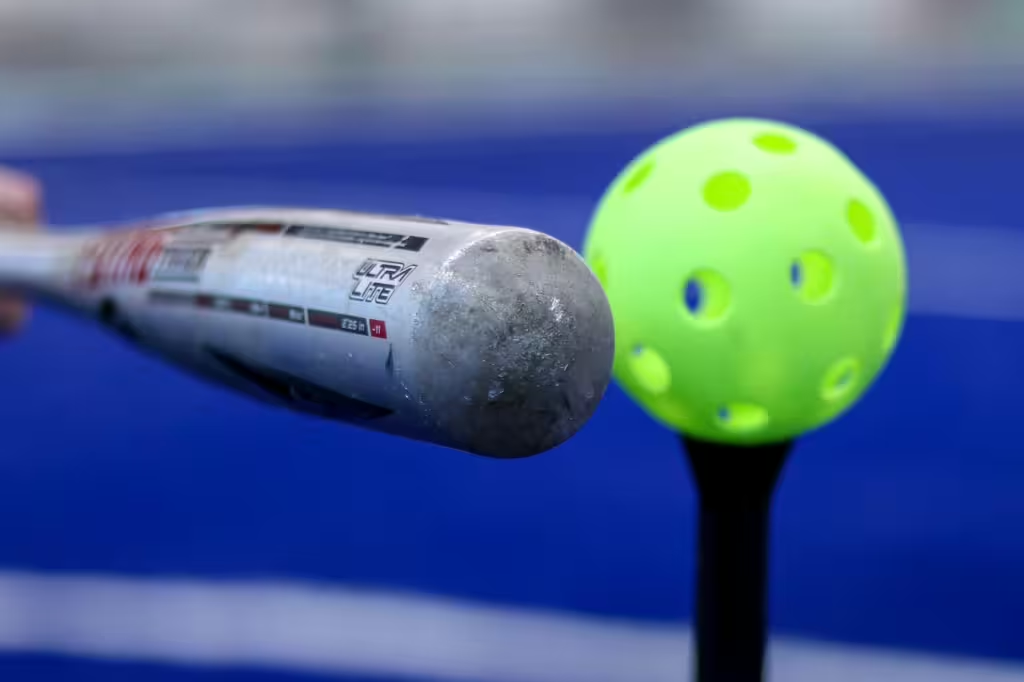
You see, instead of a pitcher throwing the ball, the ball is placed on a stationary tee, which allows kids to focus on hitting without the added challenge of timing a pitch. It’s also important to note that other, familiar elements are the game have been simplified to match the developmental stages of this age bracket.
The Real Goal of T-Ball
Now, given its similarity to baseball, it’s easy to assume the goal is to teach children essential baseball skills, but that’s not the only reason that this sport was envisioned in the first place. You see, at this age, it’s more important that kids build up their confidence, develop basic motor skills, and learn how to follow simple instructions. Most importantly of all, it’s vital that kids experience the joy of playing sports.
We have often spoken about the enriching, uplifting value of fun when it comes to youth sports, and we stand by that assertion. The more excited they are to play, the more excited they will be to come back and play; season after season.
Starting with the Right Mindset
Believe it or not, parents set the tone for how children experience sports. It’s true, our jobs don’t end by putting a glove on their hand and sending them out onto the field. We also need to to help them to approach the sport with the right mindset. This means taking the focus off how well your child is playing and reframing your thinking so that you can help them learn the sport. Parents should embrace the learning process and celebrate effort, not simply results. Also, they’re young, it’s ok to expect mistakes and some measure of rules confusion.
Teaching the Basics at Home
Before stepping onto the diamond or the outfield, it might be helpful to practice at home. Maybe go over some simple rules and help you kid focus on the fundamentals. In all cases, be mindful that these activities should feel like play, not drills.
Hitting
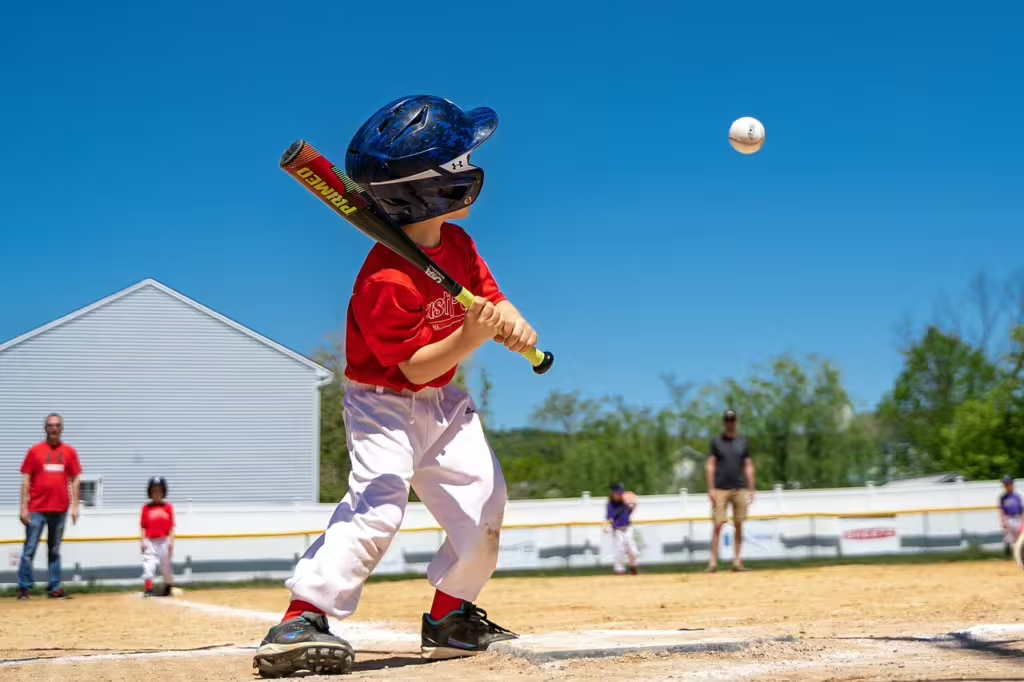
Get them ready to play by using a tee to practice contact. As their balls will be stationary, try to begin with that, but you can use a soft toss to help them prep beyond T-ball too. Try to help them keep their swings simple, let it be natural.
Throwing
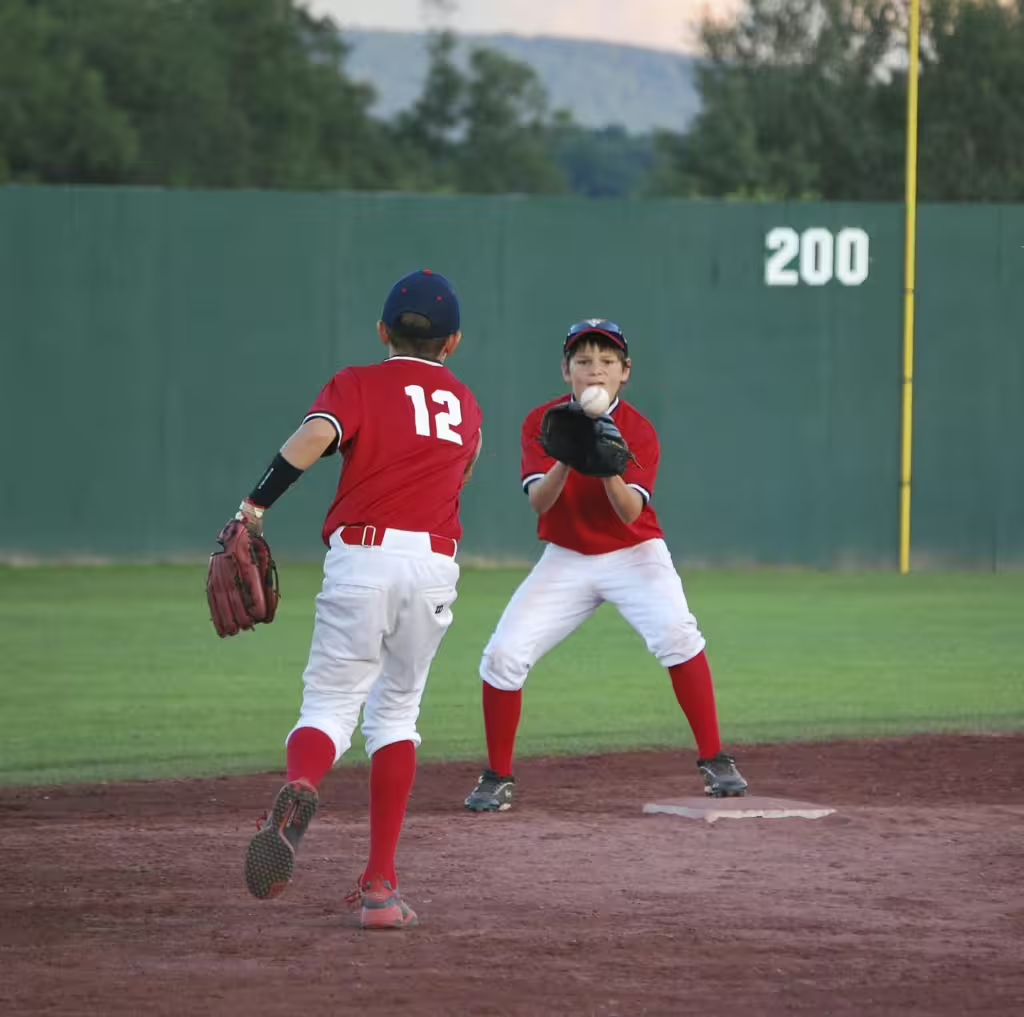
If you’re going to have them throw, close the distance. Practice short, gentle throws and emphasize using both hands for throwing as well as catching. Finally, keep the focus on controlling the ball, rather than getting any sort of distance.
Catching
Kids learn to throw and catch pretty early, but catching a baseball is a bit different. Try and start with soft balls or even rolled grounders and encourage your child to use their body to stop the ball. This will help them to build confidence gradually to catch two or even one-handed.
Attention and Repetition
Look, we’ll be real, children have limited attention spans. This is especially true in new environments. They lose focus, get distracted, and forget instructions pretty easily. Remember, this isn’t a lack of effort, it’s just kids being kids. Moreover, it’s part of development. They need to learn focus just as much as they need to learn how to hit, throw, catch, and run the bases.
Repetition will help in all these areas. Those of us who have watched kids TV know how often they repeat concepts. This is because, at this age, repetition of concepts and skill practice is essential to long-term learning. Over time, repetition will build familiarity, confidence, and skill.
Avoiding Common Pitfalls
There are certain approaches that parents should avoid if they want to create unnecessary pressure. Try not to over-correct them on technique or focus too much on the outcome. Instead, let the game unfold as naturally as possible. Be patient, they will pick it up in their own time. At all costs, don’t compare them to their peers. Kids learn at their own pace, some faster than others. You know your child, so you know what they are capable of and where they struggle. Support them on the latter and they’ll learn to play and love baseball.
Preparing for the Transition to Baseball
T-ball is just the beginning! This sport variation lays the groundwork for future levels of baseball. Kids will grow up and learn more complex rules but they will also develop stronger coordination and skill. In the end, the skills they build while playing T-ball will set them up to have an easier transition once they get to the big diamond.
Cultured Athlete Says…
As you can see, introducing baseball through T-ball is not about creating perfect players, it is about building a foundation. Like the tee itself, T-ball is more about helping kids to learn about baseball, feel supported, feel encouraged, and have fun. Our role as parents is not to hold the ball for them, however, but to pitch it to them low and slow so that they can eventually play without the tee. With patience, understanding, and guidance, we can help them to move past the need for the tee and play the game with confidence.
Discover more from CulturedAthlete
Subscribe to get the latest posts sent to your email.