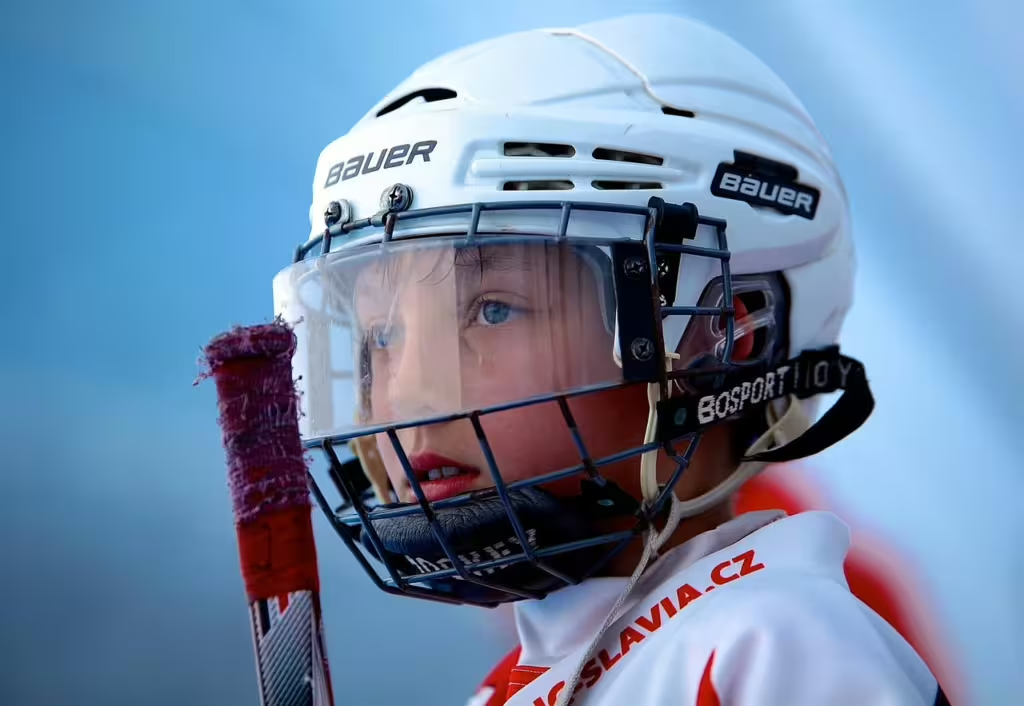

There’s few who would deny that ice hockey is one of the most exciting sports to watch. Young or old, it’s hard to not be amped up by the fast, physical, brisk pace of the players as they move across the ice. The skill, physicality, and agility that hockey players exhibit is hard to beat. There are many children who would love a chance to get out there and play, just like their pro hockey idols. The question is, if you’re kid is just getting started, should ice hockey be where they begin?
There are other options, of course; options which some parents might not even be aware exist. If ice hockey seems to daunting for your budding athlete, they could always play street hockey or field hockey instead. In this case, the question becomes, which is the better choice for your child?
In this article, we will explore several types of hockey; street and ice. We will discuss how they share most of the same core ideas, moving the puck or ball, working as a team, and scoring goals, but also how they offer very different experiences. Our hope is that, by understanding the differences and similarities, parents will be able to make the best decision possible.
What Do Ice and Street Hockey Have in Common?
Essentially, both forms of hockey teach many of the same skills. They teach children hand-eye coordination, teamwork, communication, body and spacial awareness, as well as how to pass, shoot, and guard. The rules are still the same; same objective of moving the puck in such a way that it goes into the opposing team’s goal. All the while, players work as a team to protect their own goal and keep the puck away from their opponents.
What this means is that many, if not all of the skills kids glean from either version transfer easily between the two. For instance, a child who starts in street hockey can often transition into ice hockey later on; provided they learn to move on ice skates, of course.
The Biggest Difference: The Playing Surface
The most obvious difference between these two versions of hockey should be pretty obvious but, in case it isn’t…the difference is where they are played. Ice hockey, as one might expect, is played on an ice rink; either outdoors or indoors. As such, it requires kids knowing how to skate. The pace for ice hockey also tends to be a fair bit faster, as well.
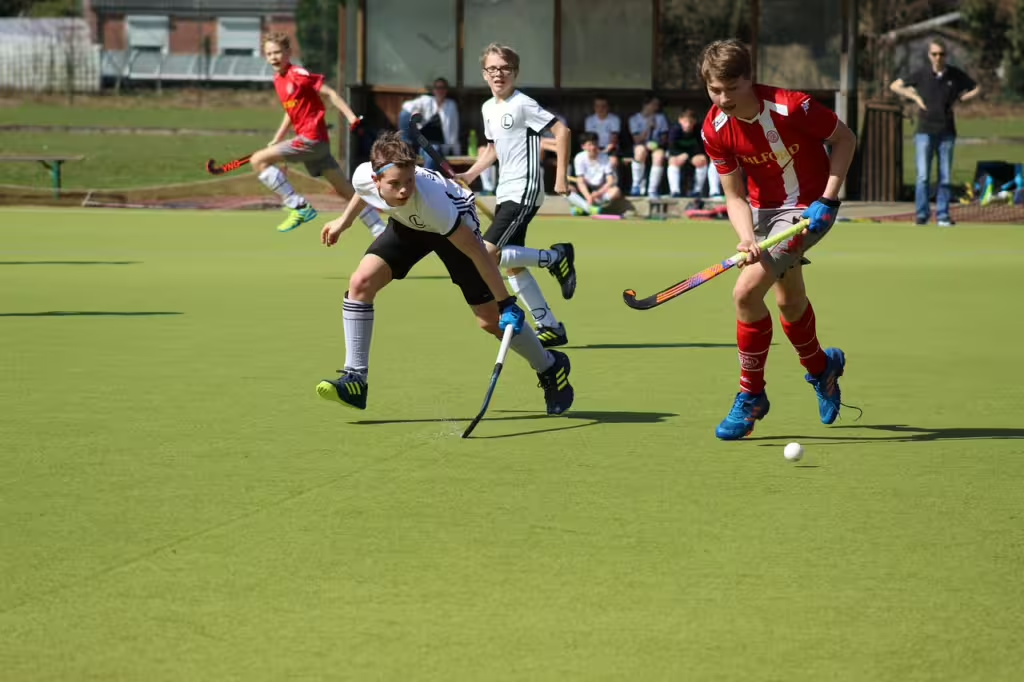
Street hockey, meanwhile, can be played on pavement, concrete, or a sports court. Field hockey is played on grass of turf, but that’s a different article. In either case, kids run around rather than skate. The pace is slower and more controlled.
In essence, it would seem that the biggest barrier between the two is skating itself, at least for beginners or very young children. Learning how to skate takes time, practice, and confidence. Learning to move comfortably on ice does not come naturally to everyone. This fact, coupled with the pacing difference, is why street hockey tends to be he natural starting point for kids to jump right in.
Equipment and Cost
For many families, cost and equipment are major factors for consideration. Ice hockey naturally requires more gear, including the stick, skates, and helmet. Kids will also need shoulder pads, elbow pads, shin guards, and gloves. There are also ice time and league fees often associated with pee wee hockey leagues. This all adds to the overall investment. Street hockey is a bit simpler and far more inexpensive by comparison. It still requires an investment of gear; stick, ball, puck, and optional shin guards, gloves, and often uniform.
Physical Demands
Both sports are physically active, but in different ways. Where ice hockey contains high-intensity burst of movement and features short shifts and quick changes, street hockey has far more continuous running. The emphasis in the latter is on endurance but the pace of street hockey also tends to be easier on beginners than the constant switching of unpredictability of ice hockey.

Accessibility and Convenience
Street hockey is often easier to access because it can be played on driveways as easily as in neighborhood parks. There is no rink required for this hockey, whereas ice is kind of essential to playing…ice hockey. This often means that practices and games need to be scheduled and the ice rink needs to be reserved. For this reason, most kids who do play ice hockey can only do so through organized leagues, as playing on a rink where other people are placidly ice skating can be bad form.
Social and Development Benefits
Both versions of hockey offer strong social benefits as kids learn the value of teamwork and communication. As with most youth sports, they can make lifelong friendships with their fellow athletes and develop skills like resilience, athleticism, and dedication that can last throughout their lives.
Safety Considerations
Safety is important in both sports though ice hockey tends to be better equipped for falls and injuries; simply by virtue of their necessary protected gear. Falling on ice might be a common occurrence for beginners, but those falls are usually cushioned by pads, helmets, and guards. Many people consider ice hockey to be a “full contact sport,” but the truth is, contact levels vary by age group.
Falls happen in street hockey too, though. And since kids wear less protective gear in general, they can sustain more cuts, scrapes, and bumps than those that skate on the ice. As a result of this lack of padding, many youth games of street and field hockey feature non-contact play. Nevertheless, in either version, supervision and proper equipment will help keep kids safe in either version.

Cultured Athlete Says…
As you can see, ice hockey and street hockey may share the same roots, but they offer different paths into the sport; especially where young children are concerned. You have learned that street hockey provides an easy, accessible way to get started, while ice hockey offers a faster, more structured experience if your child is ready to take that big of a step into youth athletics.
Ultimately, there is no “better” version, it’s all subjective. If your kid is ready, they’re ready and if they’re not, they’re not. Either way, it doesn’t matter if trunning down a driveway or skating across the ice, what matters most is that they’re moving, learning, and having fun.
And that’s where a lifelong love of sports begins.
Discover more from CulturedAthlete
Subscribe to get the latest posts sent to your email.