
For many parents, choosing the right sport for their child can feel overwhelming. It isn’t that the sports themselves are difficult to follow or potentially tricky for kids to grasp, it’s just that quite a few of them feel…well, “samesy.” Take hockey and lacrosse, for example, to the uninitiated, these are sports that have quite a lot in common in terms of rules and physical, kinesthetic motion.
Some readers, particularly those who might happen to be fans or former athletes in these aforementioned sports, are probably shaking their heads at the very notion. “Similar? They couldn’t possibly be any different!” We hear you, but you have to understand that not every parent is as familiar with the world of youth athletics as you might be. This article is for them, to assist parents in identifying the similarities and the big differences between these two sports.
After all, both hockey and lacrosse are fast-paced, physical, and team-oriented. Both involve sticks, goals, and quick decision-making. As it happens, both are also incredibly popular among kids, especially in regions where youth sports culture is a big part of the community and identity. In this article, we will detail what the sports share in common, as well as the key differences parents will want to know in order to decide which best fits their child’s needs.
The Big Picture: Why They Feel Similar
At a glance, lacrosse and hockey look a lot like cousins…or at the very least, step siblings. For example, both sports involve players using a stick to control an object; a ball in lacrosse and a puck for hockey. Both sports also have a goal, at opposite sides of the field of play that players are trying to score on. Hockey and lacrosse also feature continuous, fast-paced movement and play. Finally, depending on the league and level of play, both lacrosse and hockey involve some degree of physical contact.
Now, because of these similarities, there is actually quite a bit of skill transfer between the two sports. What we mean is, it’s not uncommon for athletes that are good at lacrosse to play hockey as well, and vice versa. Indeed in some areas of the Northeast U.S., some kids, teens, and even adults play lacrosse one season and hockey the next.
The Playing Surface
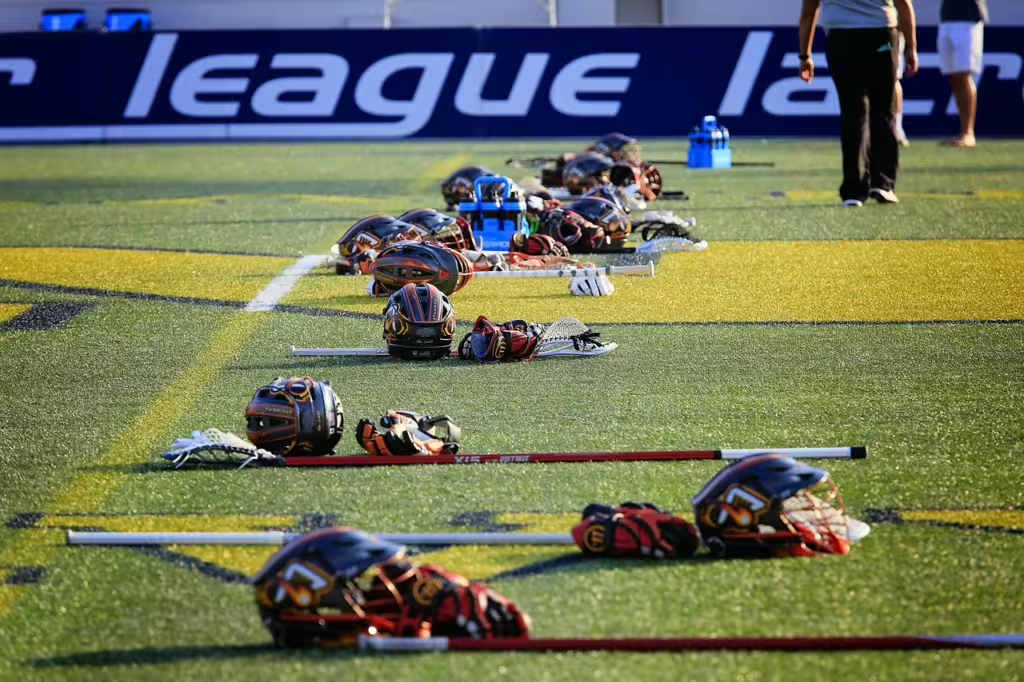
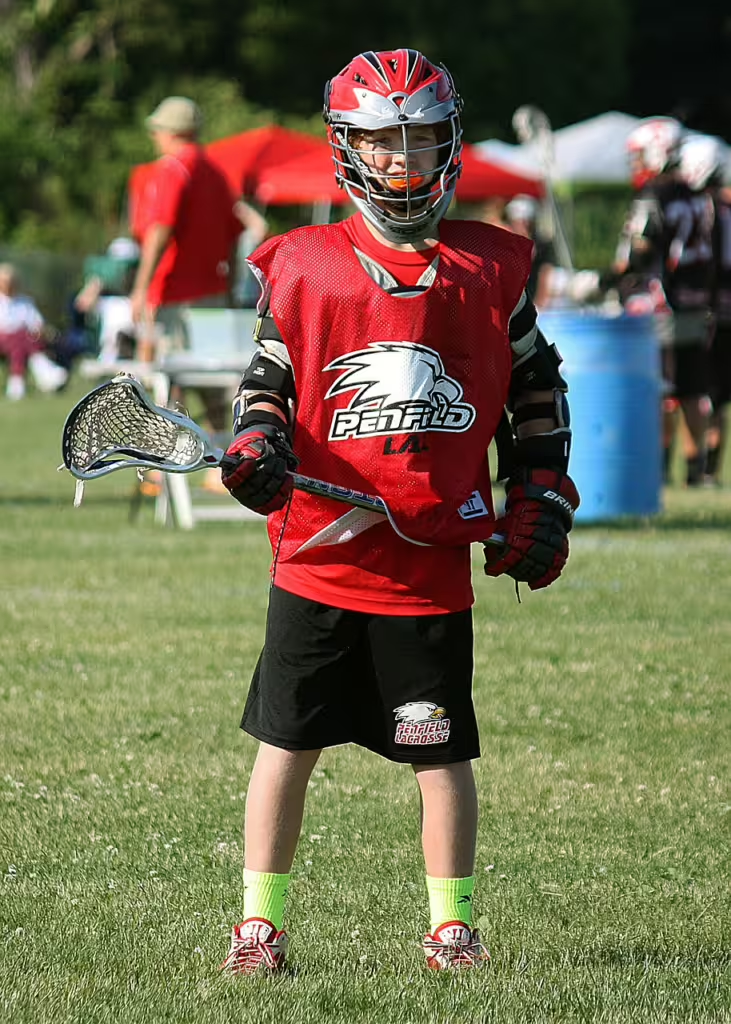
Perhaps the biggest difference between lacrosse and hockey is where each game is played. Lacrosse is played on a field, made of either grass or turf. It is a large play space, where athletes have more room to run than those skating within the boundaries of a hockey rink. Most of the time, lacrosse is played outdoors, ice hockey, meanwhile, is only played outside on rare occasions. Usually ice hockey is played upon an ice rink.
In any case, ice skating is a core skill that kids need to play ice hockey, where just about anyone that can run and hold a stick can play lacrosse. This latter consideration is usually the deciding factor for most parents and kids, as skating adds a greater level of difficulty to the sports experience. That said, as intimidating as it can seem to some young athletes, there is no doubt that mastery of it can make for some very exciting play.
Movement and Physical Demands
Both sports are physically demanding, though in different ways. In lacrosse, players sprint up and down the field. They need to master quick, directional changes and their own endurance. The same directional shifting is true for hockey but in this case, it has to be done on ice. Kids need to skate with balance and precision and be able to engage in explosive bursts of acceleration, rather than long-distance running. In any case, both sports do require strong lower-body control, even if hockey necessitates more.
Equipment Differences
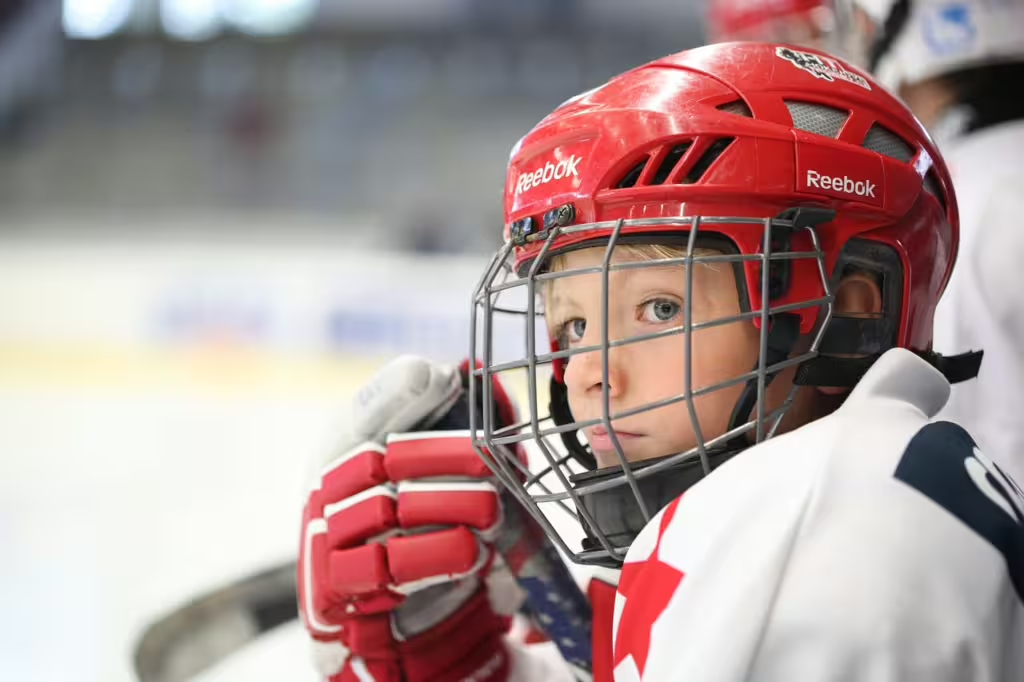
Both lacrosse and hockey use very different equipment to play. This is another major distinction that parents need to consider when signing their kids up. Where lacrosse only needs a helmet, gloves, pads, and a stick with a net, hockey needs a fair bit more. First, kids will need ice skates to even play the usual form of the game. At the same time, they need a hockey stick, helmet, usually with a cage, and shoulder pads, shin guards, and gloves. parents to consider. It should also be noted that hockey equipment is generally more extensive; and often more expensive than that used in your usual lacrosse league.

Ball vs. Puck
The difference between playing with a ball or a puck may seem like small potatoes, but it changes the game significantly. Since lacrosse uses a rubber ball that can be cradled or carried in the stick, players tend to do more aerial passing during play. Hockey meanwhile, uses a puck which tends to stay on the ice for most of the game. Players are coached in stickhandling and control in both sports, but the kinistethic motion and tactics are quite different. For example, The ability to carry the ball in lacrosse gives players more time to make decisions, while hockey requires constant control and strategizing under pressure.
.
Contact and Physicality
Both sports involve a degree of physicality and physical contact. Body checking and physical altercations often happen in ice hockey, especially as the game is played in more confined spaces. At the same time, lacrosse does have controlled stick checks and male-centered lacrosse leagues do tend to get more physical than those played by just girls.
Which Sport Is Right for Your Child?
The choice for which sport you want your child to play depends on that child’s personality and interests. In general, if your kid prefers running, open spaces, and slightly less physical contact; they might prefer lacrosse. Also, if they don’t love ice skating or aren’t particularly good at it, lacrosse is definitely an easier entryway into youth sports. On the other hand, if your kid already loves skating or wants to learn, they will be more than happy to try hockey. Either way, both sports are great for children that enjoy fast, high-intensity action. You never know, your child might like one enough to want to try the other!
Cultured Athlete Says…
As you can see, lacrosse and hockey may look similar on the surface, but they offer distinct experiences for young kids that are looking to engage with sports. While lacrosse (and to a lesser extend, field hockey) provide children with open-field play and better accessibility, hockey offers high-speed action, a unique set of skills, and a challenging way to play.
In the end, there is no way for parents to discern which sport is “better,” there is only which fits best with what your child is looking to get out of a youth sports experience. It doesn’t matter if your child is running through a field or skating over ice, as long as they feel engaged, excited, and supported in what they’re doing; they’ll be happy to keep on doing it for as long as they can!
Discover more from CulturedAthlete
Subscribe to get the latest posts sent to your email.