
For many children, sports represents so much more than winning games or earning fame. Most kids just don’t see sports through that lens. To kids, sports are something that one does to have fun, to make friends, and learn new things. And even if parents see them as a means of discovering their confidence, overcoming personal obstacles, or realizing what is possible through hard work and determination; kids just don’t always see it themselves.
This is why it often falls to adults to impart these valuable lessons, to teach children that sports is so much more than fun or even fame. If you are a parent and you’e struggling to find ways to impart these things to your child with regards to sports, then we might just have the solution.
You see, few athletes demonstrate these important lessons more powerfully than disabled runners, especially those who have broken records or made sweeping changes in the world of sports. Many times over, these adaptive athletes have found ways to shatter society’s expectations about track and field or marathon events.
In this article, we will explore several inspiring stories about how these remarkable humans have proven that physical disabilities do not prevent people from competing, succeeding, or making history. Our hope is that, by the time we’ve finished, our readers will be have the tools at hand to teach their young athletes what really matters when it comes to sports.
Sports Are for Everyone
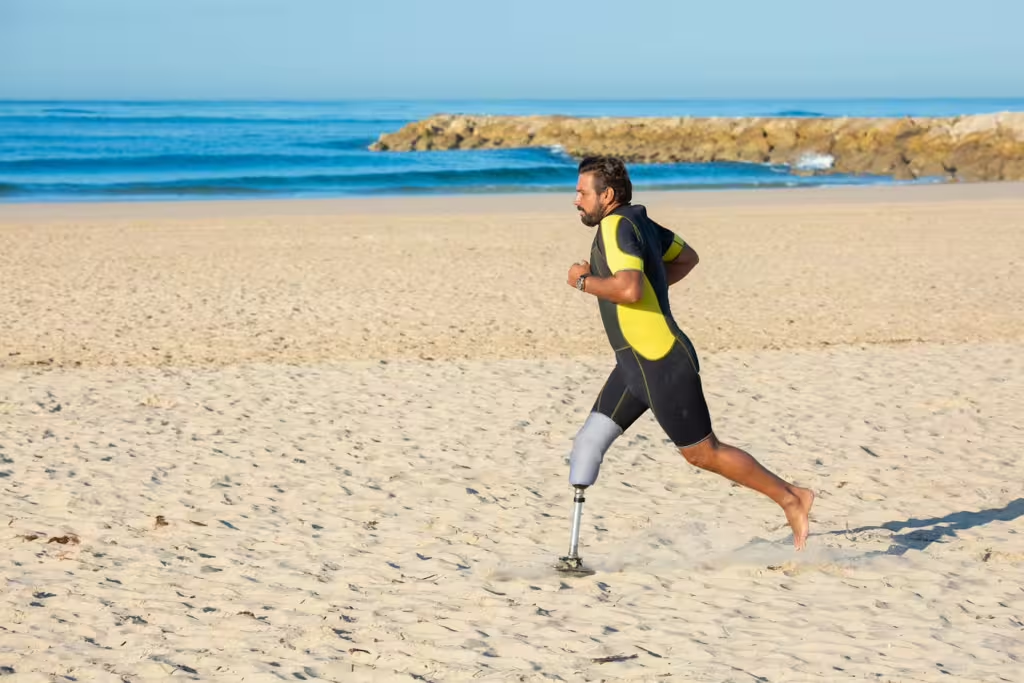
One of the biggest misconceptions in sports has to do with physical limitations. The prevailing thought is that such limitations will forever prevent people from competing at higher levels of competition, much less keep up with able-bodied athletes. This is grade-A poppycock; especially in this day and age.
The fact is, the adaptive sports of today allow for far more than they did in the past. Support, technology, and acceptance of these adaptive sports have grown enormously in recent years. And with that growth, athletes with disabilities find themselves with more opportunities than ever before. These days they athletes with disabilities can participate in their own adaptive sports, such as wheelchair basketball or mainstream sports like track and field, marathons, triathalons, and team sports aplenty.
These athletes are no different than able-bodied ones and train with the same commitment, discipline, and passion as any other competitor. For children, the chance to see these disabled athletes at work sends an important message about inclusion and ability; anyone can play sports if they want.
Amy Palmiero-Winters and the Power of Perseverance
One athlete who stands out in recent years is Amy Palmiero-Winters, whose accomplishments have shown countless young athletes the value of perseverance. Through marathon running and her own amazing outreach organizations, Amy continues to make a real difference in the world. She has overcome some incredible challenges in her life.
After losing part of her leg in a teenage auto accident, Amy thought her life of athletics was done. She didn’t let that thought consume her, however. In time, she rallied and persevered, refusing to let her disability define her limits. Eventually, she discovering that running was still very possible for her. She began competing in track events using a prosthetic running blade and the rest was history.
Today, Amy holds 11 World Records in various track events and has run some of the most difficult and endurance-testing races on the planet. She’s run over deserts and tundras and successfully come through them to run again! She has also become a staunch advocate for adaptive sports, especially as they pertain to children.
Breaking Records and Changing Perceptions
It isn’t just that adaptive athletes like Amy win races, it is also the fact that they run them at all. By even deigning to compete in these challenge, they are breaking through the societal assumptions about disabilities themselves.
For many years prior, people with disabilities were excluded from organized sports. People underestimated their abilities and soon found, to their pleasant surprise, that even disabled athletes could break sports records. All they needed was a place where they could compete on an even playing field.
This is why adaptive sports competitions have become so valuable to those with disabilities. At the same time, the children watching these athletes compete get the chance to learn that differences do not define someone’s potential.
The Rise of Adaptive Sports
As we have seen, adaptive sports have expanded dramatically over the past decade. In the year 2026, more schools, leagues, and organizations are offering more opportunities for children with disabilities to participate in athletics than in any previous time period. This growth and acceptance has helped create better accessibility, more visibility for adaptive athletes, and stronger support systems for families of kids with disabilities.
Tatyana McFadden and Dominating Wheelchair Racing
Tatyana McFadden is currently known as one of the greatest wheelchair racers in history. Her story of strength and resilience has inspired millions, especially considering she has won numerous Paralympic medals and major marathon championships in her tenure as a runner.
Her success in some of the highest levels of competition in the world demonstrate to budding athletes that adaptive athletes are only the beginning of what’s possible for them in sports. In some ways, McFadden’s story reinforces the idea that greatness comes from dedication and hard work. She is yet another elite athlete and human to be admired.

Blake Leeper and the Pursuit of Speed
Blake Leeper is a Paralympic sprinter who is most well-known for his speed and determination. Like Amy Palmiero-Winter, Leeper runs on a prosthetic blade. In Leeper’s case, however, it isn’t just one blade, but both. Blades notwithstanding, Leeper has managed to achieve world-class sprinting times while also advocating for greater inclusion in sports.
Unlike Amy, who’s journey was about pushing herself and fighting past her doubts, Leeper’s story is about seeking out chances for competition in the adaptive athletics space. He is yet another great example of disabled athetes who are pushing the boundaries of what is possible in sports today.
Why Representation Matters
We’ve seen it time and again; representation in sports can have a huge impact on children. Kids who see athletes of their own ethnicity, gender, or who share the same challenges they do compete, they begin to believe that they too can do those things.
This is especially pertinent for children with disabilities. For those kids, seeing adaptive athletes succeed can build their own motivation and confidence. It can also give them a sense of belonging in sports that they may not have ever felt before. In many ways, representation makes sports feel more accessible to kids from all walks of life.
Supporting Young Adaptive Athletes as Parents
The point of telling our parental readers about all this is to hammer home the major role they play in the grand scheme of things. Helping your children to feel comfortable exploring sports and giving them reasons to do so beyond winning and getting a trophy, is perhaps the most effective way to instill a longtime love of the game.
Helpful approaches parents should include in their “pitch” include, focusing on ability rather than limitation and encouraging effort and enjoyment. At the same time, parents should not be afraid to use the experience and accomplishments of disabled athletes to show children that participation, resilience, perseverance, and self confidence are often the best tools they have to succeed in sports.
Cultured Athlete Says…
As you can see, while this article was partially about how a child should view sports, it is also about the enduring power of the human spirit when it comes to athletics. There are many admirable disabled runners out there who broke records and transformed sports in recent years. Today, those runners continue to inspire children and families around the world. Athletes like Amy Winters, Tatyana McFadden, and Blake Leeper prove that disability does not prevent greatness or achievement.
In many ways, these stories remind us all that it doesn’t matter what cards life has dealt you, determination, resilience, and passion matter far more than one’s limitations or those that we place on ourselves. For parents, these athletes provide powerful examples of what sports can truly offer children and that is what’s most important; how we as parents frame sports to our children.
In the end, it might end up meaning something different to them, but at least on the way, we were able to tell them about these remarkable people and what they achieved in their relentless runs.
Discover more from CulturedAthlete
Subscribe to get the latest posts sent to your email.