

When we think about the many sports heroes that have made their way into the hall of fame, there are some standouts that even the most unsporty people know about. In terms of legendary athletes, few names stand out more than Michael Jordan. This was a person knows basketball prowess made him (and subsequently his sneakers) into a household name. From Chicago to Melbourne, Michael Jordan’s stunning career rendered him one of the most recognizable athletes in sports history; though he wasn’t always that famous.
Indeed, before the championships, highlight reels, Air Jordan’s, Space Jam, and international fame of all sorts, Michael Jordan was simply a kid who loved the game. He was, by all accounts, a competitive kid at that. He also enjoyed playing multiple sports, something we here at Cultured Athlete have been advocating from the very beginning.
In this article, we will dive deep into the myth of Michael Jordan to find the man, nay kid, underneath. We will examine his upbringing, past exploits, and his legacy to find out what kind of person becomes so well-versed in so many different sports modalities. Finally, we will help parents how they can use the lessons from Jordan’s historic past to enhance their own child’s youth sports experience.
Growing Up with Competition
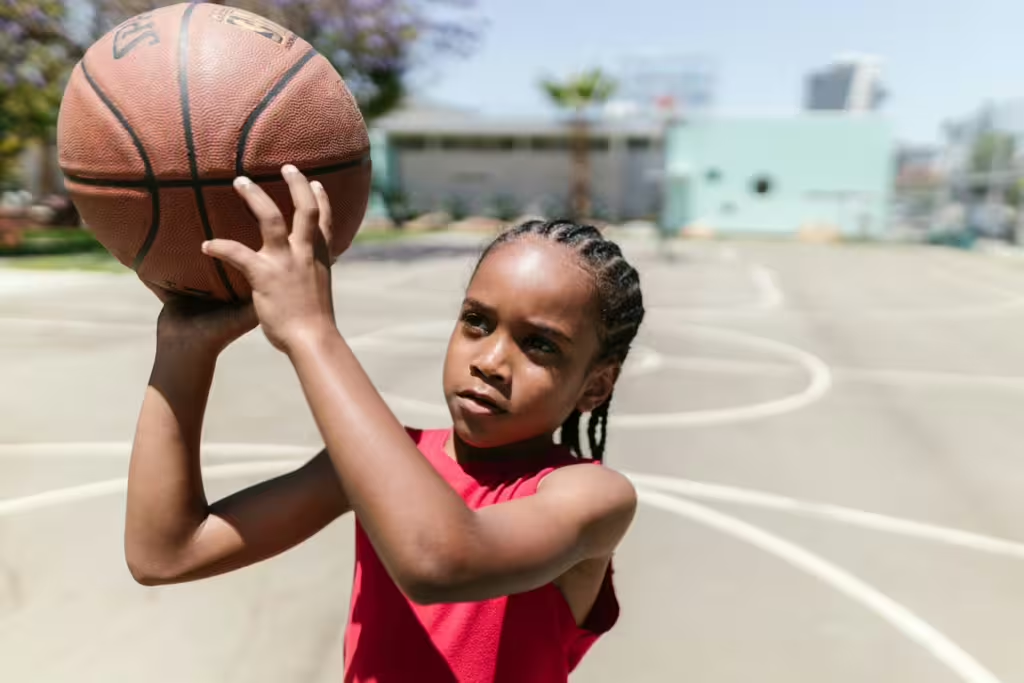
Michael Jordan grew up in a highly active household in Wilmington, North Carolina. Sports were a regular part of his daily life, and competition between him and his siblings helped shape his competitive mindset early on.
That said, the child known as Michael Jordan wasn’t as purely focused on basketball as he would wind up being some day. In his younger years, he spent time playing baseball, football, and yes, when he felt like it, basketball. They say that variety is the spice of life and in Jordan’s case, that proved to be true.
That variety helped young Michael to develop broad athletic skills while enabling him to continue to enjoy what he was doing. For young children, exposure to multiple sports activities can enhance coordination, adaptability, and improve one’s overall athleticism, while still supporting the child’s long-term growth.
Baseball’s Influence on His Development
Many people don’t know this, but basketball wasn’t always his primary focus. In fact, his first love was actually baseball; a sport which he would return to once his basketball days were done. As it happens, Michael’s father, James Jordan, strongly encouraged baseball, so he ended up spending years playing the game during childhood.
Baseball helped the eventual legendary shooting guard to develop excellent hand-eye coordination, impeccable timing and reaction speed, and no small amount of patience and concentration. These skills would end up translating quite well to basketball. And yes, years after his NBA career came to a close, Jordan would briefly return to baseball professionally. It’s clear that “America’s Favorite Pastime” remained deeply connected to his identity.
Basketball Beginnings
Eventually, Michael moved onto basketball, which became his bailywick. In time, he would become an icon, but his early basketball journey was far from perfect. As a teenager, he famously did not make the varsity basketball team during his sophomore year of high school. This moment, mundane as it might seem, has become an essential piece of sports history. And it isn’t Jordan’s failure to measure up that made it so, but how he responded to that momentary disappointment.
Instead of giving up, Jordan pushed forward. He continued practicing and was focused on getting good enough to make the team. In essence, he used the disappointment as motivation to improve. It’s for this reason that the story became such a quintessential part of his “legend” and why it’s an experience often shared with young athletes. It demonstrates resilience and persistence in the face of adversity. After all, not making varsity may indeed have been the catalyst that drove him to become an NBA legend.
Learning Through Setbacks
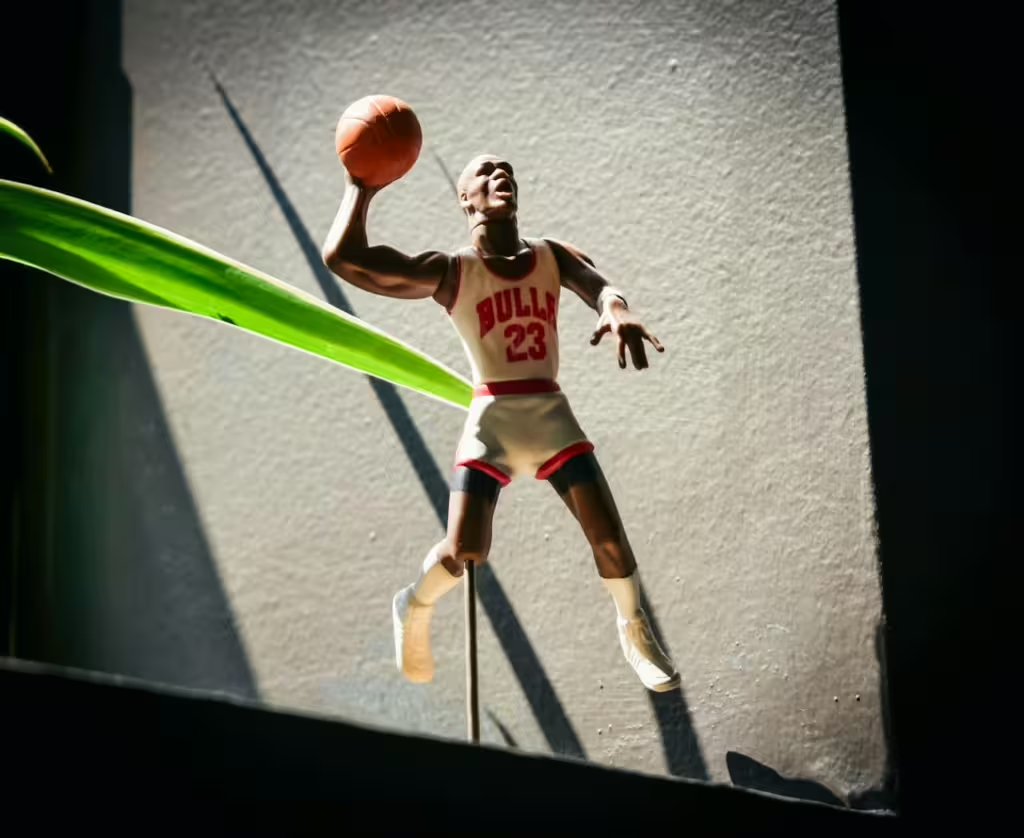
One of the biggest lessons that parents and budding athletes can take away from Jordan’s early years is that setbacks are normal and perfectly surmountable. Not making a team or struggling with a skill does not mean that a child lacks potential, they simply need to work at it. In many ways, setbacks can help athletes of all levels to develop their skills, work ethic, mental toughness, and self-confidence. Jordan’s setback reminds us that success comes in time and with no small amount of effort on the part of the athlete.
Support from Family
Jordan’s family played an important role in his development and eventual success. We already know he had a father who encouraged him to play baseball, but both his parents encouraged him to work hard, take responsibility, and exhibit persistence. They helped him to stay motivated without pushing him harder than he could handle. It is that balance that parents should seek to emulate in trying to keep their own kids engaged.
From High School to Growth
After not making varsity initially, Jordan continued developing physically and athletically. Over time, he grew taller, stronger, and more skilled. He progressed in his own time and at his own pace, and this is also important for parents to remember. Children develop in their own time. Some athletes mature earlier, while others improve in dribs and drabs, over years and different sports; it all depends on the kid. This is why we often say patience and grounded expectations are just as important as pushing forward.

Cultured Athlete Says…
As you can see, Jordan’s early journey offers up an important lesson: athletic success is a process cultivated over one’s lifetime. His development and eventual achievements came from years of playing different sports; not just becoming good at one. Over time, he learned from his setbacks, improved his skills, and grew both physically and mentally by virtue of his experiences.
The early years of Michael Jordan’s journey show that athletic success is about much more than raw talent. It’s about persistence, growth, and the willingness to keep learning through victory as well as defeat. We already knew that young athletes benefitted from variety, but through a legend like Jordan, we have proof that multi-sports participation builds strong foundations for the future.
In the end, what we as parents really need to remember is that, before Michael Jordan became one of the greatest athletes in history, he was simply a kid learning, competing, and growing through sports; just like our own kids.
Discover more from CulturedAthlete
Subscribe to get the latest posts sent to your email.