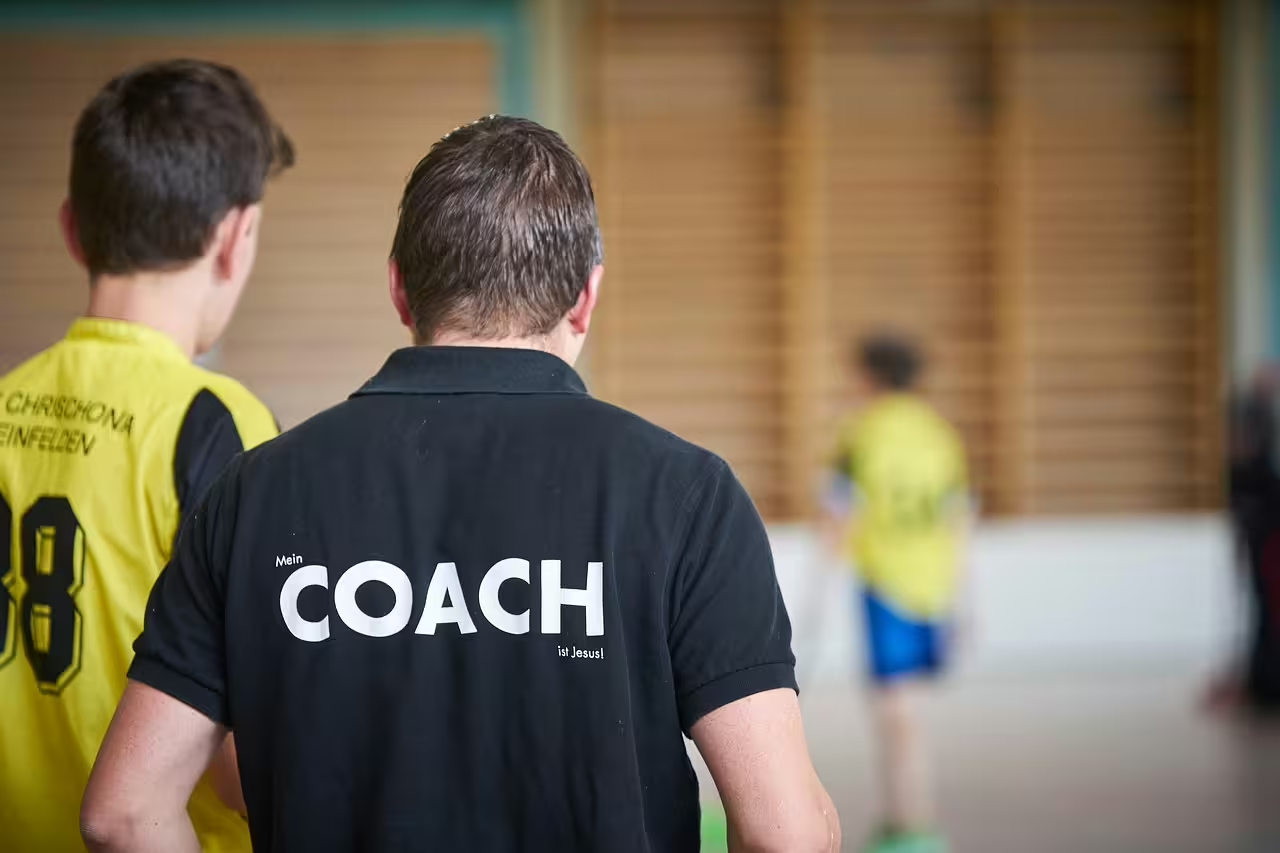


For many kids and even some parents, balancing sports and school can feel especially challenging. If your child happens to be involved in a more competitive form of sport, say a travel team, for instance, this just ups the difficulty quotient to a whole new level.
Practices, games, homework, class projects, and family responsibilities, all compete for time; and that’s not even accounting for actual rest and leisure time. If this type of scheduling seems impossible to you, don’t worry…it is. This is an untenable schedule and its one that has many families questioning whether athletics might distract a child from their other responsibilities, especially with regards to academics.
The thing is, research and real-world experience often show the opposite to be true. There are good indications that participation in youth sports can actually help children perform better in school. In this article, we will discuss both sides of the issue, though admittedly the goal is to assure parents that sports is ultimately more beneficial than it is detrimental; so long as it is approached with balance in mind.
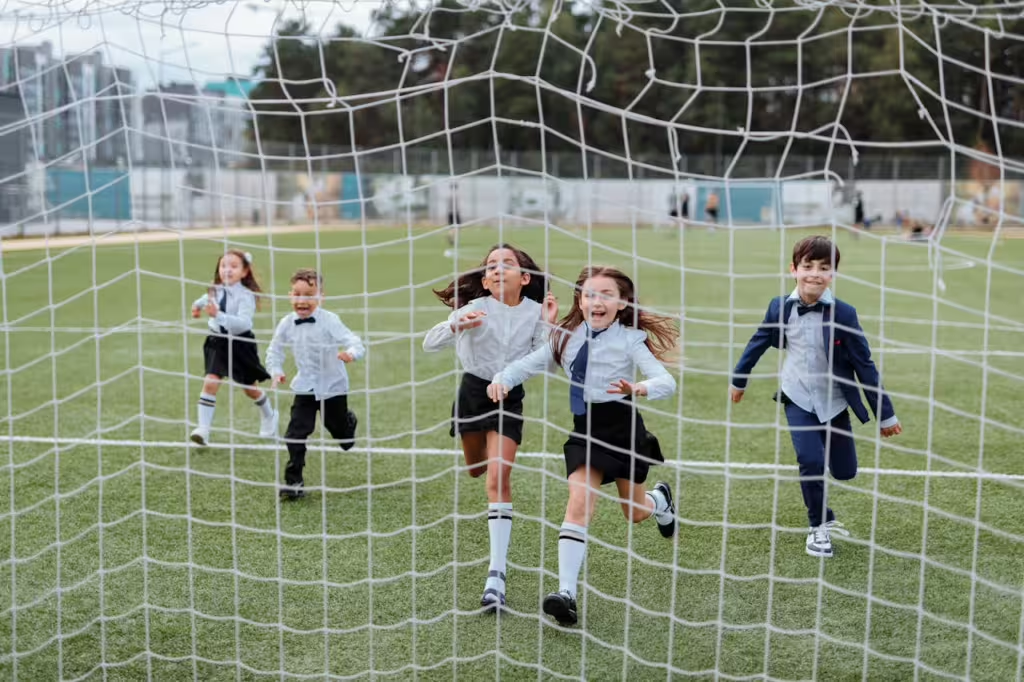
Building Discipline and Routine
By now, longtime readers already know that sports are more than just something a child does to keep busy. Playing sports does more than keep kids active, it helps kids develop focus, discipline, confidence, and time-management skills. The thing is, all of these positive attributes also happen to be key to academic success.
One of the biggest ways sports improve academic performance is by teaching discipline. By playing sports, student-athletes learn the importance of following schedules and completing their tasks. Athletes are expected to be responsible for their actions; actions which can sometimes affect the success of the whole team unit. And that’s not even talking about the children being present for the scheduled events and practices that come with playing sports.
Practices and games require athletes to show up prepared and on time. Over time, these expectations form habits, which can then carry over into their schoolwork and study habits. Thus, children who learn to manage routines through sports may become more organized in other areas of life as well.
Improving Time Management Skills
The introductory section of this article was fairly hyperbolic, we get that, but it was important to set the tone and expectations for parents who are considering involving their kids in sports. Scheduling in sports often involves balancing practice and games with family time, leisure time, and school assignments. The need to schedule all of these things can help build up the child’s time-management skills.
In addition, the lack of free time means that the student-athlete needs to learn to prioritize tasks, plan ahead, and avoid procrastinating on certain timely assignments. Indeed, many parents find themselves pleasantly surprised when their busy children somehow become more efficient with schoolwork, even though they are involved with athletic extracurriculars.
Physical Activity and Brain Function
Research indicates that regular exercise supports healthy brain function. Basically, physical activity gets things moving, letting blood flow to the brain more readily, up-ticking energy levels, and heightening one’s concentration and alertness. There s also proof that exercise can improve a person’s memory and cognitive performance.
Despite having physically exerted themselves, children might feel more focused, less restless, and better prepared to learn post exercise, than they would have prior to the work out. In fact, many schools actually encourage physical education and athletic involvement simply because of this innate connection between movement and learning.
Supporting Focus and Attention
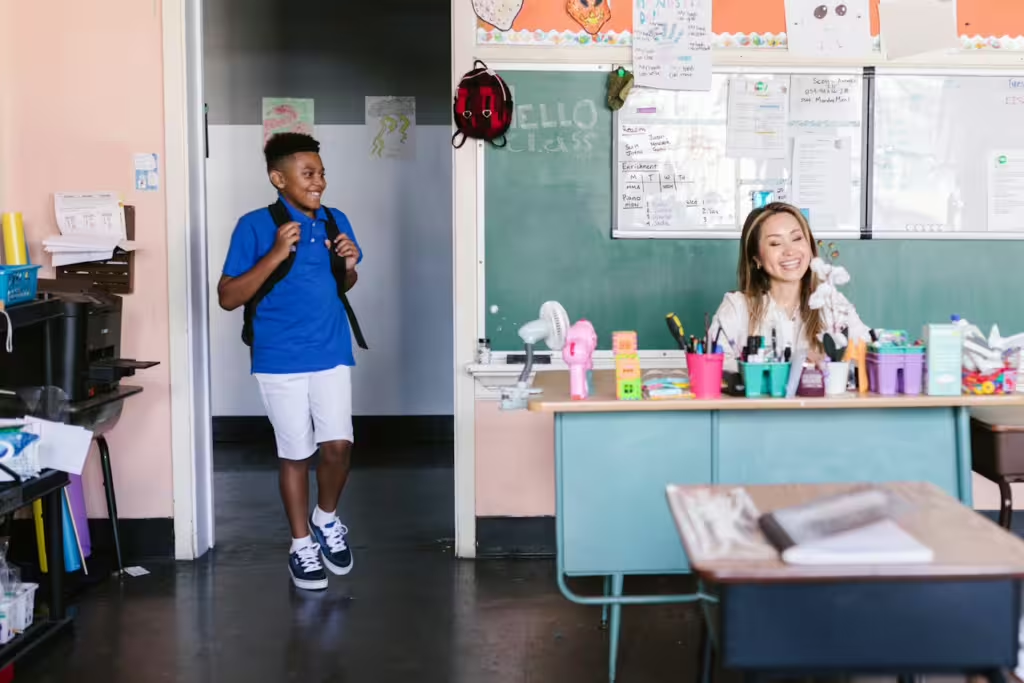
It doesn’t matter which sport your child chooses to play, they are going to have to pay attention to the game. Sports require the participants to stay alert, process information quickly, and respond in real time. Athletes have to adjust to a constantly changing situation and stay focused on the game, the other players, and their teammates shouting instructions. And though they aren’t as intense in the middle of a class, the same skills are useful in school.
For example, children who develop focus during sports may be able to follow their lessons more effectively and improve their level of concentration. They are also more likely to stay engaged during assignments, even long-term assignments that require them to work on their own.
Building Confidence That Carries into School
Kids who play sports gain significant confidence and this faith int heir abilities can also transfer into their academic achievements. Through athletics, kids learn that working hard can lead to success and they may take that mindset with them into other areas of their lives.
For instance, sports teach kids that progress takes effort and practice leads to personal growth; both of those concepts are equally valuable when a child is looking to master their lessons or study for tests. It might help them do better in music and art as well, as they learn that practice makes perfect. At the same time, it teaches them that mistakes are part of the process and that they aren’t the end of the word.
Reducing Stress and Anxiety
School can be stressful for children, especially as academic expectations increase. Sports isn’t just a good outlet for that anxiety, it can help them release nervous energy. Remember, children who feel emotionally balanced are often better able to focus and learn.
The Social Benefits of Sports
Sports gives kids the chance to socialize as well. They get to make new friends, work and compete with others, and learn to be a part of a unit. These types of positive social experiences can also support academic success. Being a part of a team helps kids improve their communication skills and feel supported and engaged in social settings. It should also be noted that strong peer relationships can also improve a person’s motivation as well as their emotional well-being.
The Importance of Balance
While sports can support academics, keeping things in balance is still going to be essential. Having too many commitments can lead to stress, fatigue, injury, and eventual burnout. This is why, no matter how busy a kid’s schedule is, parents need to make time for them to rest, hang out with friends, spend time with family, do their homework, and just lay around on their tablets once in a while. In the end, the goal is balance, not overload.

Cultured Athlete Says…
Sports and academics do not have to compete with one another. In many cases, they work together to help children grow into confident, disciplined, and well-rounded individuals.
For parents, the key is maintaining balance and focusing on overall development rather than perfection in any one area.
Because when sports are approached in a healthy way, they become more than just games.
They become opportunities for children to strengthen their minds, build confidence, and develop habits that support success both in the classroom and beyond.
Discover more from CulturedAthlete
Subscribe to get the latest posts sent to your email.