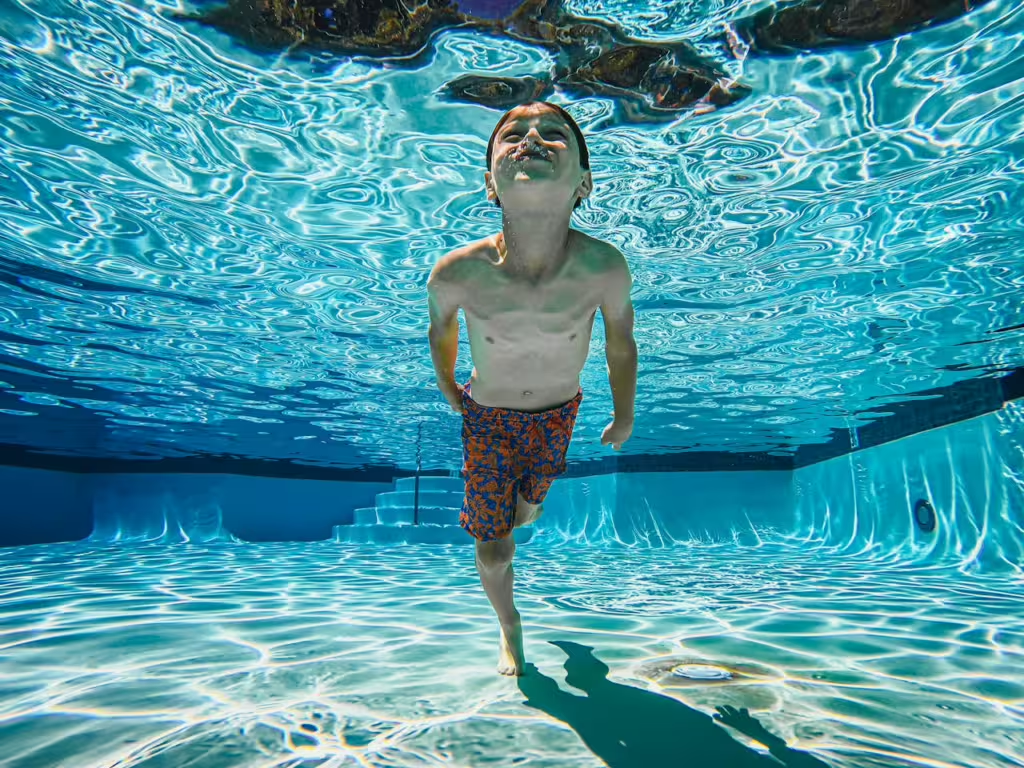

Summer is just around the corner and that means that little kids everywhere are going to suiting up and getting ready to take a dip in the pool, lake, or if they’re lucky enough to live near water, the ocean. Swimming is a valuable, life-saving activity that all children should learn at some point, and it also happens to be one of the most popular youth sports as well.
Let’s face it, swimming is fun. Even the most competitive levels of swimming differ so much from land-based sports that kids can feel freedom of movement and enjoyment as they move about in the water. In terms of physical exercise, swimming builds endurance and confidence, not to mention essential life skills.
In terms of organized sports, swimming offers a joyous combination of individual achievement and team camaraderie. That said, for beginners and kids who may have never experienced swimming as anything but a leisure time activity, the structure can feel a bit unfamiliar compared to sports that are played on land.
In this article, we will discuss swimming as a team sport. We will examine how practices, meets, scoring, and age brackets work, as well as how it differs from more terrestrial sports. By the time we’re done, our hope is that parents will have enough base knowledge to decide if this type of athletic activity is something their child might enjoy or if it’s perhaps better to wait until that child is older.
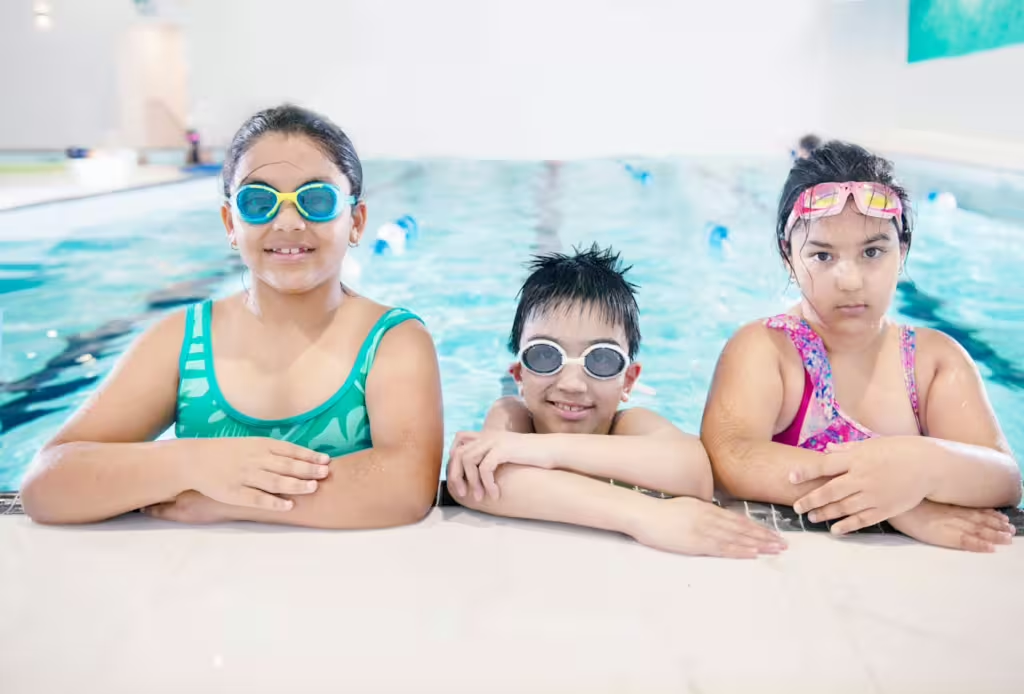
What Is a Youth Swim Team?
Unlike games with constant motion and scoring, swim meets are made up of individual races, timed results, and team points. A youth swim team itself is little more than a group of swimmers who train together and compete in those aforementioned contests.
Teams tend to be organized through community recreation programs, school or regional teams, or even local swim clubs. Swimmers are typically grouped by age and skill level, allowing them to develop at an appropriate pace.
Practices: The Foundation of Development
As with recreational swims and early swim lessons, practice is where most of the learning happens; even for swim teams. Swim team practices focus on the basics, especially at younger levels, but as kids age, they focus on stroke technique, endurance, conditioning, breathing, timing, starts and in-the-water turns.
As with land-based sports, swim team practices are often structured in sets, where swimmers complete specific distances with rest intervals. The purpose of this methodology is to build skill, stamina, and strength; not all at once, but over time.
The Four Main Strokes
In competitive swimming, athletes learn and compete in four primary strokes. These strokes are:
- Freestyle – the fastest and most commonly used stroke
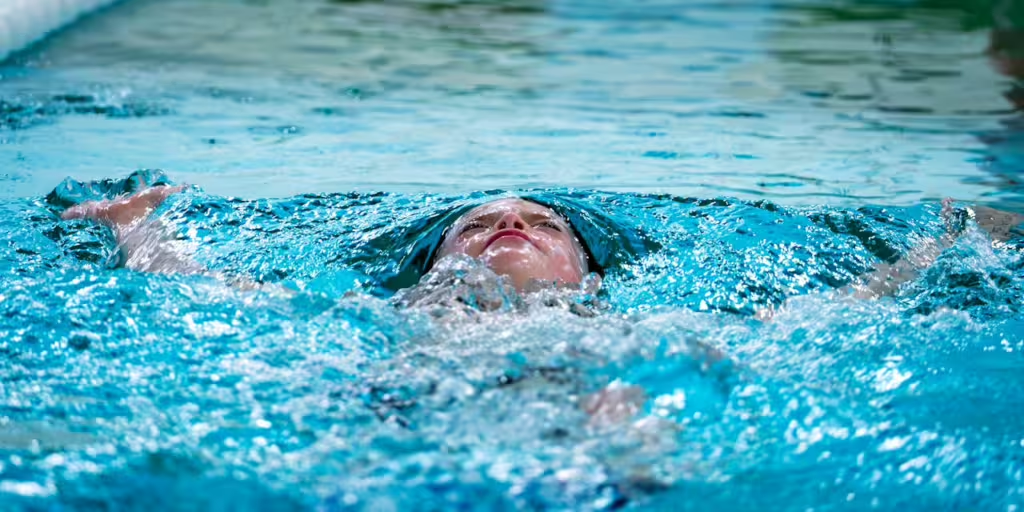
- Backstroke – performed on the back
- Breaststroke – a slower, more technical stroke
- Butterfly – the most physically demanding stroke
Each of the strokes has specific rules, and this is where practice is key. Learning proper technique is a key part of training and can often be the key to winning in large-scale competitions.
Swim Meets: How Competitions Work
Swim meets are the big show. Like track meets and football games, this is where swimmers apply what they’ve practiced and compete against one another; usually against rival leagues or teams.
Unlike traditional team sports, swimmers compete in individual races called events and each event is defined by one of the four strokes or the distance the athlete has to swim. Common distances for events are 25, 50, and 100 meter races. Note that a swimmer might compete in several events during the course of a meet; so it can be a pretty long day.
Swimmers are placed into heats, or groups, based on their age and entry times. Each heat races separately, and times are compared across all heats to determine placements.
Races are timed, often quite fastidiously. Most often they are even timed to fractions of a second and the results are based on the fastest overall time and a swimmer’s personal improvement. This makes swimming one of the only youth sports where kids can compete against others, and to some degree, themselves.
Team Scoring
Even though races are individual, swim meets often include team scoring. This means that points are awarded to teams based on a swimmer’s placement in each event. For example, 1st place usually earns the most points, while lower placements earn fewer points. When all is said and done, all of the points are added together to determine the overall team result. This structure allows swimmers to contribute to the team while still focusing on their own performance.
Age Groups and Levels
Youth swim teams are typically organized by age groups, such as 8 and under, then groups aging up from 9-10, 11-12, and 13 and older. Within these groups, swimmers will be divided by skill level, so that competition remains fair and there are opportunities for growth.
Getting Started
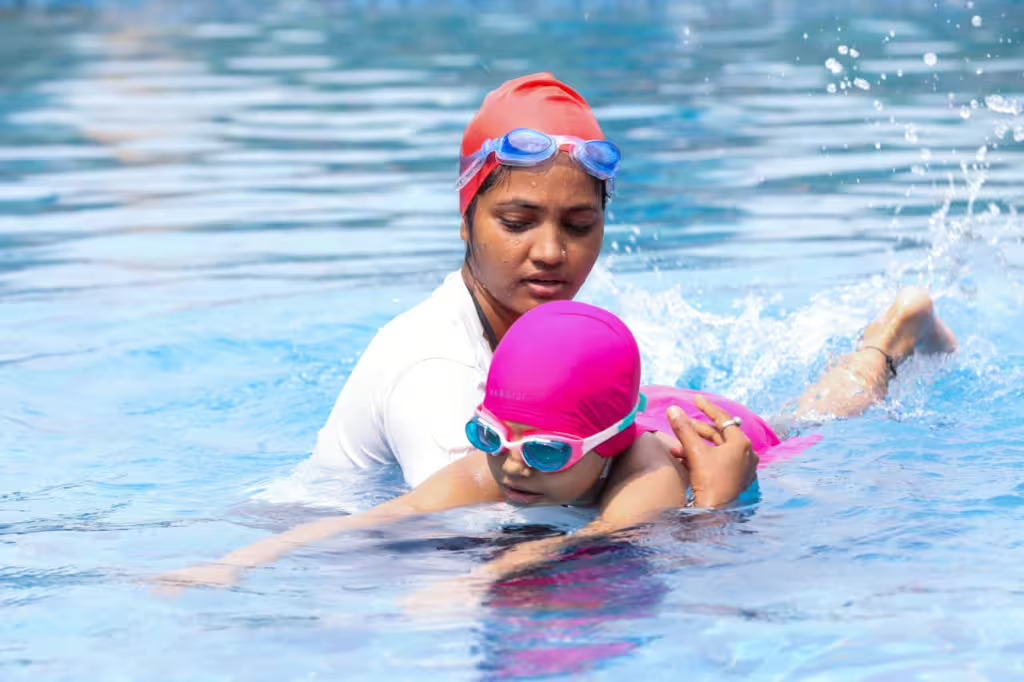
If you’re considering swim team for your child, there are a few steps that should be followed to assess their readiness. At the very least, your child should be comfortable in the water and have rudimentary swimming skills. Start by looking locally for community programs, swim clubs, and school teams. These will give you the best access and have the most community support for parents. You may also want to attend a tryout event so your child can be evaluated. This will test their competency in the water and help assess their skill level appropriately.
Cultured Athlete Says…
As you can see, youth swim teams may be a bit different than what your child is used to, but these programs offer a unique blend of individual growth and team connection that is not often found on the football field or basketball court. Swimming with a team teaches children that they can work toward their own personal goals while still contributing to a larger group effort.
If parents can take away any advice from this article, it’s that swim teams may not be for every child. Younger children, specifically those who have not had a ton of experience on their own in the water, may need to wait until they are more confident swimmers until they begin this sport in earnest.
Ultimately, knowing these things ought not to be an impediment, but are there so that you can make the experience smoother and more rewarding for everyone involved. We want swim team to be what it is; a sport that builds skill, confidence, and helps kids to work hard for their fellow athletes, not a challenge so insurmountable that they flounder at the idea of entering the pool.
Discover more from CulturedAthlete
Subscribe to get the latest posts sent to your email.