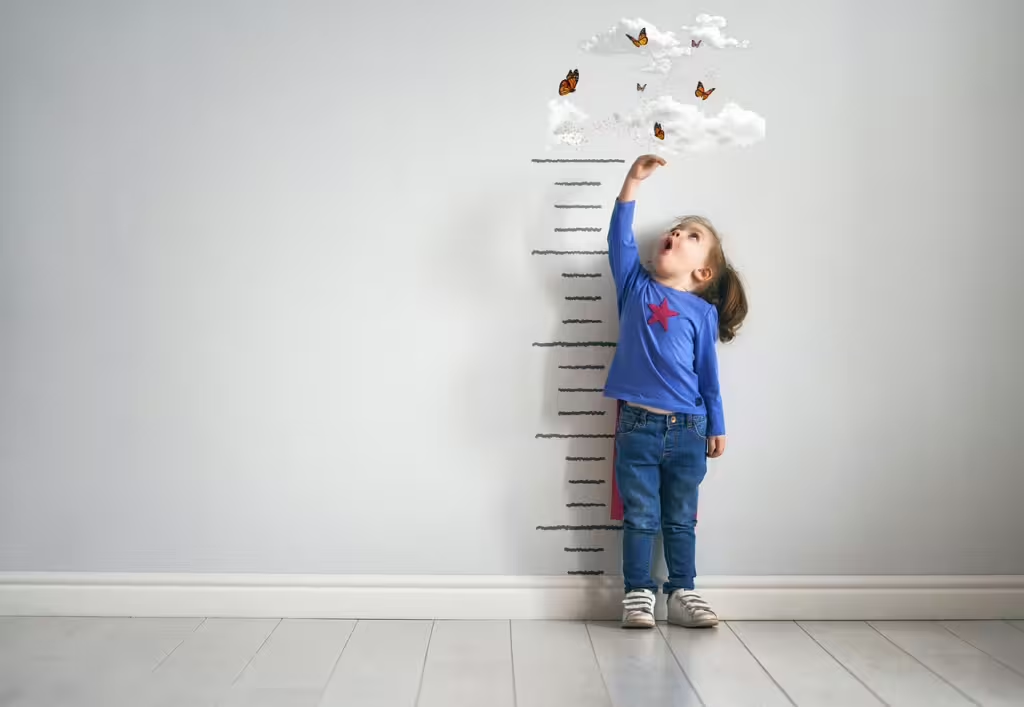

As parents, we hardly notice how fast our children are growing in the moment. It happens suddenly, almost. One day they are little mushy beans, dependent on us for everything, and the next day, it seems, they’re making the varsity football team, going on dates, and graduating college. This reader once had a relative tell him that, when it comes to kids, “the days are long, but the years go fast.” And every day since I became a parent, I have found it to be true.
Sports are often a good way to see this physical growth in action. Not simply because each year that they play sees them gaining confidence, coordination, strength, and skill, but also because there are noticeable physical changes that occur thanks to their still-growing bodies. One of the most critical, and often overlooked, aspects of this development is the presence of growth plates. These areas of developing tissue play a key role in how a person’s bones grow, but they also make young athletes more vulnerable to certain types of injuries.
In this article, we will examine the way children grow, in this case, physically. We will help parents understand the science behind growth plates and how they can affect injury risk. At the same time, we will also teach you how to support your child’s safety while still encouraging active, healthy participation in sports.
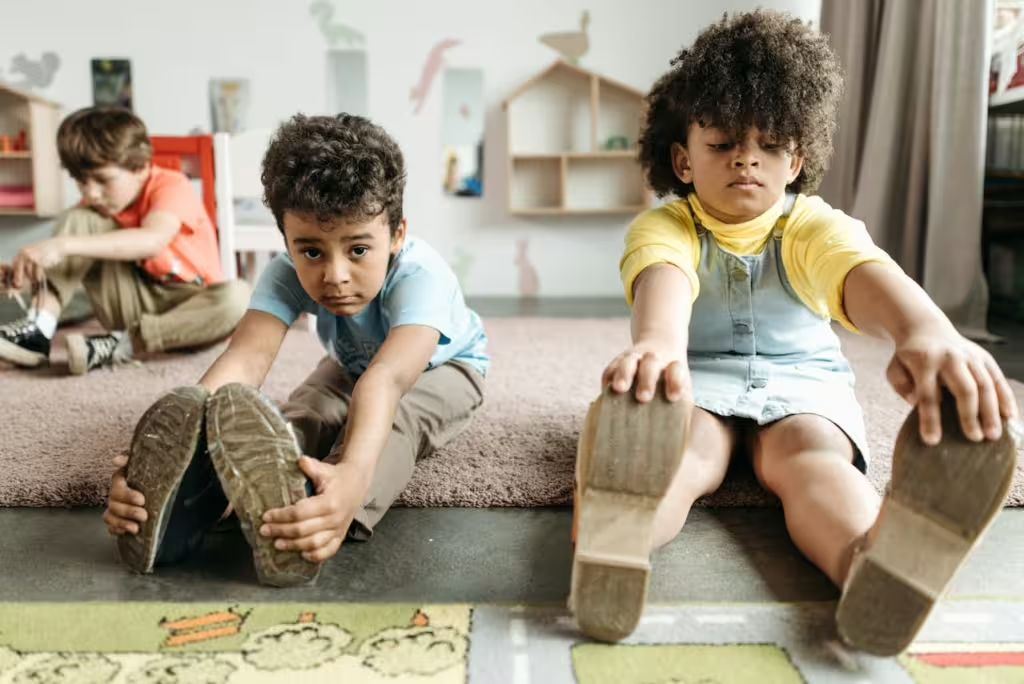
What Are Growth Plates?
Growth plates, otherwise known as epiphyseal plates, are areas of cartilage located near the ends of long bones. When we say long bones, we mean the arms and legs, but in this case, we also mean fingers and toes. These plates are aptly named, as it turns out, because they are where bone growth occurs. Over time, as a child matures, the cartilage located near the wrists, elbows, knees, ankles, fingers, and toes, gradually hardens and becomes solid bone.
The problem is, in kids and teens, these cartilaginous sports are far softer than fully developed bone. This means that these essential growth plates that every kid needs to get bigger, also happen to be more vulnerable to injury than their fully-developed, bony counterparts.
Why Growth Plates Matter in Sports
In adults, ligaments and tendons are often the weakest point during stress or impact. In children, it’s goin to be the growth plates. Where we might catch a sprain or a strain if we end up hurt playing, a younger athlete could end up with a growth plate injury. These wounds are particularly worrisome because they can effect how a bone grows; if they aren’t treated properly, that is. This is why we are making such a big deal about this type of injury in the fist place and why awareness, and responding early, is so important to avoiding a dire result.
Common Types of Growth Plate Injuries
Growth plate injuries are often referred to as Salter-Harris fractures. These fractures tend to be classified based on how the injury affects the bone and growth plate. As one might expect, the details can vary from growth plate to growth plate. Nevertheless, any growth plate injury should be evaluated by a trained medical professional.
Some of the more common scenarios parents might encounter include the child sustaining a fall onto an outstretched hand, kids having a collision during play, or some sort of repetitive stress injury that results from overuse. We’ve spoken about the latter before, which is why we always recommend sports diversification so that kids can workout all their various muscles; not just one set.
Overuse vs. Acute Injuries
Growth plate injuries generally fall into two categories: Acute injuries which occur suddenly and overuse injuries, which develop over time due to repeated stress. The former are usually the result of falls, impacts, or twisting motions and tend to be noticeable right away. Kids will show symptoms like pain, swelling, and difficulty moving the affected area.
Overuse injuries, meanwhile, tend to be things like Little League elbow, which comes from repetitive throwing motion, and Osgood-Schlatter disease, a condition that tends to affect the knee. In any event, overuse injuries can be harder to recognize because the symptoms may start gradually and are rarely as stark or painful for the athlete.
Signs Parents Should Watch For
The lesson here is that recognizing early signs of injury can help prevent more serious issues down the line. Parents should watch for:
- Persistent pain during or after activity
- Swelling near joints
- Limping or favoring one side
- Reduced range of motion
- Complaints of discomfort that don’t improve with rest
If any of the above symptoms continue for more than a few days, it’s important that you seek medical advice.
Preventing Growth Plate Injuries
So, how can parents prevent growth plate injuries? They can’t…not really. However, there are steps parents can take to reduce the risk. Encouraging proper warm ups like dynamic stretching, light jogging, and the like, can make a big difference. Also, parents may want to focus on technique and safe movement patterns. If need be, discuss these things with your child’s coach so that gradual skill progression can be made while still mitigating the risk of serious injury.
Above all else, avoid overtraining. Burnout and injury are serious risks for young athletes and too much activity without having adequate rest increases the likelihood of someone getting hurt. Give them breaks, rest days, time to do something else between seasons. They’ll thank you for it, we promise.
Long-Term Outlook
The good news it that most growth plate injuries heal well with proper care. Common treatments may include rest, immobilization (such as a cast or brace), and an eventual, gradual return to activity. It should be noted that, in rare cases, more serious injuries may affect bone growth, which is why follow-up care is important. Still, with appropriate management, most children return to full activity without lasting effects.
Cultured Athlete Says…
As you can see, growth plates are a vital part of a child’s development, but they ought not be the thing that keeps them from participating in sports; we hope that you’ve learned that much, at least! Indeed, by understanding how these areas function and recognizing the risks associated with them, parents gain the skills to ensure that their children participate in sports safely. The goal of this lesson was never to eliminate risk entirely, but to manage it thoughtfully.
Discover more from CulturedAthlete
Subscribe to get the latest posts sent to your email.